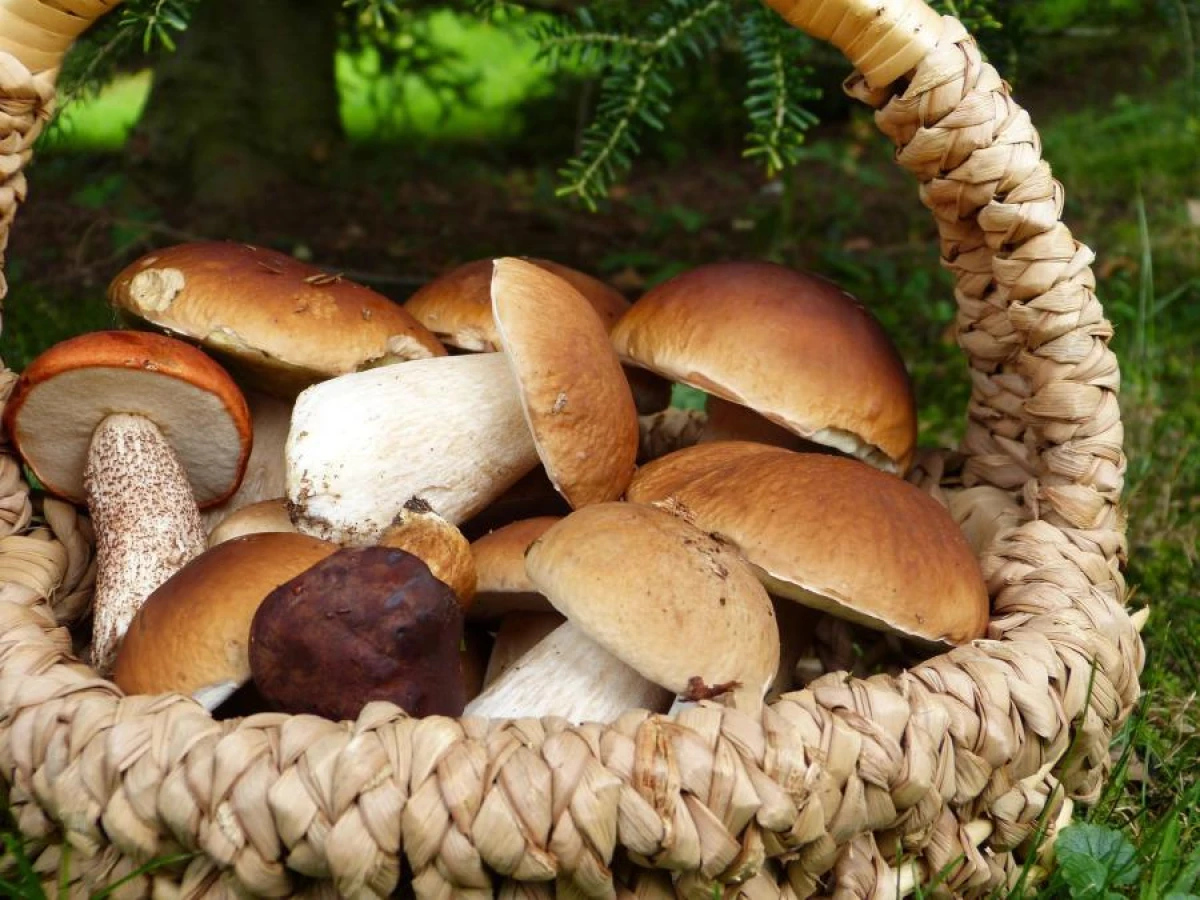
The summer season of quiet hunting brings a multitude of mushrooms. After collection, the question arises: “How to properly cook them?”. Each type requires a special approach. All the details are in the article.
What to Do After Collecting Mushrooms
Cut mushrooms do not store well: they need to be processed and used immediately. It is best to do this on the day of collection, with a maximum time limit of 6-8 hours. Exceptions are oyster mushrooms, chanterelles, and champignons — they can last in a cold cellar for about a day.
First, it is necessary to get rid of worms. To do this, the harvest is submerged in salted water for 2-3 hours and then rinsed. Chanterelles do not attract parasites, so they do not need to be soaked. To prevent the mushroom harvest from turning black, a little lemon juice is added to the water.
For aspen and birch mushrooms, the skin is removed from the stems during processing. Chanterelles and morels are boiled in salted water for 15-20 minutes before cooking. Champignons are not cleaned but are thoroughly rinsed. For butter mushrooms, the film is removed, while for morels, the stems are separated, and the caps are soaked in water. For old mushrooms, the tubular layer is cut off with a knife, as spores have already formed there.
Before drying, mushrooms are usually not washed but only brushed to remove stuck dirt, leaves, and grass. Large mushrooms are cut into several pieces.
Any type of forest mushrooms can be frozen; they store well in the freezer and do not lose their taste and aroma. Moreover, they do not need to be thawed before cooking — they can be placed directly from the freezer into a pot or pan. Before salting, the raw material is soaked in water for about 5 hours. Salted mushrooms are added to snacks, salads, or hot dishes.
Mushrooms pair well with products such as sour cream, mayonnaise, onions, garlic, olive oil, dill, parsley, allspice (peppercorns), nutmeg, and cloves.
Methods of Cooking Mushrooms
Mushrooms behave differently in various dishes: for example, chanterelles are tastier when fried, while honey mushrooms and butter mushrooms are better pickled. It is advisable to cook dishes with mushrooms in small quantities, as this product should not be reheated. Reheating can lead to the formation of toxic compounds that may cause vomiting, diarrhea, and bloating.
* The porcini mushroom is the most noble and versatile. It is often added to mushroom soups and broths, fried, dried, pickled, and salted. It is good in all dishes!
* Aspen and birch mushrooms should not be added to soup, as they disintegrate. It is better to fry, stew, or salt them.
* Champignons, like oyster mushrooms, can be cooked in any way. The caps are delicious on the grill if marinated in olive oil with garlic and salt.
* Chanterelles are very healthy mushrooms and are excellent for frying. When boiled, they can taste bitter, and when dried, they can be tasteless.
* Butter mushrooms are good pickled, dried, and boiled. They are not suitable for stewing, as they release a slippery and unpleasant juice.
* Black and white milk caps are harvested for winter. They are eaten pickled or salted. These mushrooms are primarily used in Russian cuisine.
* Milk mushrooms can be stewed, fried, dried, and salted. These mushrooms are good because they require minimal thermal processing. For example, for soup, it is enough to boil them for 10-15 minutes.
* Honey mushrooms are eaten boiled, stewed, and salted. They can be used to make mushroom caviar, solyanka, or soup, and can also be frozen for winter enjoyment.