
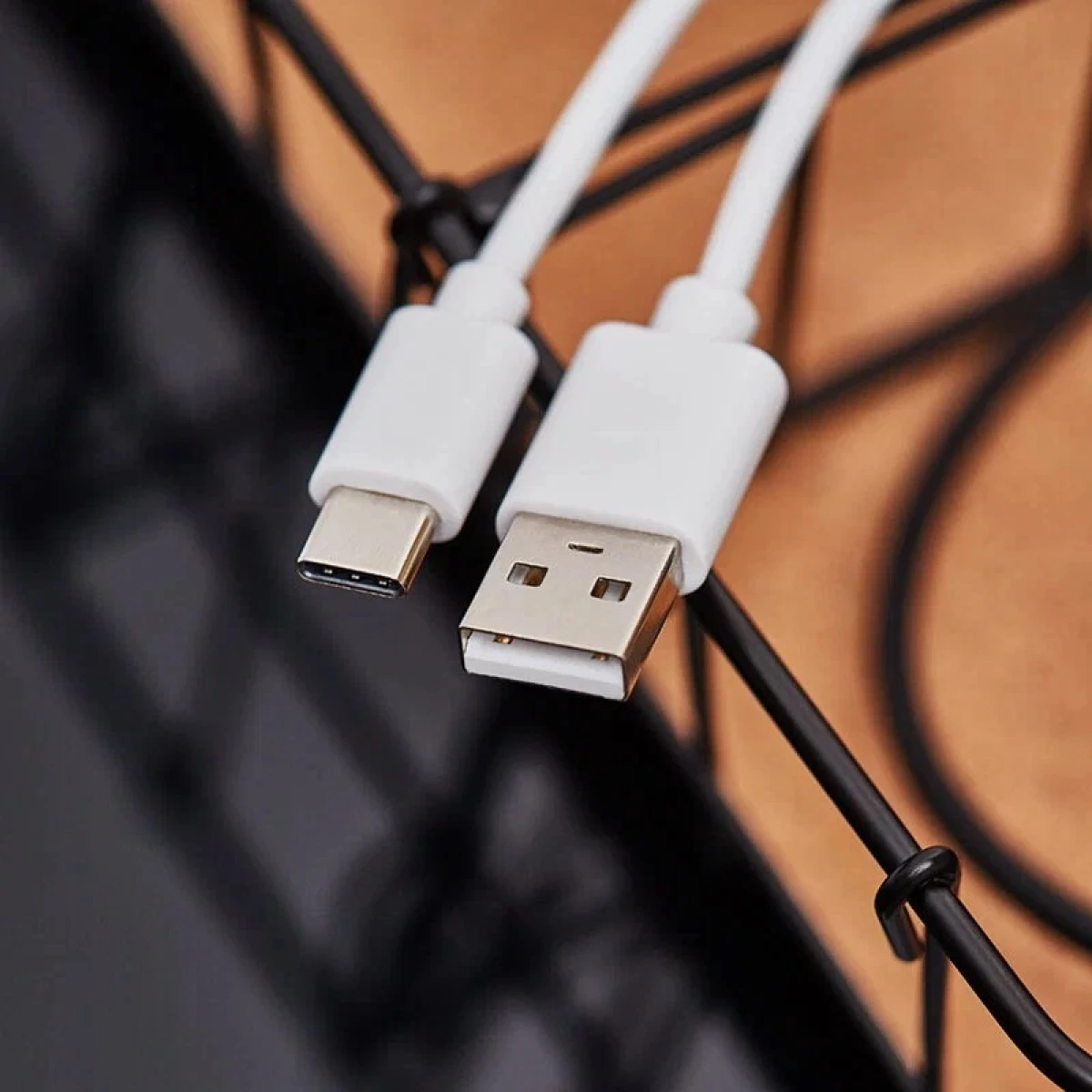
Many believe that the lifespan of a cable depends on how it is coiled. However, studies have shown that the main reason for failures is not the storage method, but the everyday habits of users.
Charging cables, which are essential for daily use of smartphones, laptops, and other devices, most often fail not due to improper coiling, as most people believe, but because of the habits of their owners. This was reported by BBC.
Michael Pecht is the founder of the Center for Advanced Life Cycle Engineering at the University of Maryland. His lab collaborates with technology companies that send gadgets and accessories there to investigate the causes of failures. Pecht jokingly notes, "We are like a morgue, but for electronics."
Experts tested USB cables under extreme conditions: they were stretched, repeatedly connected and disconnected, deformed, and even examined with X-rays after damage. Despite the common belief that cables fail due to improper coiling, Pecht assures that during the tests, the team did not find any breakages specifically for this reason. According to him, for thin and flexible charging cables, it does not matter much how they are coiled.
However, the most vulnerable part of the cable is the area where the cord connects to the plug. This is where the greatest stress occurs during daily use. Kyle Wiens, co-founder of iFixit, notes that the overwhelming majority of failures happen precisely at this point.
The reason lies in the physics of materials. Inside the cable, there are thin metal wires covered with insulation. When they are repeatedly bent at one point, the structure of the metal begins to break down.
Experts point out that another common mistake is pulling the cable by the cord to disconnect it from the device or outlet. This creates additional stress precisely at the weakest point. Instead, the cable should be removed by holding the connector itself.
Another issue is using cables that are too short. If the cord is constantly stretched to reach the outlet, it accelerates wear. It is also harmful to use the phone while charging in such a way that the cable bends at a sharp angle.
Experts also draw attention to using the phone in the car. If the device is placed in a cup holder or lies in such a way that its weight presses down on the cable, during movement and jolting, this creates additional pressure at the connection point.
For long and heavy cables, such as professional audio or video cables, proper coiling is important. In such cases, a special "over-under" technique is used. However, this rule is not critical for regular charging cables.
Specialists also advise not to skimp on quality. Cheap cables are often made from less durable materials, which is why they fail faster. Kyle Wiens recommends paying attention to models with textile or nylon braiding, which better protects the wires.
According to the expert, this is why some major tech manufacturers, particularly Apple, have started using braided cables instead of regular plastic ones in their new models.
In conclusion, cables most often fail due to bends at the plug, tension, and careless use. Simple measures—such as not pulling on the cord, avoiding sharp bends, and choosing quality models—will help extend their lifespan much more effectively than any "correct" coiling methods.















Leave a comment