
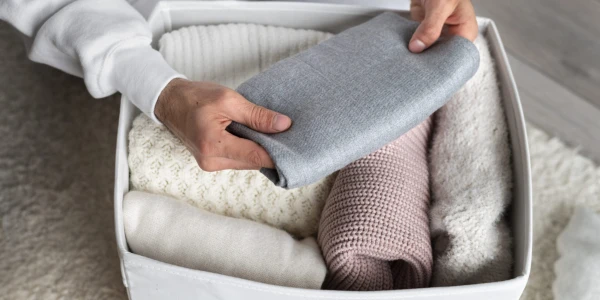
With the end of the cold season, it is important not just to put winter clothing away in the closet, but to properly prepare it for storage. Improper conditions can lead to moisture, unpleasant odors, fabric damage, or even insects.
Choose the Right Containers
One of the key factors is protection from moisture and dust. Experts recommend using airtight or vacuum containers that help keep items in good condition and save space.
“I highly recommend airtight or vacuum containers so that moisture or insects cannot damage fabrics or delicate materials,” notes organization expert Aaron Shirley.
It is also important to remember that delicate items or clothing with embellishments should not be compressed with a vacuum.
“Make sure you do not vacuum delicate clothing or items with fragile decorations; they won’t withstand the pressure,” explains consultant Emily DeForge.
Label and Organize
To avoid wasting time searching, it is better to organize storage in advance. Label boxes and containers, and keep a list of items.
“When I help my clients fold items for long-term storage, I label each container with a numbered card,” shares DeForge.
This is especially convenient if there are many items distributed across different locations.
Consider Storage Conditions
Temperature and humidity play a crucial role. It is better to choose dry spaces with relatively stable conditions.
Cardboard boxes are not always suitable: they can deform and absorb moisture. If the space is humid, it is advisable to use moisture absorbers.
It is also not recommended to store clothing in attics or basements, where it is difficult to control the climate.
Use Extra Space
If there is not enough room in the closet, alternative storage areas can be utilized. Containers under the bed or even suitcases work well.
“A well-packed suitcase looks good in the closet, but there is no reason for it to sit empty,” says DeForge.
Wash Items Before Storage
Before putting clothes away for several months, they need to be washed or dry cleaned. This helps avoid unpleasant odors and stains.
Laundry expert Linley McConnell advises checking pockets and selecting a delicate cycle.
“I know this sounds very simple, but it can also ruin your washing machine and your items,” she emphasizes.
Dry Down Jackets Properly
After washing, it is important to pay attention to drying. Down jackets should not be left damp — the filling can clump together.
“A dryer ball is key here because it needs to fluff the down,” notes McConnell, recommending the use of dryer balls or tennis balls.
Don’t Forget About Accessories
Hats, scarves, and gloves also require careful care. Knitted items are better washed by hand to maintain their shape.
“Do not wring them out,” advises McConnell, recommending gently removing excess moisture.
Accessories should be stored in a dry, cool place using natural moth repellents, such as lavender or cedar balls.














Leave a comment