The Turkish hotelier revealed details about handling food at buffets. Some food that has not come into contact with guests may be served again. The expert explained how to distinguish a quality hotel from one that cuts corners.
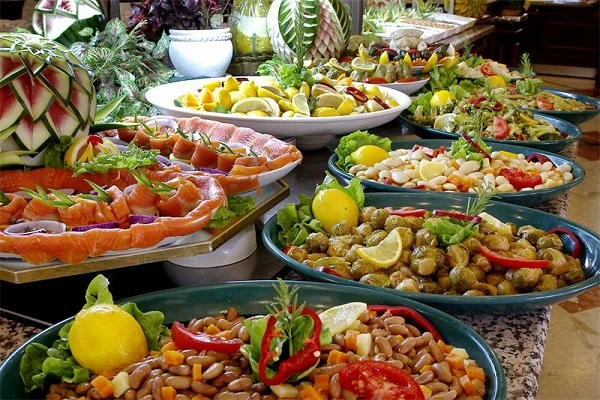
The Turkish resort paradise, synonymous with the "all-inclusive" system for millions of tourists, has found itself at the center of a rather unappetizing discussion. This concerns the fate of food that tourists did not eat at the famous buffets. Following the statement by the head of the Turkish Hoteliers Federation, Osman Ayık, about the possibility of re-serving certain products, well-known Turkish hotelier Arthur Birsin shed new light on the practice.
His comments balance between an attempt to reassure tourists and an open acknowledgment of the existence of different standards in the industry. Birsin confirmed: yes, certain products may be offered to guests again. But — and this is the key "but" — only under strict adherence to two conditions. First, the food must not have come into contact with guests at any point. Second, its expiration date must not have been exceeded.
"What has not been in contact with guests can go for reprocessing. If you were served certain items for breakfast, everything that was not eaten goes to waste. However, there is food that was not taken to the buffet or was not used: these are boiled eggs that are still in their shells, or fruits — like bananas in their peels. They can later be offered to guests again," Birsin stated.
In essence, the hotelier drew a clear line between a direct threat to health and what he sees as reasonable savings without risk. An egg in its shell or a fruit in its natural "packaging" is considered a hermetically sealed product that has not lost its qualities. Everything that was on a communal dish, which someone could potentially have touched with tongs or that could have been splashed by a neighboring dish, is subject to mandatory disposal.
However, Birsin then made a much sharper statement that divided the industry into two irreconcilable camps — those who maintain standards and those who cut corners everywhere. "There are hotels that save on quality. In such places, leftover food may be repurposed into some salads and other dishes, but in any case, good hotels think about their quality," the interviewee noted.
This phrase is a verdict for an entire segment of the market. It indirectly acknowledges that the practice of deep "reprocessing" of leftovers, where yesterday's side dish can become the basis for today's salad, and uneaten pieces of meat can be part of a sauce, is a reality in some Turkish hotels. The motivation is simple: fierce competition and price dumping force owners to seek any means to cut the largest expense item — food costs.
So how can one distinguish a quality hotel from one that saves on every penny? Birsin offers a simple yet effective piece of advice: pay attention to the menu. "Guests who come and stay for a week notice fundamentally different items on the table, prepared from different ingredients," the hotelier emphasized. In a good hotel, the buffet menu should change daily, demonstrating variety and freshness of purchases. Monotony and repetition of the same dishes day after day is the first alarming sign.
"For this reason, everything is prepared fresh again, because hotels must showcase luxurious service and quality cuisine. The quality of dish preparation primarily depends on the quality of ingredients — nothing good can be made from poor materials," Arthur Birsin concluded.