With the arrival of the spring season, more fresh vegetables and fruits appear on the shelves. However, along with vitamins, potentially dangerous microorganisms, including E. coli, listeria, and salmonella, can also enter the home.
Experts warn that simply rinsing under running water may not be sufficient, especially if the products are contaminated with bacteria or chemical residues.
Basic Safety Rules
To reduce the risk of infection, it is recommended to follow several basic rules:
-
Choose quality products. Avoid buying fruits with damage, cracks, and dents — bacteria can penetrate more easily through them. Cut fruits should only be taken from refrigerators.
-
Avoid cross-contamination. Vegetables and fruits should be stored separately from meat, fish, and seafood both in the store and at home.
-
Maintain hygiene. It is important to wash hands before and after handling food, as well as thoroughly clean kitchen utensils — knives, cutting boards, and dishes.
How to Properly Wash Products
For more effective cleaning, simple solutions and methods can be used:
-
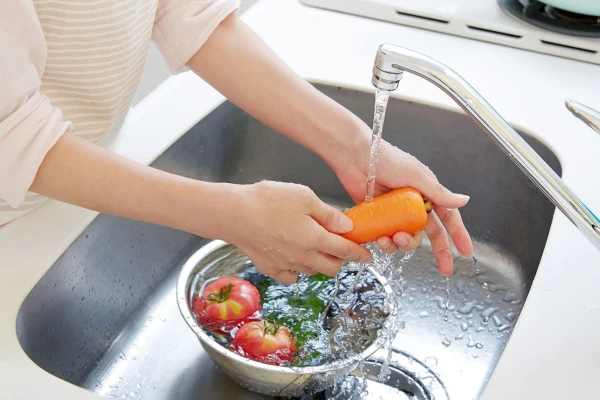
Vegetables and firm fruits. Dissolve a tablespoon of baking soda in a liter of water and soak the products for 10–15 minutes, then rinse thoroughly.
-
Greens. Soak in cold water with added vinegar or salt for a few minutes, then gently rinse — this helps remove sand and some bacteria.
-
Berries. It is better to wash them just before consumption to avoid quick spoilage. Use a gentle stream of water.
Additionally, it is recommended to use a separate brush for vegetables. Even if the skin will be peeled, pre-washing helps avoid transferring contaminants to the edible part.
What to Pay Attention to When Storing
Some fruits emit ethylene — a gas that accelerates ripening. For example, apples and bananas are better stored separately from other products, as they can affect the freshness of vegetables and greens.
Following these simple recommendations helps reduce the risk of foodborne infections and make the diet safer.