
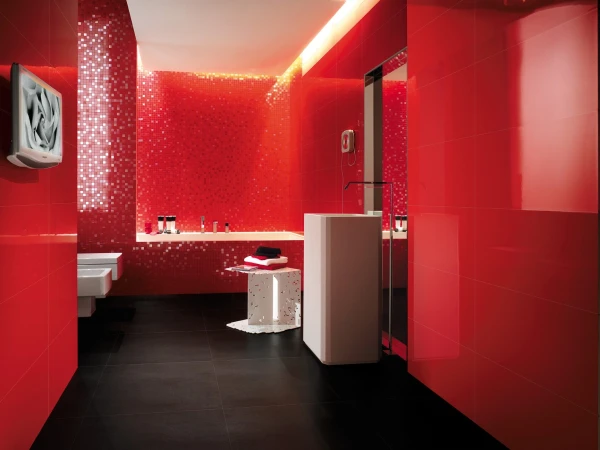
Choosing a color for the bathroom plays a key role, especially if the space is small and lacks natural light. Some popular shades can visually reduce space, make it cold, or overloaded.
Designers note that when decorating a bathroom, it is important to consider not only trends but also so-called anti-trends — solutions that are better to avoid.
White
Pure white may seem universal, but in practice, it highlights any dirt and can create a sense of "sterility." A more successful option would be warm shades of white or soft beige.
Dark Brown
Deep brown tones visually reduce space and make the room darker, especially in low light conditions.
Black
Striking in design projects, black often creates a feeling of crampedness in regular bathrooms and emphasizes water stains.
Red
An overly active color that can increase tension and visually overload a small space, especially under artificial lighting.
Gray
Cool gray shades can appear lifeless and strip the interior of coziness. It is better to prefer warmer neutral colors.
Bright Pink
Saturated pink can quickly become tiresome and irritating. Softer and muted options look more harmonious.
Yellow
In a limited space, yellow can create visual noise, which is amplified by reflections in mirrors.
Bright Orange
An active and energetic color that can be too intrusive for a bathroom. More subdued terracotta shades can be an alternative.
A thoughtful choice of color palette helps to make the bathroom visually more spacious, cozy, and comfortable for daily use.













Leave a comment