
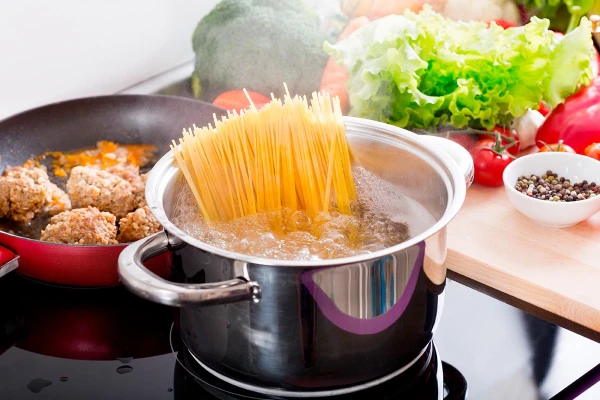
Pasta is one of the simplest dishes. It seems that it’s impossible to make a mistake: throw it in water, wait — and it’s done. But because of this apparent simplicity, most people do everything “by eye” — and end up with something between porridge and a tasteless side dish instead of pasta.
Chefs say for a reason: half of the success is not the sauce, but the properly cooked pasta. And there are several typical mistakes that almost always ruin the result.
Small Pot
Often, pasta is cooked in a small pot — simply because it’s more convenient. But in tight water, they literally lack space. They start to stick together, and the water quickly becomes thick with starch.
In fact, pasta needs freedom. The approximate formula is simple: one liter of water for 100 grams. Yes, it seems like too much — but that’s how pasta turns out light and not sticky.
Oil in Water
A myth passed down from generation to generation: add oil — and the pasta won’t stick together.
In reality, the oil just floats on top and has almost no effect on the process. Instead, it covers the pasta with a thin film, making it harder for the sauce to “cling.” As a result, the dish turns out less flavorful.
Breaking Spaghetti
Many break long pasta to fit it in the pot. But the shape has a purpose: long spaghetti holds the sauce better.
It’s better to just lower them into boiling water and wait a bit. After 20–30 seconds, they will soften and fully submerge.
Salt “by Eye”
One of the most underrated things is salt. It’s in the water that pasta gets its basic flavor.
If the water is not salted enough, no sauce will fix that later. Chefs have a simple guideline: the water should be “like the sea.” About one teaspoon of salt per liter.
Rinsing
Many habitually rinse pasta after cooking. It seems that this makes it “better.”
In reality, along with the water, the starch goes away — the very starch that helps the sauce stick. As a result, the pasta becomes dry and tasteless. You should only rinse it in one case — if you are making a cold salad.
Overcooking
The most common mistake is cooking “until soft.” As a result, the pasta turns into a mushy mass.
The correct state is al dente, when there is a slight firmness inside. This is the type of pasta served in Italy, and it pairs best with sauces.
Draining All the Water
Few people realize that the water after cooking is a valuable ingredient. It contains starch that makes the sauce thicker and more “adhesive.”
That’s why chefs always leave a bit of this water and add it to the sauce — just a couple of tablespoons, but the effect is noticeable.
A Little Secret That Changes Everything
The tastiest option comes when you don’t just cook the pasta and pour sauce over it.
It’s much better to transfer them directly into the pan with the sauce and let them “finish” together for 1–2 minutes. Then the sauce doesn’t just sit on top, but seems to be absorbed into the pasta.
And at that moment, even ordinary pasta starts to resemble a restaurant dish.











Leave a comment