
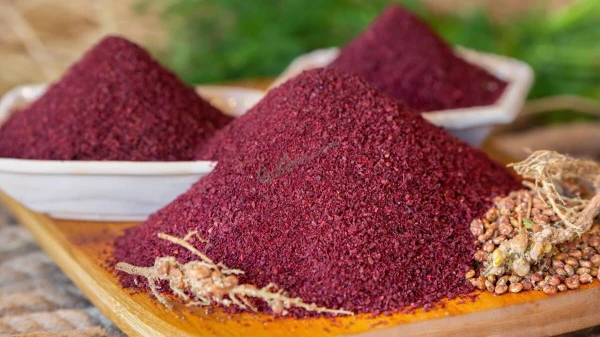
Sumac rarely makes it into the basic spice set, which is a pity. Learn which dishes this Eastern spice is added to and how it can be dangerous for marble countertops in the article.
What Does Sumac Taste Like
Sumac refers both to the plant with bright red clusters of fruits and the spice obtained after drying and grinding them. However, there are no spicy notes in the powder itself: its taste is sour, slightly astringent, with a hint of berry. But it is this delicacy that has made sumac a star of Middle Eastern cuisine. The spice is added to hummus, falafel, and is used in the preparation of sumaciyya (a meat stew with chickpeas and vegetables), musakhan (chicken baked with onions and pine nuts), and lahmacun (a traditional flatbread with meat).
At home, sumac can be used instead of familiar souring agents, such as vinegar or lemon juice. The spice comes in handy when a dish does not need extra liquid and foreign notes: due to its malic acid content, it provides a gentle sourness and enhances rather than overwhelms the taste of other ingredients. At the same time, sumac does not impose a specific Eastern aroma.
Dishes to Add Sumac To
Meat, Poultry, Fish
Sumac will reduce the fattiness of pork, lamb, and salmon, add juiciness to turkey and chicken, and smooth out the aroma of river fish. Rub the spice on steaks before frying or baking, or add it to raw minced meat or stews 10–15 minutes before cooking is finished. Usually, a couple of pinches or a teaspoon of powder is enough.
Vegetables, Snacks, and Soups
Sumac will enhance the flavor of grilled eggplants, zucchinis, and peppers. A pinch of spice will give fresh vegetable salads a pleasant sourness and allow for less salt to be used. With borscht, it creates a combo: the spice will make both its taste and color more expressive.
You can sprinkle sumac on chips, popcorn, and even dried apples. However, those accustomed to bold flavors may find such snacks bland. In this case, try za'atar—a popular Eastern spice blend based on sumac.
Marinades and Sauces
Sumac can replace vinegar in meat marinades and will be a great addition to sauces based on yogurt, mayonnaise, tomatoes, or fruits. Don’t be afraid to experiment: the spice pairs well with herbs, hot peppers, cumin, garlic, ginger, oregano, thyme, cardamom, and even cinnamon.
Lemonades
Americans make a refreshing drink called sumac-ade from sumac fruits, a recipe they borrowed from the indigenous peoples of North America. Thanks to cold steeping, it turns out not only tasty and beautiful but also healthy, as it retains maximum vitamin C.
At home, you can make a simplified version using ground spice. Boil 1.5 liters of water in a pot with four tablespoons of sugar, two lemon slices, and three slices of fresh ginger. Remove from heat, add a sprig of mint and a teaspoon of sumac. Let the drink steep and cool, then strain thoroughly.
Why Sumac Requires Caution in the Kitchen
Sumac is not only eaten. Due to its high tannin content, it has long been used in leather production, and the natural pigments in its composition have been used for dyeing fabrics. However, these same properties of sumac have caused inconveniences for centuries: during transportation, it could easily spoil valuable neighboring cargo.
Sumac is particularly dangerous for marble. When mixed with water, the powder penetrates deeply into the stone, staining it purple. Therefore, if you have marble countertops in your kitchen, you need to work with this spice very carefully, using cutting boards or protective coverings.
Benefits of Sumac
In ancient times, sumac was considered a remedy for all ailments: it was used to treat colds and inflammatory diseases, soothe gastrointestinal issues, and treat wounds. The spice is indeed rich in antioxidants and vitamin C, containing potassium, magnesium, and other minerals. However, to obtain a significant dose of beneficial substances, one would have to consume it in large quantities, while its actual usage is just a couple of pinches per dish. Therefore, one should not rely on its medicinal properties: sumac should be on the spice shelf, not in the medicine cabinet.














Leave a comment