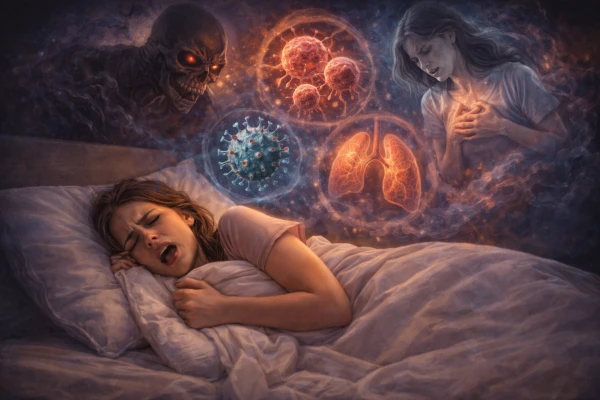
Nightmarish or unusually vivid dreams are familiar to almost everyone. They most often occur during periods of stress or emotional tension. However, some studies suggest that distressing dreams may sometimes be related to health conditions, warning of possible illnesses even before the first symptoms appear.
What Are "Prodromal Dreams"
Scientists use the term "prodromal dreams" to describe unusual or intense dreams that may occur in the early stages of illness. According to one hypothesis, the body begins to send subtle signals to the brain about ongoing changes even before a person feels physical symptoms.
During rapid eye movement (REM) sleep, the brain actively processes information and may respond to such signals. The paralimbic areas of the brain, including the amygdala, play an important role in recognizing potential threats. If the brain detects unusual signals from the body, it may "translate" them into symbolic or distressing images in dreams.
What Illnesses Dreams May Signal
Analysis of several studies shows that unusual and distressing dreams have sometimes been recorded before the diagnosis of various diseases. Among them:
- gastrointestinal diseases
- lung diseases
- gynecological issues
- dental diseases
- arthritis
Individual studies also note a connection between intense dreams and infectious diseases.
Example from Scientific Observations
For instance, in a 2015 study, some participants who were later diagnosed with breast cancer reported that shortly before their diagnosis, their dreams became particularly vivid, realistic, and emotionally charged. About 83% of the surveyed women reported such experiences.
Researchers also note that unusual distressing dreams may sometimes appear before the onset of flu or a cold.
Conclusion
Researchers emphasize that the connection between dreams and illnesses requires further study. For now, this hypothesis is considered one of the directions for scientific research that may help better understand how the brain responds to early changes in the body.