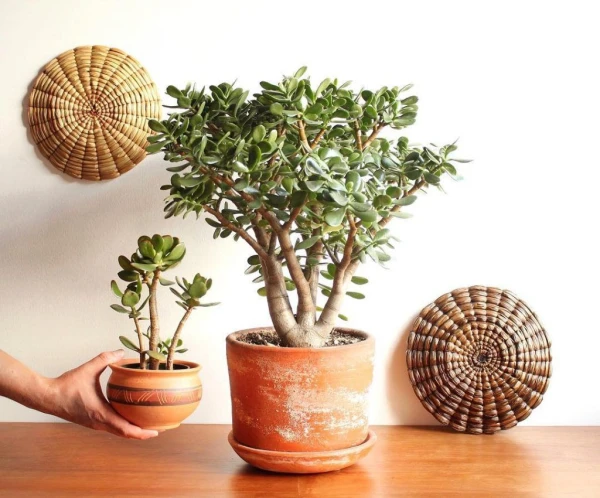
The jade plant, more commonly known as the "money tree," is considered one of the most popular houseplants. In addition to its decorative function, it is attributed with a number of beneficial properties in folk practice — from helping with minor wounds to alleviating inflammation.
Natural Protective Properties
It is believed that the jade plant releases volatile substances that can have antimicrobial effects. Because of this, the plant is sometimes referred to as a natural "defender" of the home against viruses, bacteria, and fungi.
Some houseplant enthusiasts also note an interesting feature: when someone in the house falls ill, the plant may lose leaves or appear weakened, and after the person recovers, it begins to grow actively again.
Assistance for Wounds and Cuts
In folk medicine, the juice and pulp of jade plant leaves are sometimes used for caring for damaged skin. Crushed leaves are applied to small cuts, scratches, or abscesses. It is believed that the substances in the plant help accelerate skin recovery and reduce inflammation.
Compresses for Bruises and Strains
For bruises, strains, or muscle pain, compresses made from the pulp of jade plant leaves are sometimes used. They are applied to the affected area of skin to reduce inflammation and discomfort.
Use for Herpes and Inflammations
The plant's juice is sometimes used for herpes on the lips — folk recommendations suggest carefully applying it to the affected area. For throat inflammations, a solution is prepared: the juice from about ten leaves is diluted in a glass of boiled water and used for gargling.
For Insect Bites and Calluses
The juice of the jade plant is also used to treat insect bites. It is believed to help reduce itching and redness.
Another folk use is related to calluses: a thin film is removed from the leaf, and its pulp is applied to the skin and secured with a bandage overnight.
Important Caution
Despite the widespread folk recipes, specialists remind that the jade plant contains potentially toxic substances, including arsenic compounds. Therefore, it should be used internally with extreme caution and only in the form of weak infusions.
Conclusion
The jade plant remains a popular houseplant, attributed with many beneficial properties in folk medicine. However, before using any home remedies, it is important to remember the potential risks and consult specialists if necessary.