Most people drink tea daily, and most often in bags: it’s quick, convenient, and there’s nothing to wash. But we are increasingly warned: it’s not very healthy. Why and how to minimize risks?
What do you know about the materials that tea bags are made from and the substances they release during brewing? More and more studies link the impact of microplastics and toxic compounds to the consequences of chronic inflammation and metabolic disorders, warns doctor Ksenia Nechaeva.
What They Are Made Of
In the classic version, a teabag should be made of paper. However, in reality, most manufacturers use a mixture — for example, paper with thermoplastic additives, polyester or nylon, polypropylene — a type of plastic that helps the bags not to disintegrate in boiling water.
The more plastic in the teabag, the higher the likelihood that it will start releasing micro-particles when heated. This is not always noticeable because the taste and smell do not change, but this is what makes the problem more serious.
A study from McGill University showed that one nylon tea bag can release up to several billion particles of microplastic and nanoplastic into the drink. Projects like PlasticHeal and similar European studies confirmed that these tiny particles pass through the intestinal barrier, enter the blood and lymph, and settle in the liver, spleen, and intestines.
Scientists link microplastics to chronic inflammation, immune system disorders, hormonal disruptions, decreased quality of eggs and sperm, and long-term risks of DNA damage. And this is not just “scare stories” from the Internet, but data that is actively being studied at the level of the Ministry of Health and international food safety committees.
Dangerous Chemicals in Teabags
In addition to the fact that tea bags are increasingly made from plastic, they can also be treated with substances that enhance strength and heat resistance, such as:
PFOA (perfluorooctanoic acid) — a toxic compound associated with cancer and endocrine disorders. It has been used in packaging, non-stick coatings, and has been found in some samples of tea bags;
bleaches, adhesives, dyes — enter the bag during the paper manufacturing process. Their quantity is usually small, but regular consumption can increase the overall chemical background, especially at high brewing temperatures.
Myths and Official Positions of Regulatory Authorities
Manufacturers often claim that the plastic in the bags is food-grade and safe. Some bags indeed pose no threat, especially those made from high-quality cellulose.
But there is an important point: research results vary significantly between manufacturers. Therefore, it is too early to give a definitive verdict of "completely safe." Scientific data continues to be updated, and interest in the topic is only growing.
How to Minimize Risks
-
Choose paper bags without a plastic mesh. Look for labels on the packaging that say "no thermoplastic" or "unbleached."
-
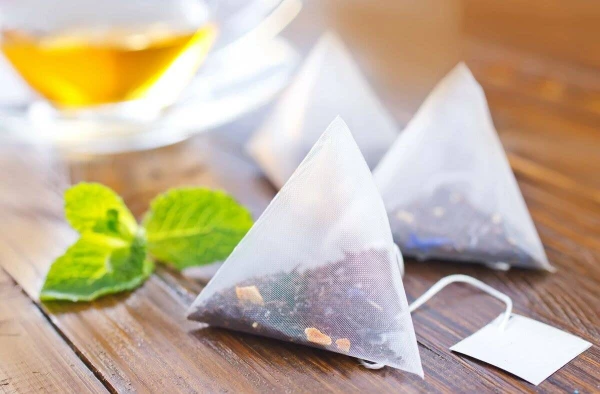
Avoid plastic pyramids. Beautiful and transparent, they are most often made from nylon and release the most microplastic.
-
Prefer loose-leaf tea. Its quality is higher, and contact with packaging is minimal.
-
Use metal or glass strainers. This is a safe and reusable alternative.
-
Don’t brew a teabag with boiling water at 100 °C. By slightly lowering the temperature (to 85–90 °C), you reduce the release of particles.
It is important to understand that the problem does not end with your cup. Microplastics from tea bags, after disposal, enter the soil, water, and accumulate in it for decades. Every plastic teabag is a small but real harm to the planet, which will sooner or later return to humans through water and food. The safest option is a conscious choice: natural paper bags or loose-leaf tea.