
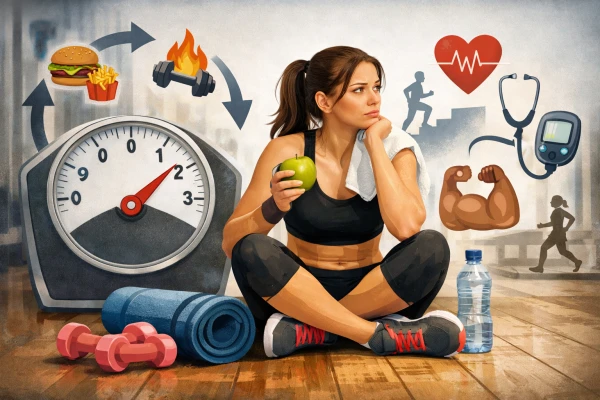
Regular physical exercise improves health and reduces the risk of many diseases; however, on their own, they rarely lead to significant weight loss. This conclusion is reached by scientists and sports medicine specialists analyzing data from large studies.
Workouts and Weight Loss: What Research Shows
Many people believe that the more physical activity they engage in, the faster they will lose weight. However, scientific data shows that the relationship between workouts and weight loss is not always straightforward.
According to research findings, regular exercise without dietary changes often leads to only moderate weight loss—typically a few kilograms over several months. The body can compensate for increased physical activity by, for example, increasing appetite or reducing energy expenditure in other physiological processes.
Such conclusions are also found in scientific works dedicated to metabolism and weight control, published by research institutes and medical organizations.
Why the Body Compensates for Workouts
Experts explain this by the peculiarities of metabolism. When the level of physical activity increases, the body can adapt:
- appetite increases
- spontaneous activity during the day decreases
- the body starts to use energy more efficiently
As a result, the overall energy balance may change much less than a person expects.
Moreover, with age, the basal metabolic rate gradually slows down. One reason for this is sarcopenia—the age-related decrease in muscle mass. The less muscle there is, the less energy the body expends even at rest.
Why Exercise is Still Extremely Important
Despite the limited impact of workouts on body mass, physical activity remains one of the key factors for health.
Regular exercise helps:
- improve the body's sensitivity to insulin
- reduce visceral fat
- stabilize blood glucose levels
- strengthen bones and muscles
- lower the risk of cardiovascular diseases and depression
Research also shows that a high level of physical fitness is associated with lower mortality regardless of body weight.
Short Bursts of Activity are Also Beneficial
Even small episodes of movement throughout the day can positively affect health. For example:
- brisk walking
- climbing stairs
- short stretches during work
Such habits help maintain metabolism and reduce the risk of chronic diseases.
Weight Loss and Health Are Not the Same
In recent years, medications for weight loss from the GLP-1 class have emerged. They do help reduce body weight more quickly; however, for some people, rapid weight loss is accompanied by a loss of muscle mass, which can decrease strength and endurance.
Therefore, specialists increasingly emphasize that health cannot be assessed solely by the number on the scale. Much more important is the combination of factors—level of physical activity, cardiovascular health, muscle mass, and metabolic health.
Conclusion
Physical exercise may not lead to significant weight loss, but it greatly improves the body's condition, increases endurance, and reduces the risk of many diseases. Therefore, experts recommend viewing movement primarily as an investment in health and longevity, rather than just a way to lower the number on the scale.















Leave a comment