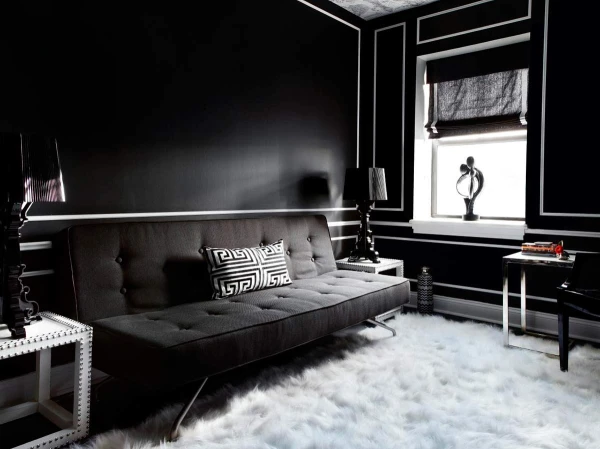
The color black in interior design has long ceased to be a symbol of gloom and is increasingly viewed as a sign of expressive taste. However, designers warn: an impressive result is only possible with a competent approach.
The Power of Contrast and Character of Space
Using black in home decor is considered one of the boldest design decisions. This color adds depth to the space, highlights architecture, and helps create expressive accents. According to experts from international interior publications, including Architectural Digest, black elements—from furniture to wall finishes—can visually "gather" a space and make it more structured.
Dark shades look especially advantageous in spacious rooms with good natural lighting. They enhance contrast, make light more noticeable, and create a gallery-like effect. Additionally, black is considered a universal background for art, textiles, and decor.
When the Decision is Justified
Designers note several cases when black in interior design truly works:
-
Accent walls or areas. Partial use of the color adds depth without overwhelming the space.
-
Contrast with white or light shades. This classic combination creates a sense of balance.
-
Modern styles—minimalism, loft, high-tech. In these directions, black emphasizes the graphic nature of forms.
-
Matte textures. They look more noble and do not create excessive shine.
Color trend experts, including specialists from the Pantone Institute, emphasize that dark shades can shape the emotional background of a space—from intimate coziness to dramatic expressiveness.
Possible Mistakes
However, black cannot be called a universal solution. In small and poorly lit rooms, it can visually "consume" space and create a sense of heaviness. Caution should be exercised when using black in bedrooms and children's rooms, where psychological comfort remains a priority.
Typical mistakes designers identify include:
-
Excessive number of dark surfaces without a light balance;
-
Lack of thoughtful lighting;
-
Combination with unsuitable tone colors;
-
Overuse of glossy surfaces.
Additionally, it is important to consider maintenance features: dust and marks are more noticeable on dark surfaces.
Balance as the Main Principle
Experts agree: black is a tool that requires precision. In a well-structured composition, it can add status and modernity to the interior. Otherwise, it can make the space heavy and uncomfortable.
The optimal approach is to use dark shades in moderation, combining them with natural materials, textiles, and thoughtful lighting. Then black will become not a design mistake, but an expressive element of individual style.