
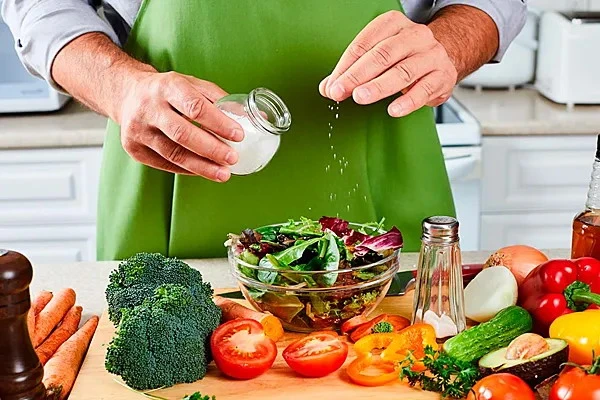
We explain when to add salt to a dish and why the wrong timing can ruin even a successful recipe.
Salt is not just a seasoning: it can change the flavor of a dish and even affect its texture. How much salt to use, which type to choose, and, most importantly, when to salt — these questions concern many cooks. Let’s figure out at what stage of cooking salt should be added to ensure that meat, vegetables, fish, eggs, and everything else turns out truly delicious.
When to Add Salt During Cooking
"Just salting a dish and forgetting about it is not an option; you need to constantly monitor how the food develops flavor during the cooking process," notes renowned Iranian-American chef, television host, and author Samin Nosrat in her book "Salt, Fat, Acid, Heat." According to the chef, only constant tasting and gradual adjustments as ingredients are added help achieve the most flavorful food.
The Washington Post has gathered several recommendations on when it is best to salt foods — before cooking, during, after, or at all stages.
Meat
"It’s better to salt meat anytime than never, and more salt is better than a little," writes Samin Nosrat.
Salt enhances the flavor of meat, preserves its juiciness, and gives an even golden crust. According to the expert, it is best to salt meat in advance — a day before cooking, but the denser the cut, the earlier it should be treated with salt.
"For example, oxtail, shank, and short ribs should be salted one or two days in advance. A steak can be salted either 40 minutes or more before cooking, or less than three minutes before cooking," recommends J. Kenji López-Alt in "The Food Lab."
Poultry
According to the expert, chicken should be salted a day before cooking, while turkey should be salted two to three days in advance.
Even if the pieces of meat are small, you will achieve good results if you salt them a few hours before you start cooking, or simply while preheating the oven or grill.
Eggs
A little more salt can turn a plain scrambled egg from tasteless to well-seasoned. Additionally, salt improves the texture of cooked eggs. "It acts as a buffer that prevents the proteins from binding too tightly and squeezing out water," explains J. Kenji López-Alt.
He recommends salting eggs at least 15 minutes before cooking to allow the salt to dissolve evenly. Although salting just before cooking is also acceptable, it should not be done at the end — otherwise, the eggs will become tough and watery.
Seafood
Unlike meat, seafood does not benefit from being salted in advance. "The delicate protein of fish and shellfish can break down if salted too early, becoming tough and dry," explains Samin Nosrat.
She recommends salting delicate fish 15 minutes before cooking, while steaks from meaty fish like tuna and swordfish, 2.5 cm thick, should be salted 30 minutes in advance: "All other seafood — such as shrimp and scallops — should be seasoned during cooking to preserve their texture."
Vegetables
Due to the variety of vegetables and cooking methods, it is difficult to give a universal recommendation. "Salt helps break down pectin — the fiber in plant cell walls — speeding up cooking time," writes Harold McGee in his book "On Food and Cooking."
Additionally, salt preserves the color of green vegetables, such as green beans. "If in doubt, salt vegetables before cooking," advises Samin Nosrat. "For example, when roasting, mix vegetables with oil and salt, and when boiling or sautéing, add salt directly to the water or pan."
The only exception is mushrooms. Since they are mostly made up of water, adding salt too early can draw out all their moisture. Therefore, salt mushrooms when they start to take on color.
Cut vegetables are best salted 15-20 minutes before cooking; before that, let them drain in a colander or on a towel and pat dry to remove excess moisture.
Beans and Grains
As with vegetables, it is better to add salt at the beginning of cooking — this way, legumes and grains will soften and develop better flavor. "Cooking beans in salted water does not make them tougher, contrary to popular myth," says López-Alt on Serious Eats. Moreover, he recommends soaking beans in salted water to make them creamy and prevent them from falling apart during cooking.
Grains, unlike beans, absorb all the water in which they are cooked, so they should be salted a little less. The longer the product cooks, the more salt it will absorb.
Soups, Sauces, and Stews
Salt soups, stews, sauces, and similar dishes in stages: season at the beginning of cooking, then adjust the flavor during the cooking process.
The amount of salt will always depend on personal preferences, but achieving the right balance will simply "fix" the flavor. "If your recipe uses other salty ingredients (olives, capers) or starts with salting meat, add less salt to the liquid and focus on adjusting at the end," advises Nosrat.
Baking
Baking is a very specific process, so salt should be added according to the recipe. Salt enhances the flavor of other ingredients, so salting only to taste at the end is the worst thing you can do.
Among other things, salt promotes gluten formation, which determines how and when the dough will become elastic and pliable. Sometimes salt is added later to ease mixing and hydration. But adding salt as instructed ensures its even distribution and that you won’t ruin the dish.













Leave a comment