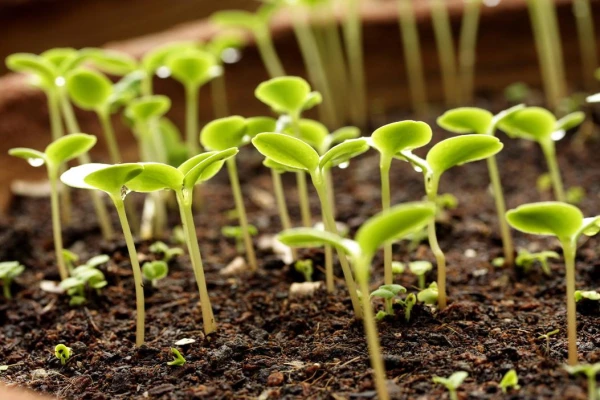
February is the starting month for the future harvest. It is now that the foundation of strong and healthy seedlings is laid. For plants to develop well, it is important to choose the right seeds, prepare the soil, and adhere to optimal sowing times. We discuss which crops to start with and what to pay special attention to.
Key Points:
-
The quality of seeds, properly prepared soil, and light conditions are the main factors for successful February seedlings.
-
In February, crops with a long growing period that require an early start for full development are sown.
How to Choose Quality Seeds?
The success of the future harvest primarily depends on the quality of the seeds. Therefore, careful attention should be paid to their selection. First of all, one should pay attention to the expiration date and appearance. Quality seeds should not have any damage or foreign odors.
To check the seeds, they can be soaked in water — any seeds that float should be removed.
Another method of checking: light and empty seeds are attracted to a charged plastic stick.
Before sowing, it is advisable to soak the seeds in a weak solution of potassium permanganate for 30 minutes for disinfection. After that, they are rinsed with clean water and spread on a damp cloth for germination. This preparation increases germination and protects future plants from diseases.
Preparing Soil for Seedlings
The soil for seedlings should be loose, fertile, and retain moisture well. This provides favorable conditions for the development of the root system. Soil that is too dense or acidic is unsuitable for young plants, hinders nutrient absorption, and slows growth.
The best option is a purchased seedling substrate or a self-prepared mixture of compost, sod soil, and sand. Before planting, it is important to disinfect the soil: heat it in the oven at a temperature of 50–60 degrees or water it with a weak solution of potassium permanganate. To reduce acidity, wood ash or lime flour is added to the soil.
When to Start Growing Seedlings?
In February, it is best to sow late-ripening and slow-growing crops with a long growing period.
Sowing dates depend on climatic conditions: in warmer regions, work can start earlier, while in colder ones — a bit later.
Which Plants to Start With?
For greenhouses in February, sow:
bell peppers; eggplants; early dwarf tomatoes; celery root.
For open ground, suitable crops include:
leeks; early varieties of broccoli; early varieties of cauliflower.
Among the flowers that are advisable to sow in February, the most popular are:
petunia; viola; alysum; portulaca; bellflower; amaranth; cornflower; daisy.
Most vegetables and flowers are sown after February 25, when the daylight hours become longer. However, if there is still not enough natural light, the seedlings may stretch excessively. In this case, special lighting lamps should be used, without placing them too close to the plants.
It is also important to consider the light requirements of different crops:
-
tomatoes require about a 17-hour daylight;
-
eggplants and sweet peppers need about 13 hours.
Fertilization and Hardening
The first fertilization of seedlings is done after the appearance of one or two true leaves, using complex fertilizers.
An excess of nutrients can cause root burns or salt accumulation in the soil, so it is important to strictly follow the recommended dosages.
Before planting in open ground, seedlings need to be hardened, gradually acclimating them to natural conditions. Approximately two weeks before planting, the plants should be taken outdoors for a few hours, gradually increasing the duration of their stay.
We hope that February gardening efforts will be successful. Wishing you a good harvest!