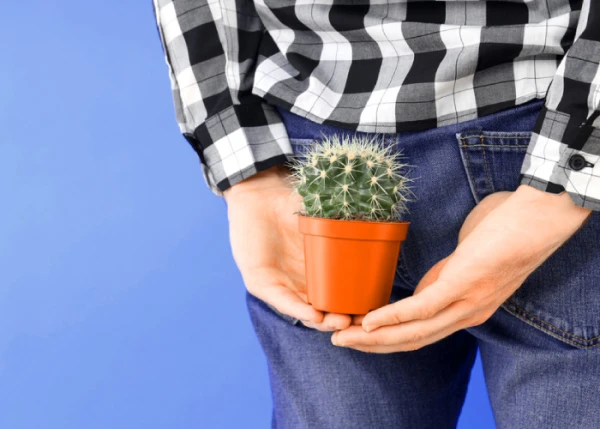
Hemorrhoids are a delicate topic that is rarely discussed openly. Due to embarrassment, many endure pain and discomfort for years, postponing a visit to a specialist. To break the taboo, we gathered the most common and uncomfortable questions about hemorrhoids and asked proctologist Anastasia Travnikova to answer them.
1. When should you really see a proctologist?
The reason for a visit should be itching, burning, pain in the anal area, blood after defecation, a feeling of a foreign body, or protruding nodes. Even if symptoms appear occasionally, this is already a signal: the disease is developing.
2. Is this an age-related problem?
Hemorrhoids are often observed in people aged 35–55, but they can also occur in younger individuals. The main risk factors are sedentary work, low physical activity, chronic constipation, stress, and irregular eating habits. Pregnancy and heavy lifting also increase the likelihood of its development.
3. What happens in the body with hemorrhoids?
Hemorrhoids develop due to a malfunction of the rectal veins. As a result, hemorrhoidal nodes appear—either internal or external—which can cause discomfort, pain, and bleeding.
4. Is an examination by a proctologist painful?
In most cases, the examination is delicate and does not cause pain. The doctor may use anesthetic gels. If it concerns internal hemorrhoids, an anoscopy is performed—an examination using a special instrument.
5. Is surgery always necessary?
No. In the early stages, conservative treatment is often sufficient: medications, topical treatments, and lifestyle adjustments help manage symptoms. Modern approaches allow avoiding surgical intervention if the disease is detected in time.
6. What happens if you don't get treated?
Without therapy, symptoms usually worsen: thrombosis of nodes, frequent bleeding, inflammation, and protrusion with strangulation may occur. Advanced hemorrhoids are more difficult and longer to treat.
7. What modern treatment methods are available?
Today's proctology has not only traditional surgeries but also gentle minimally invasive methods, such as laser technologies, which allow for the removal of nodes without a scalpel, with minimal pain and a short recovery time.
8. What helps prevent hemorrhoids?
Movement is a key factor in prevention. Regular breaks during sedentary work, walking, swimming, and weight control help reduce risk. A diet rich in fiber and water normalizes bowel movements, and limiting spicy foods is also beneficial. People with a hereditary predisposition are advised to have regular check-ups with a proctologist.