When a crack appears in a family with children due to the infidelity of one spouse, it goes beyond male-female relationships. We asked a psychologist to explain how to talk to children to protect their world from total destruction.
Expert - Irina Merkulova, Psychologist
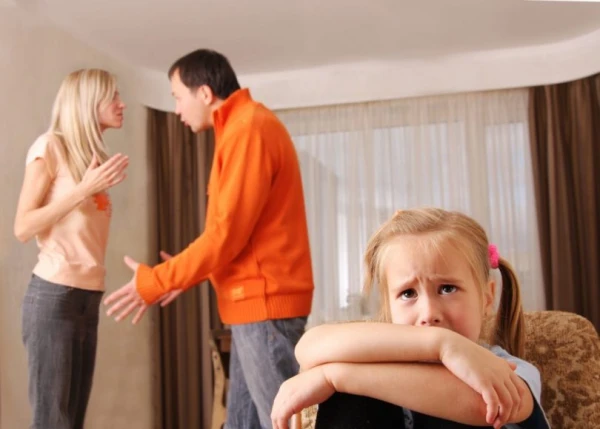
The house has become quiet, as if someone turned off the sound. Only the everyday noises remain — the kettle, the clock, the creaking floorboards. But behind this external silence lives a tremor: betrayal, pain, unanswered questions. And there are those who feel it even without words — the children. They may not know the facts, but they sense everything through body language, breath, intonation.
Infidelity as a Loss of Support
Infidelity not only destroys relationships between adults. It undermines the foundation of trust on which the family stands. For a child, parents are the basis of their inner world. When one parent breaks this invisible law, the child loses their sense of security. Even without knowing the details, they feel that something has gone wrong, that the world has become unstable.
Children often unconsciously take on guilt. The child's inner voice whispers: “I must be somehow to blame for mom's sadness,” “If I were better — dad wouldn’t have left.” This false connection is a trap that can haunt them for a lifetime.
How to Talk When the Pain is Still Fresh
The main thing is not to unload feelings on the child that are too heavy even for adults. The conversation is not about morality, guilt, or revenge. It’s a conversation about stability: “Yes, we are no longer together. But my love for you remains unchanged.”
There is no need to mention infidelity directly. It is important for the child to feel that love for them is not a bargaining chip. If the conversation is filled with bitterness or reproach, if the child is used as an ally in the conflict, their psyche takes on the role of an outsider in a fight. Anxiety, hyper-control, and fear of being abandoned again arise.
Parents' Emotions — A Reflection of the Child
Children do not so much listen as they feel. If anger and hatred live in the house — the child absorbs them, even without understanding the meaning. If there is even a drop of calmness, through it the child learns to believe that life after destruction continues.
Everything that is important to convey: yes, betrayal has happened, it hurts, but it is not the end of trust in the world. If an adult can maintain respect even in a situation of infidelity, the child learns a lesson in maturity: love is not equal to perfection, and relationships are a responsibility, not an eternal celebration.
The Consequences of Silence and Rage
When infidelity remains a secret, an unresolved topic, the child feels the tension and forms their own story — usually scarier than reality. They may see the unfaithful parent as the bad one, and the other as the victim. Or, conversely, they may experience an internal conflict: “If mom hates dad, how can I love them both?”
It is better to speak calmly, not about the reasons, but about the result. “We could not preserve what connected us. Now each lives differently.” These simple words create a space where the child can remain a child, without the role of a judge or savior.
Healing the Family
In a situation of infidelity, it is especially important to restore predictability for the child. Familiar little things — dinner, walks, bedtime conversations — become anchors. They show that love for the child is not disrupted.
For an adult, victory is not revenge, not proof of being right, but maintaining contact. This is what fosters healing. When adults stop playing out the scene of pain and start living honestly, the child feels that the fractured world is becoming whole again.
Infidelity — Not a Period, But a Comma
Yes, it is destruction. But the fracture can become the beginning of growth. Only if we do not allow resentment to control reality. The path to calmness lies not through oblivion, but through understanding: infidelity is not a devaluation of life, but a test of maturity.
It is important for children to see not a victim, but a person who can heal pain without losing their humanity. Then even infidelity ceases to be a shadow, transforming into a lesson of acceptance, responsibility, and a living belief that love is still possible.
Let the new chapter begin not with labels, but with quiet confidence: the family has not disappeared — it has simply become different.