
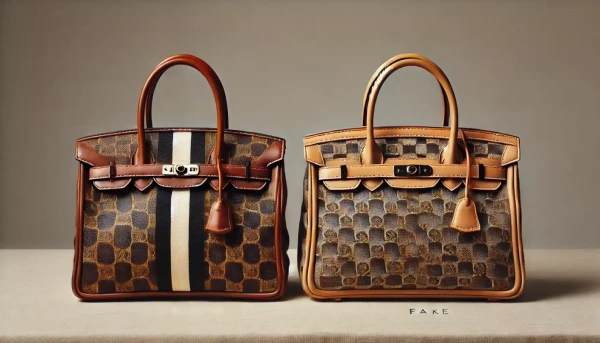
In a world where designer brands compete not only with each other but also with an endless stream of counterfeits, the ability to recognize a genuine luxury item is no longer snobbery but a matter of common sense. Fakes have become sophisticated, and luxury replicas are now often sold as vintage, stylist archives, and showroom samples. But a quality original always has markers: from the smell of leather to the quality of seams, from the structure of the logo to how the hardware behaves. Here are five key principles that really work.
Price — No Longer a Measure of Truth
Just ten years ago, everything was simple: cheap meant fake. This formula no longer works. The counterfeit market has moved to premium production: dense leather, decent hardware, confident packaging, and the price tag almost reaches that of the original.
However, sometimes a genuine item is sold too cheaply — because the gift didn’t fit, because the owner has long forgotten about the bag in the closet, because urgent money is needed (the rich cry too, you know). The only rule: do not trust the price. Neither suspiciously low nor demonstratively high. Always ask for additional photos: stamps, internal stitching, hardware, seams. Online shopping is a game of details. And, if possible, do not miss the opportunity to inspect the item in person.
Carefully Examine Seams, Stitches, Lines
A genuine item can be recognized by its precision. Luxury brands have stitching that resembles an ornament: uniform stitches, no skips, folds, or wavy lines; on counterfeits, seams behave much more freely.
It is especially important to look at the inside — fashion houses pay almost as much attention to the reverse side of the item as to the front. However, copies often save on the parts that the buyer "seemingly won’t look at." If the fabric crinkles, stretches oddly, looks loose, or doesn’t hold its shape — you are not looking at luxury.
Hardware: Metal with Character
Genuine hardware is heavy, with a noble shine, even color, and clear relief. On an original zipper or button, there are no chipped corners, small scratches, or suspiciously light plastic.
Pay special attention to the logos on the hardware. Brands have their own typography: line thickness, letter spacing, engraving depth. Counterfeits most often make mistakes in this complex detail.
Logos, Tags, and Labels
Brands are obsessed with fonts. Each house has its own letter proportions, logo placement, and unique tag shade. For example, Louis Vuitton's "L" and "V" never come too close together, Prada's letters have been elongated in the same proportion for decades, and Dior's letter "O" is always a perfect circle.
A counterfeit may be made well, but the font almost always gives it away: somewhere the letter will be off, somewhere it will be thicker, and somewhere there will be an extra gap. Check the number of tags, the method of attachment, the quality of the fabric, and the accuracy of the text — counterfeits often have errors even in the composition.
Item Passports: Documentary Accuracy is Half of Authenticity
A genuine item always has a history — boxes, dust bags, cards, codes, holograms. Some brands use serial numbers tied to the year and place of production. When buying on vintage platforms or in resale, check the seller: rating, account age, return policy, transaction history. The more transparent this history is, the lower the chance of encountering a fake.















Leave a comment