
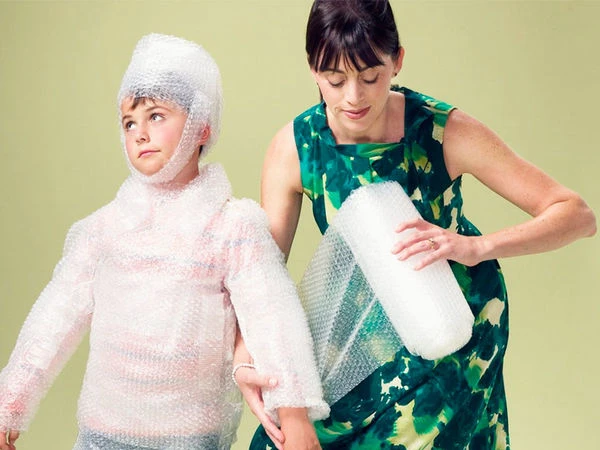
Can you overdo it with care and love? Yes. Moreover, such overprotection can seriously harm your child's development.
Moms and dads often worry about their children's well-being — this is absolutely natural. A good parent wants to be close to their child to comfort, guide, and protect them.
However, sometimes the desire to care and protect goes too far, and "being close" turns into "being everywhere." This is how helicopter parents come into existence.
Psychologists are convinced: this is the case when the best intentions can lead to frightening consequences.
Merging, Not Attachment
"A helicopter parent is a caregiver who is constantly attached to their child — physically, emotionally, mentally, and/or materially," explains clinical psychologist and author Jenny Yip.
There is a scenario where parents control their child "from above." However, helicopter parents take a different path. In this case, mom or dad "sticks" to the child, monitors every aspect of their life, and rushes to intervene at the first signs of trouble or discomfort.
Undoubtedly, it is natural for a parent to feel attached to their child. However, for normal development, a child must explore the world independently and sometimes make mistakes.
If one of the parents is "stuck" to their son or daughter, the chance to become independent will be lost.
Sick Symbiosis
How do helicopter parents harm their children? The fact is that this approach to parenting fosters the formation of unhealthy attachment or symbiosis between children and their caregivers.
As a result, the child does not have enough freedom to make decisions independently, understand themselves, and accumulate life experience.
In some cases, children "stick" in response and ultimately start solving all problems with the help of their parents. They know: mom and dad will definitely save them — why even try to do something on their own? Such a child may find it difficult to physically separate from their parents.
All children go through a stage when they particularly need their parents. Undoubtedly, there is nothing wrong with parental assistance. However, when it becomes the main and only way to cope with difficulties, this is a bad sign.
Yes, helicopter parents may seem very sensitive and involved. They provide safety and warmth. However, if care turns into overprotection, over time, their children will find it difficult to develop independence and cope with challenges.
Instead of learning and making mistakes, children absorb the lesson: "I am safer when someone else manages my life."
As a result, such a child will grow into an immature, insecure adult with a multitude of problems in personal life and career. And unfortunately, mom won't be able to solve them anymore.
Moreover, "helicopter parenting" harms adults as well. Such parents spend all their time and energy living their child's life, leaving no room for their own affairs. This leads to emotional exhaustion.
What to Do
If you suspect that you are overprotective but want to change the situation, start looking for balance. Your task is to maintain warm relationships with your children while encouraging their independence.
"The goal is not to stop caring for the child but to respond to their needs without going beyond what is appropriate for their age," explains psychotherapist Allison McQuaid.
Do not abruptly switch from the "I do everything for you" mode to the "Now you do everything yourself" scenario. Make changes gradually. First, give the child the opportunity to do something independently. Allow them a limited, but still a choice. And be sure to acknowledge progress; praise will serve as additional motivation, writes Huffpost.
If your child encounters a failure, do not rush to help. You can express sympathy and support, give advice, but do not solve all their problems for them. Try not to shield the child from any discomfort. Gradually expand the field for independence.
"Our role as parents is to be a reliable support from which children can explore the world, not an anchor that prevents them from moving forward," summarizes Yip.
















Leave a comment