
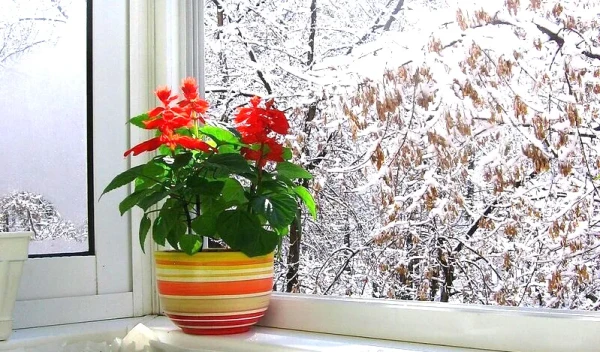
Winter for houseplants is not a time for growth, but a period of survival. There is less light, the air is drier, the watering schedule is disrupted, and the usual summer rules cease to work.
To help green friends survive the cold season without becoming weakened, it is important to adjust care in a timely manner. Gardening expert Albina Volkova shared insights on the specifics and necessary manipulations.
Reassess Watering
In winter, plants consume significantly less water. With shorter daylight hours and slowed growth, excess moisture becomes the main cause of problems — from root rot to fungal diseases. "Watering should be reduced, and one should focus not on a schedule but on the condition of the soil. The top layer should dry out deeper than in summer, especially for plants with dense leaves and rhizomes; this is the main guideline," the specialist asserts.
Maximize Light Exposure
Even shade-tolerant plants feel a sharp lack of light in winter. Pots should be moved closer to windows, heavy curtains should be removed from windowsills, and glass should be regularly wiped clean. It is important to remember that weak winter light is not the same as summer shade. With a significant lack of lighting, growth slows down, leaves become pale and elongated. If this is still insufficient, consider installing additional lamps.
Increase Humidity
Central heating is the main winter stressor for plants. Dry air leads to the drying out of leaf tips, weakened immunity, and the appearance of pests. "The simplest way is to place containers of water nearby or use a humidifier. Regular spraying is not suitable for all plants, so it is important to consider the type and structure of the leaves," the gardener advises.
Temporarily Refrain from Fertilizing
During the winter period, most plants do not need fertilizers. Fertilizing stimulates growth, which, in the absence of light, results in weak and elongated plants. Exceptions are species with active winter blooming, but even in this case, dosages should be minimal. Winter is a time of rest, not stimulation.
Check Condition and Remove Excess
In winter, it is useful to conduct an audit. Remove dry and damaged leaves, inspect plants for pests, check drainage, and ensure pots are stable. Such minor actions help plants conserve energy for recovery and calmly survive until spring. Overall, the fewer abrupt interventions and artificial stimuli, the easier plants endure the cold season, and the more actively they start with the arrival of light and warmth.














Leave a comment