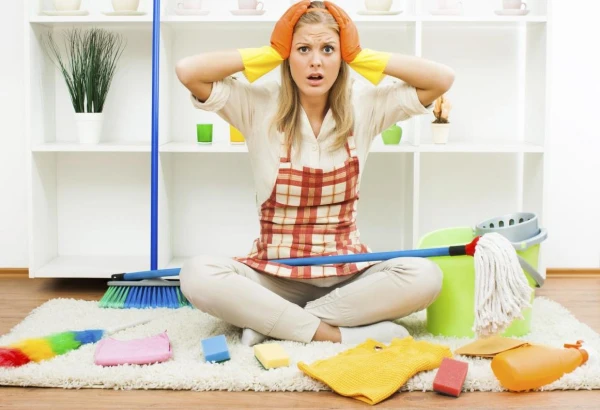
It's nice when everything in the house shines. But for perfect order, women sometimes pay the most important price in life.
Scientists from the University of Bergen (Norway) have analyzed the health status of 6,200 people over two decades. They were interested in how regular cleaning with detergents affects the lungs. The researchers paid particular attention to those who were under 35 years old at the beginning of the observations.
Research Results
The scientists' hypothesis was confirmed: constant contact with aggressive household chemicals causes chronic irritation of the mucous membranes. Over time, this leads to the degradation of the respiratory organs.
To assess the dynamics, the researchers measured two parameters: the maximum volume of air exhaled in the first second (which indicates airway patency) and the total volume of air that a person can exhale with effort (which reflects lung capacity).
The results were alarming. Women who systematically engaged in house cleaning had significantly faster declines in lung function. The situation was worst for professional cleaners.
"When you realize that micro-particles of substances designed for cleaning surfaces, not for inhalation, enter the lungs, the results no longer seem surprising," says lead scientist Eystein Svanes.
The study also revealed another pattern: asthma was diagnosed significantly more often in women who regularly used cleaning agents—both at home and at work. Notably, no similar negative dynamics were recorded in male participants. The scientists believe that the body's susceptibility may differ by gender.
The pursuit of sterility can subtly undermine health. "Long-term observations show that regular use of household chemicals for cleaning causes significant harm to the respiratory system," notes Eystein Svanes. "In most cases, these agents can be avoided. For effective cleaning, often just microfiber cloths and plain water are sufficient."
How to Minimize Harm
Many cleaning agents contain aggressive components: surfactants, acids, alkalis, and sometimes—chloroform, phthalates, or synthetic fragrances that can negatively affect health. During cleaning, follow safety rules:
-
open windows before starting cleaning and ventilate afterward;
-
use protective gear: rubber gloves will protect your skin, and a respirator will protect your lungs from volatile compounds;
-
do not mix substances: reactions between different components (for example, chlorine and vinegar) can lead to the release of toxic gases;
-
thoroughly rinse off chemical residues;
-
do not lean over treated surfaces, do not inhale concentrated vapors;
-
use the product strictly for its intended purpose, follow dosage and expiration dates;
-
if you feel unwell, immediately stop cleaning and go outside. If necessary, consult a doctor.