
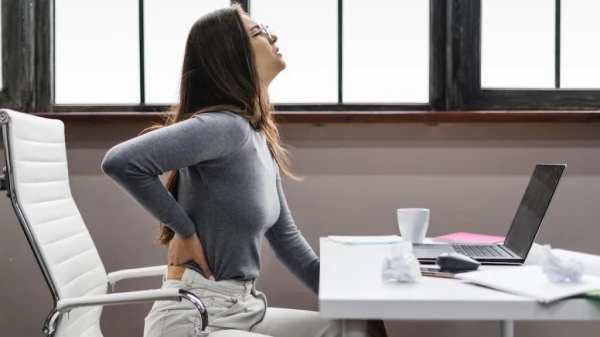
The harm of a "sedentary" lifestyle has been talked about for a long time, and not without reason. In the U.S., it has even been dubbed the "new smoking," drawing parallels with the extensive list of diseases that can literally be "earned" this way. But this story can have a happy ending! Together with doctor Olga Chizhevskaya, we prepared a guide to save the musculoskeletal system from office hypodynamia.
It’s paradoxical, but in a sitting position, our back experiences more tension than during walking. Evolution, which gave us the ability to walk upright, provided us with an ideal shock absorber – the spine, which has natural S-shaped curves. However, by taking a sitting position, we turn the S into a C, resulting in the main weight of the body resting on the spinal column. This leads to overload of the musculoskeletal corset, pain sensations, neuralgias, and even migraine attacks.
Rescue Plan
If you have a sedentary job, it’s not the end of the world. Doctors say it’s important to monitor how much you move throughout the day. In addition to regular workouts in your free time, it’s important to do everything possible to pay more attention to micro-movements during the workday. Here are a few simple but effective tips:
-
Make it a rule to get up every 1.5–2 hours. Stand up, walk around, stretch your feet, and sit back down. Even 90 seconds of movement activates the muscle-venous pump.
-
Take a stroll down the hallway during phone calls.
-
Even if there’s an elevator in the building, take the stairs.
-
If the dress code allows, do small exercises during the day, such as squats or small jumps in place.
-
Another way to relieve static tension and stretch your muscles a bit is to roll your foot barefoot under the table with a special rubber massage ball with spikes.
-
Have lunch and drink coffee at a high bar counter if possible.
-
Consider getting a fitness tracker that will monitor the number of steps you take and remind you to move.
According to data published in the British Journal of Sports Medicine, during an eight-hour workday, at least two hours should be spent standing. It’s optimal to break this time into several intervals.
Workplace Ergonomics: A Hidden Cause of Pain
Check if your office is set up according to ergonomic standards. Often, due to a lack of properly organized workspace, we inadvertently stretch our necks toward the screen. Such a posture significantly increases the load on the spine. Specialists provide a vivid comparison: imagine holding a bowling ball in your hand. When your arm is hanging down by your side, it’s almost relaxed, but as soon as you extend the ball forward, your muscles require significant effort to hold it. Now project this image onto our bodies: when we reach for the monitor, our head, like that bowling ball (the weight of which, by the way, is comparable to the weight of the head), exerts excessive pressure on the spine. For self-monitoring, doctors recommend performing a simple movement: pull in your chin. This maneuver helps to fix the head and neck in the correct, vertical position.
Office Shoes: Why Footwear Becomes an Enemy
The foot is a complex biomechanical structure made up of 26 bones, dozens of joints, and ligaments that must work dynamically. When we sit for hours, the muscles and ligaments lose tone, and the arches sag. Add to this inappropriate footwear, and we have the perfect storm for future problems.
How do office shoes ruin our lives? Every centimeter of heel increases the load on the front part of the foot by 15–20%. With a 7 cm heel, up to 75% of body weight is on the toes. The situation worsens if you prefer classic pointed-toe pumps. Toes squeezed into an unnatural position gradually become deformed, which can lead to the formation of a treacherous “bunion” (Hallux Valgus). But the problems don’t end there: painful corns and rough calluses appear, inflammatory processes occur in the joints, and the result is exhausting chronic pain that persists even after the shoes are removed.
Fashionable ballet flats are also not a solution. The thin sole with zero cushioning does not provide adequate support for the foot.
If the office dress code does not allow for sneakers, a podiatrist may recommend wearing custom orthopedic insoles in addition to warm-ups and exercises. Here’s how “smart” insoles work in an office setting:
Create the right foundation. They compensate for the harm caused by the flat sole of ballet flats and redistribute pressure in heeled shoes, relieving the load from the front part of the foot and the spine.
Activate microcirculation. Even when you sit, the insoles support the natural arches of the foot. This improves blood flow and prevents numbness, swelling, and a feeling of heaviness in the legs by the end of the day.
Work unnoticed. This is passive prevention that requires no effort. Just place the insoles in your office shoes – and they will work for you for all 8 hours while you focus on your tasks.














Leave a comment