
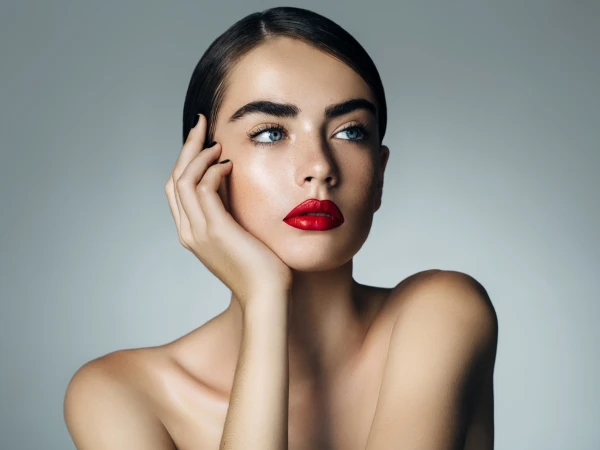
Lookism, or discrimination based on appearance, is certainly not acceptable. We should not make judgments about a person and their abilities based solely on their appearance. Especially since, as we know, it is not something one chooses.
But can we really ignore external features and focus solely on internal qualities? After all, there is a concept known as pretty privilege. Within this framework, it is believed that attractive people receive more opportunities and bonuses. For example, a good-looking person might be allowed to enter a bar first, even if there is a line outside, and might even be treated to something on the house. This suggests that appearance does indeed matter. Or does it? Let's explore this with the help of science.
Do Beautiful People Have Privileges
Apparently, yes. Research shows that externally attractive people do find it somewhat easier to navigate life — it's as if they start not from the starting line, but already a step ahead.
For instance, a student's appearance can influence their grades. A 2017 study found that in online classes, attractive female students received lower grades than in face-to-face classes. A 2022 study confirmed this result: the grades of good-looking girls dropped when they were forced to switch to online learning due to the coronavirus.
People with more attractive appearances are also more likely to get jobs, promotions, or high salaries. This applies not only to women but also to men.
Appearance also matters for romantic relationships — this is somewhat obvious. In one survey, 92% of men and 84% of women said that their partner should be attractive. However, this condition is necessary but not sufficient — external attractiveness must be accompanied by internal virtues.
Even criminals, if they are attractive, have a chance of receiving a lighter sentence.
Why Do Beautiful People Receive Privileges
Scientists offer several explanations that do not contradict each other but rather reinforce one another.
The first comes from external factors and is based on stereotypical perceptions. The belief that beauty is good leads to the perception that externally attractive people are also more pleasant internally. Observers believe that a good-looking person deserves more trust and possesses higher moral qualities. Even in fairy tales, the main character is usually a beauty, while her wicked sister is not.
On the other hand, because beautiful people find many things easier, they grow up to be more self-confident, open, and sociable, as well as convinced that they deserve better treatment. All of this helps them to pursue their goals more assertively.
What Features Make People Attractive
They say beauty is in the eye of the beholder, so anyone can be attractive, as all people are different. However, there are also objective criteria that make a person beautiful to others.
Symmetry of Features
But not absolute symmetry. Such perfection is quite rare in nature, so complete facial symmetry creates an eerie effect. However, in general, symmetry is perceived as a sign of health. This is reassuring: a person with symmetrical facial features is seen as safer.
Typicality of Features
Here, beauty is indeed in the eye of the beholder, because people consider features that are average and typical for a specific society to be attractive. Bright, flashy, unfamiliar beauty can be off-putting; the familiar is much more endearing. This may be related to the idea that typicality is perceived as an adaptation for survival in specific conditions, while an outsider simply does not fit in.
Expression of Sexual Dimorphism
On average, people find men with masculine, rugged facial features to be beautiful. This is perceived as an indicator of high testosterone levels: it means that a man can protect himself and others in case of danger.
In women, large eyes, smooth skin with a blush are valued as indicators that she is still young enough to bear children, and high cheekbones are seen as proof that she is no longer a child.
What Problems Can Be Associated with Beauty
External attractiveness brings not only privileges but also obstacles, which are similarly based on stereotypes.
For example, attractive people may be perceived as vain. They may also feel lonely because people often enter into relationships with them (not just romantic ones) for the wrong reasons, based solely on appearance.
Moreover, beauty privileges can create a distorted dynamic in relationships, leading to resentment, dissatisfaction, contempt, and even hostility from colleagues, classmates, and others around them. This, in turn, negatively impacts mental health.
Additionally, beautiful people see how much attention is paid to their appearance, which can lead to unhealthy relationships with their bodies. Some may begin to feel that their attractiveness is all they have, so age-related or other changes can also lead to psychological issues.







Leave a comment