
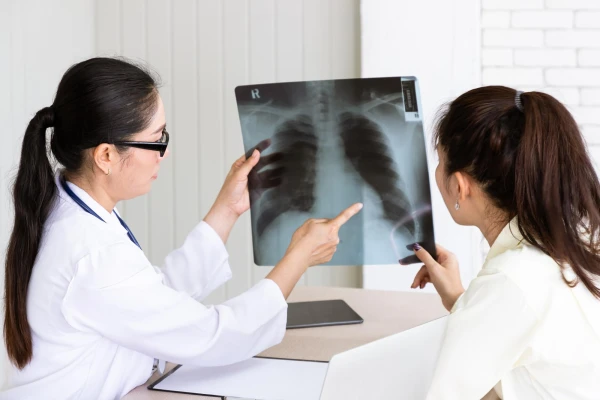
Smoking is the main risk factor for lung cancer, but it is not the only one. Harmful production, the environment, radiation, heredity, as well as infections and inflammatory processes, including pneumonia, bronchitis, and asthma—all of these increase the likelihood of developing lung cancer.
Prognoses depend on the stage. If at the first stage the 5-year survival rate is 80%, then at the third stage only 15% of patients will live five years or more, and at the fourth stage, only 5% will remain.
However, there is a chance that soon people will be able to acquire immunity against lung cancer. The first vaccine in the world for the prevention of this type of cancer has been developed in the United Kingdom.
"Less than 10% of people with lung cancer survive the disease for 10 years or more. But this can change if we successfully fight lung cancer at the earliest stages," comments one of the researchers, Professor Mariam Jamal-Hanjani from University College London.
How the Lung Cancer Vaccine Works
According to scientists, lung cancer cells differ from normal ones: their DNA has special proteins that are formed as a result of mutations. Even at the very early stage of cancer, when it is just beginning to develop, these proteins appear on the surface of the cells.
Then the vaccine comes into play. It contains a series of genetic instructions that teach the immune system to recognize the signaling proteins on the surface of mutated lung cells. The vaccine's task is to teach the immune system to recognize damaged cells and kill them before they turn into cancerous ones.
But will the vaccine help those who already have cancer? As the scientists explained, the drug will primarily be tested on patients with early-stage lung cancer. These individuals have already had their tumors removed, but they are at high risk of recurrence.
Clinical trials will begin in the summer of 2026. It will take four years to assess the safety and efficacy of the drug.
"We will conduct the most rigorous scientific trials of the vaccine and take an important first step toward a world where people will live longer, better, and free from the fear of lung cancer," the researchers assure. "If the trials yield promising results, we will proceed to large-scale trials among people at risk of cancer."
55-year-old British man Graham Dickie is one of those helping scientists prepare for the clinical study. Graham was only 42 years old when he learned of his diagnosis: stage two cancer. The man had never smoked, and this was a real shock for him.
In four years, the cancer progressed to stage four. Graham had part of his left lung removed and underwent more than 80 courses of chemotherapy. But when it became clear that the treatment was not helping, the man tried a new drug that he is still taking.
"I am proof that research saves lives. Thanks to it, I have been able to live many more happy years with my family," Graham admitted.











Leave a comment