
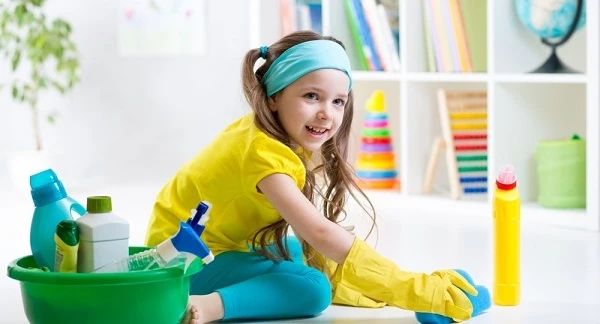
What is your child busy with on school days? Completing homework, sports activities, socializing with peers — that’s a given. But what about household tasks? Today, many "advanced" parents claim that taking out the trash, scrubbing floors, and peeling potatoes are not jobs for children. However, this approach has already shown its side effects.
If you don’t want to raise a soft-handed child who thinks that cleaning should be done by cleaning staff and cooking soup is the job of a personal chef, then it’s time to change your strategy. Clinical psychologist Daria Zhivina explained which tasks can and should be assigned to students.
Studying is important, but the floor won’t clean itself
"Labor is a noble and important matter for the upbringing of future generations. However, it’s important to remember that attitudes toward labor and the world around us are constantly changing. One cannot compare the upbringing of a child 150 or even 20 years ago with the upbringing of today’s children. The fact is that children used to have, to some extent, even more free time and more opportunities to engage in household chores," emphasizes the expert.
However, it is not advisable to completely relieve your offspring of household responsibilities. If parents instill in their child from a young age that their main task is to study successfully, they will ignore household chores. Mom and dad can certainly manage cleaning and cooking. However, in adulthood, this neglect will inevitably affect the quality of life. The grown child will not only be unable to hammer a nail but also struggle to wash a frying pan, leading to self-frustration and possibly periods of depression due to accumulated household issues.
The Sooner, the Better
Daria Zhivina recommends assigning mini-tasks to children as early as two or three years old. "At this age, children still have a clear desire to be like adults and try to do what mom, dad, or older siblings do," says the specialist. Ask the child to clean and sort their toys independently, and to take dirty laundry to the washing machine. It’s also acceptable to give them a broom or a lightweight vacuum cleaner, or even a floor cloth. As they grow older, the range of tasks can be expanded and made more complex. "If you missed this moment and decided to start labor education at school age, you will likely encounter resistance. By the age of seven, the child undergoes a certain separation, and their model of relationships at home has already formed," continues the psychologist. Therefore, it’s important not to push too hard. We should act systematically, through conversations rather than shouting and attacks.
The expert does not recommend paying for household chores. Everyone in the household lives on equal terms, contributing to the household management as much as they can. Therefore, it would be unfair if mom, who bears the brunt of the chores, does them for free while the child receives 500 rubles for taking out the trash. Ideally, parents should help each other in household matters. It’s important that the child, especially if it’s a boy, does not develop the notion that cleaning and baking pies are solely women’s tasks. Later, he will apply this scheme in his own family.
Labor is Not a Punishment
And one more significant nuance. If you have a dishwasher in your apartment, do not force the child to wash their dishes separately by hand. The same goes for a robot vacuum cleaner that diligently navigates the children’s room while the teenager struggles with a broom and dustpan. Such tasks are perceived as punishment.
"It’s very important not to scold the child, even if they do something wrong, and not to redo it, especially in their presence. When the child is doing it, try to guide and help them without excessive criticism. Any labor should be integrated into the child’s perception of life as something taken for granted," concludes Daria Zhivina.












Leave a comment