
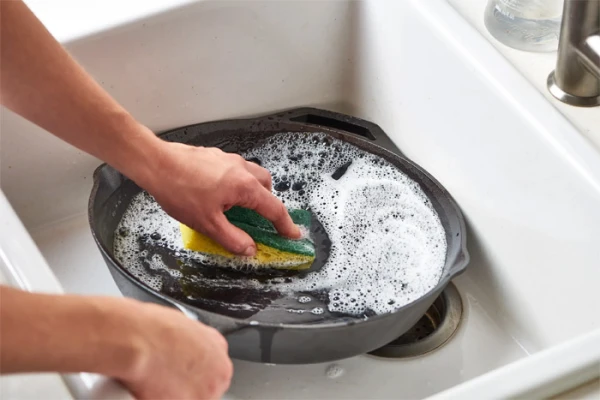
Burnt food bits, scorch marks, grease splatters, and grime can accumulate on the bottoms of pans. There are many different ways to clean the bottoms of pans—choose one that is suitable for the material of your cookware. Here are four cleaning methods to try, from the most common to the less popular.
Baking Soda
Baking soda is a mild abrasive that works well for all types of pans, including stainless steel pans, cast iron skillets, ceramic pans, and even the exterior of non-stick pans.
Be careful not to apply baking soda to a non-stick surface, as it can damage the coating.
To clean pans this way, mix three parts baking soda with one part warm water to form a paste. Spread the paste over the bottom of the pan and let it sit for ten to twenty minutes. Then, using a non-abrasive brush, toothbrush, or sponge, scrub the baking soda, ideally removing any baked-on grease. To enhance the effectiveness of the baking soda, add a bit of dish soap to the paste or sprinkle some white vinegar while washing the pan.
Salt for Cast Iron and Copper
Salt is a popular cleaning method for cast iron and copper pans, although it is also suitable for stainless steel. For this method, sprinkle coarse salt over the bottom of the pan, then use a sponge with soft bristles or a scrubbing brush to wipe away the salt along with food residues.
For more effective cleaning, add some baking soda to the salt, then spray with vinegar on top, and let it sit for ten minutes before proceeding with the cleaning.
Acid for Cleaning Copper and Stainless Steel
To clean copper, ceramic, or stainless steel pots, you can use a mild acid such as lemon juice, lime juice, white vinegar, or even tomato paste or ketchup to remove stubborn stains and grease. To use acid for cleaning a burnt pot, soak the bottom of the pot in the acid for ten minutes. Then, using a non-abrasive cleaning sponge, rub the acid into the stains and remove them.
Professional Cleaners
There are many professional cleaning products that can help clean the bottom of a pan. If the cleaning methods you are using do not help remove burnt grease and soot, look for a cleaner containing oxalic acid and follow the instructions on the packaging. Do not use steel wool, oven cleaners, or other harsh chemicals that may damage the pan.
Helpful Tips
The best way to keep your pan clean is to take care of it before dirt starts to accumulate.
Keep the Stove Clean
Before you start cooking, make sure there are no food or grease residues on the stove—if the stove is dirty, these residues can get onto the bottom of the pot and quickly dirty it.
Properly Grease the Pan Before Cooking
To keep the interior surface of the pan clean, grease it before cooking to create a non-stick surface and prevent food from sticking to the pan.
Clean Immediately After Cooking
If food residues remain in your pan for a long time after cooking or stick to the outside, they will be much harder to remove. Instead, clean the pan right after it cools down, using hot water and dish soap.
Wait for your pan to cool before adding cold water for cleaning, as thermal shock can warp the shape of a hot pan.
Wipe Thoroughly with a Towel
Water residues can cause hard water stains or rust, so immediately after washing, wipe the pan with a clean microfiber towel or kitchen towel. For drying cast iron pans and other greasy cookware, you can use a cloth or paper towel. Learn how to clean a cast iron skillet.
Store in a Clean, Dry Place
Store the pan in a dry and clean place, such as a cupboard. Keep frequently used pans on a storage board or hanging shelf, but do not store pots and pans on the stove where they can get dirty from grease and food residues.















Leave a comment