
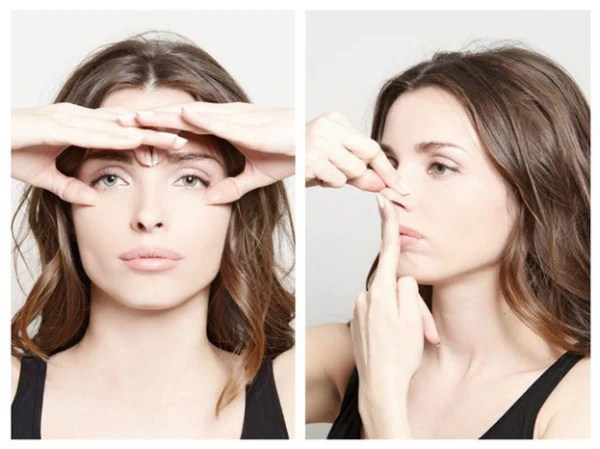
We all want to remain young and beautiful for as long as possible and enjoy our reflection in the mirror. The secret to the popularity of facial gymnastics (face fitness, face building) is clear. Trainers promise to tighten the jawline, reduce wrinkles, and achieve glowing skin without visits to plastic surgeons, fillers, and expensive cosmetic procedures.
Just fifteen minutes a day dedicated to performing certain exercises — and the result, as they say, is visible. How safe is this method, who is it suitable for, and is there any real benefit from it? We discussed this with cosmetologist and dermatologist Oksana Balanova.
Face Yoga: Beautiful Theory
The set of exercises for the facial muscles was invented by plastic surgeon Reinhard Benz from Germany back in 1930. He was inspired to create the technique by 40-year-old ballerina Eva Hoffman, whose body was in excellent physical shape, but her facial skin had lost its freshness. Later, many different methods and practices emerged.
Proponents of face fitness play on women's main fears: pain during injections, high costs of procedures, lack of understanding of how they work, and unpredictable results from plastic surgeries. On social media, face fitness is presented as a safe way to tighten the face and maintain youth. Bloggers and trainers demonstrate exercises that, according to them, strengthen muscles, improve blood circulation, and shape the jawline. The videos are usually edited in such a way that within minutes a person begins to look more vibrant and toned.
"However, the reality is harsh. The muscles of the face are structured differently than the muscles of the body. They are already in constant use: we smile, squint, talk, express emotions, and this constant activity creates a load in itself. Wrinkles often appear not due to muscle weakness, but rather due to their excessive activity. That’s why in such cases, additional exercises do not solve the problem, but rather reinforce it," notes Oksana Balanova.
Limitations of the Method
According to the expert, although face yoga can improve microcirculation, relieve tension in the jaw area, and provide a feeling of tightness, it should not be regarded as a universal and sole tool. It is not suitable for everyone and has its risks.
"For people with active facial expressions, bruxism, or a tendency to spasms, the exercises often exacerbate asymmetry or lead to deeper wrinkles," says Oksana Balanova. The method is particularly dangerous for those with the so-called "fine wrinkled" type of aging.
The scientific basis is also currently limited. There are individual studies that record participants' positive perceptions of their appearance after a course of exercises, but the samples are small, the observation periods are short, and the results are mostly subjective. The author of this article practiced the method for five years, participating in a popular online course.
From Personal Experience
My fascination with facial gymnastics occurred during the pandemic when everyone was in quarantine and various training sessions were at their peak popularity. I must say, I have always been afraid of injections, as well as unpleasant consequences like bruises and hematomas. Enthralled by the idea and having purchased an online course, I began to regularly practice face fitness. The positive aspects I would like to highlight include:
-
improved posture (there were exercises for the neck and posture),
-
the shape of my face remained tight,
-
puffiness that I had occasionally observed disappeared,
-
my complexion improved,
-
overall, I felt a pleasant sense of tightness.
But over time, I began to notice deepening wrinkles on my forehead — and now I only do exercises for muscle relaxation. Nevertheless, my skin continues to lose tone, and the shape of my face has started to sag a bit. In general, I am considering that cosmetic procedures may still be necessary.
Face Yoga as a Ritual, Not a Panacea
"Face fitness can be viewed as an additional element of self-care. It helps to relax, feel in control of the body and face, and create a sense of internal work. For some, it is a way to switch gears, spend time on oneself, and reduce stress levels. However, it is important to remember: its capabilities are limited," says our expert.
Face yoga is not suitable for people with pronounced facial expressions and a tendency to spasms. It is definitely not an alternative to medical procedures and does not replace the work of a cosmetologist.
Where Content Meets Result
Face fitness is a beautiful story packaged for social media. It is an aesthetic process that is pleasant to watch and try, but in reality, it provides more of an emotional effect than a sustainable medical result.
"Face yoga can be beneficial as a gentle practice: improving microcirculation, relieving tension, providing a sense of freshness, but its effectiveness in combating age-related changes is limited, and in some cases, it can exacerbate the problem," believes the cosmetologist.
If your goal is to maintain natural beauty and skin health, it is important to act comprehensively. A healthy lifestyle, regular physical activity, a proper sleep schedule, and a balanced diet will help you stay fit and look younger. As for face fitness, approach the method with caution. Before performing exercises, consult a specialist and remember that "magic gymnastics" is not a panacea.















Leave a comment