
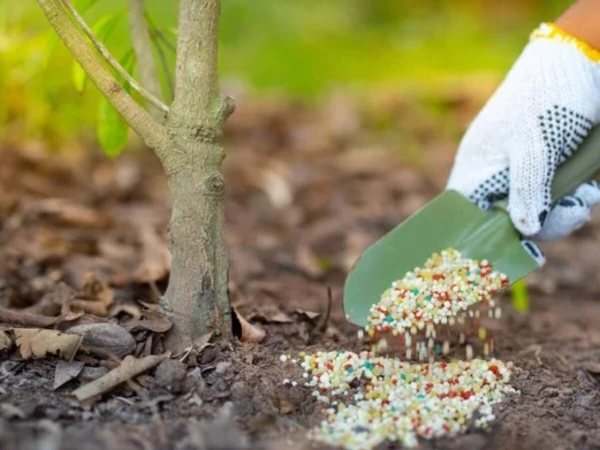
Every summer, our gardens generously reward us with vegetables and fruits; however, with each harvest, the soil loses many beneficial elements. If the replenishment of these substances is ignored, the soil will become poorer, and the fruits will grow worse. To ensure that the next season brings a good harvest, the soil needs to be properly fertilized before wintering. Here’s how and what to do.
Why Autumn
Mid-autumn is the best time for the main fertilization of the garden. When it rains and the first snow melts, the nutrients added gradually enter the soil. Mineral elements dissolve slowly, and organic matter is converted into forms available to plants thanks to bacteria.
At this time of year, it is best to add potassium and phosphorus fertilizers to the soil, as well as lime if the soil is acidic. However, anything containing nitrogen is better left for spring, as it is quickly washed away by rain and melting snow.
When choosing fertilizers, consider the composition of your soil. For example, heavy clay soils require more calcium and less nitrogen, while light sandy soils respond well to humus and retain potassium for a long time. It is important to check the soil acidity before applying fertilizers.
What to Apply to the Soil in Autumn
Potassium and phosphorus are the most important components of autumn fertilizers. These elements strengthen plant immunity, help them better withstand frost and moisture deficiency, and improve fruit quality. The main advantage of applying these minerals in autumn is that they are practically not leached from the soil and remain there for a long time.
Potassium Fertilizers
Potassium increases plant resistance to diseases and frost, as well as improves fruit quality.
-
Potassium sulfate: an excellent chlorine-free fertilizer containing about half of pure potassium. It dissolves easily and is convenient to use — just add 20–25 grams per square meter of soil.
-
Potassium-magnesium sulfate (kalimagnesia): combines potassium and magnesium, beneficial for improving soil condition, especially in light sandy soils. The application rate is about 15–20 grams per square meter.
-
Monoammonium phosphate: a quick helper for roots, containing a lot of potassium and phosphorus at the same time. It is great for watering fruit trees and bushes: dissolve 10 grams of the product in a bucket of water, using one to one and a half liters of the solution per square meter.
Phosphorus Fertilizers
Phosphorus is necessary for the development of the root system, flowering, and increasing plant endurance in winter. However, it should not be combined with lime or ash.
-
Simple and double superphosphate: classic phosphorus fertilizers, universal helpers in all areas. Regular superphosphate is added at a rate of 40–60 grams per square meter, while the amount of double is halved.
-
Phosphorite flour: a natural fertilizer rich in calcium, magnesium, and trace elements. Despite its low absorption rate by plants, it becomes available over time and provides nutrition for many years. It is suitable for areas with increased acidity — peat, sand, and loam. About 100–150 grams per square meter is used.
Organic Fertilizers
These are natural substances that improve soil quality and enrich it with beneficial components. They work gently and for a long time, slowly releasing valuable substances to plants. However, organic matter should be applied carefully and in a timely manner.
-
Manure: used to improve soil structure and replenish its minerals.
-
Compost: created by processing plant residues and food waste. After two to three years, compost is ready for use. It is rich in nitrogen, phosphorus, and potassium.
-
Peat: increases the soil's ability to retain moisture and allow oxygen to pass through. It is useful for covering the soil around plants.
-
Wood ash: a source of potassium and calcium that increases plant resistance to low temperatures. Ash is also beneficial for its micro and macro elements.
-
Green manures: special plants (such as legumes, rye, mustard) grown specifically for subsequent incorporation into the soil. Green manures improve the structure and chemical composition of the soil and eliminate harmful insects.
Nitrogen Fertilizers
Nitrogen is best applied in spring, as it is easily washed out of the soil. In autumn, a small amount of fertilizers can be used if the soil is very depleted. It is important to combine it with phosphorus and potassium.
















Leave a comment