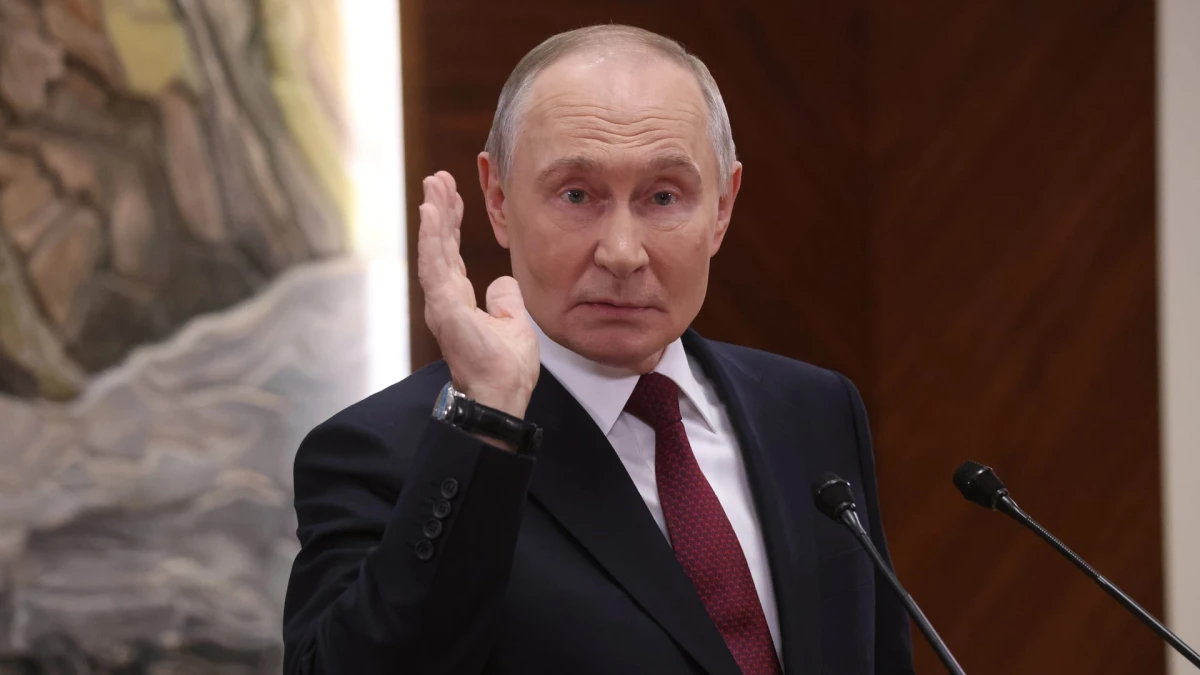
Russian President Vladimir Putin's interest in longevity and combating aging has turned into a state scientific priority in the Russian Federation with funding of about $26 billion. This is reported by The Wall Street Journal.
This concerns a large-scale state program "New Health Preservation Technologies," launched in 2024, aimed at developing technologies for extending life and reducing mortality. Russian officials claim that by 2030, the program should "save" 175,000 lives.
At the center of the program are several directions. These include gene therapy aimed at slowing down cell aging, 3D bioprinting of tissues and potentially organs, xenotransplantation – growing organs using miniature pigs, cryotechnology, and other anti-aging research methods.
The WSJ links this topic to Putin's long-standing personal interest in health and longevity. An example is given of a dialogue between Putin and Chinese President Xi Jinping, in which they discuss the possibility of living to 150 years.
Russian researchers are already reporting successes – for example, bioprinting individual tissues, but many results lack broad international verification as Russian science has become more isolated from the West.
The WSJ notes that despite the massive investments, the average life expectancy for men in Russia remains relatively low – about 68 years. This is significantly less than in the U.S. and Western European countries.