
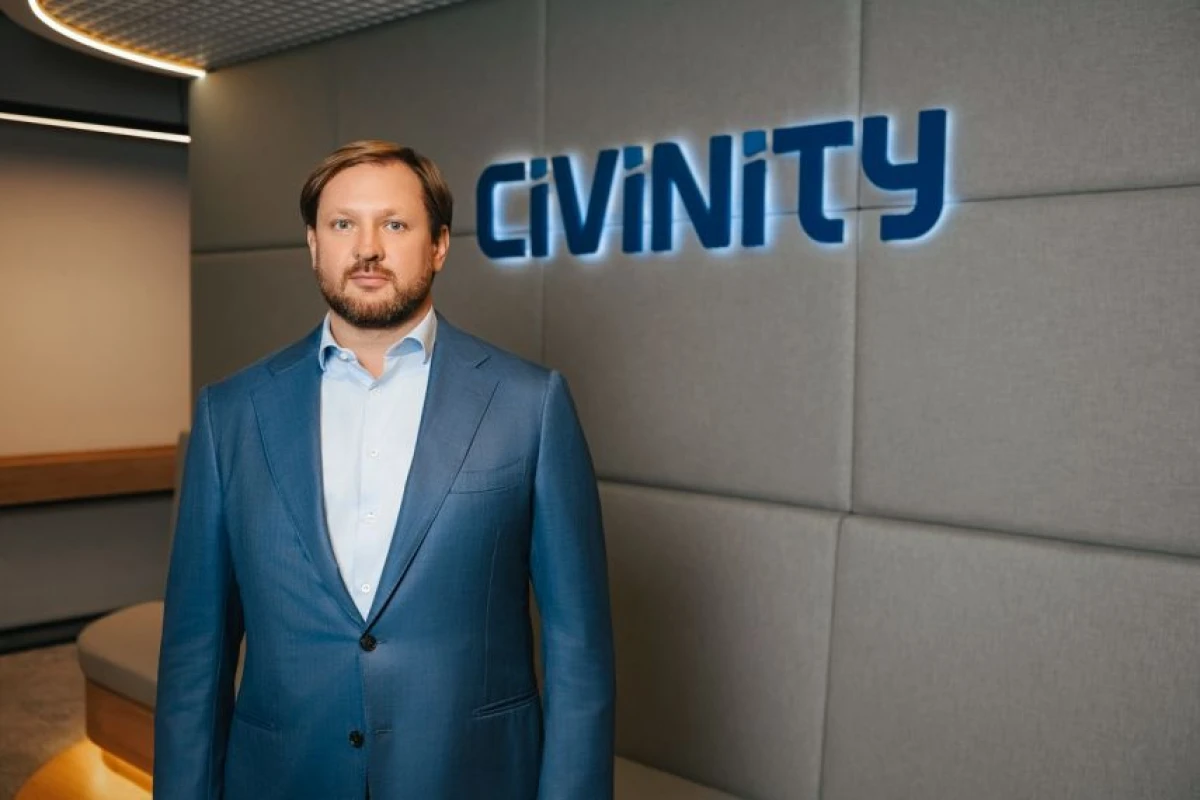
With over 1,800 employees in Lithuania, Latvia, and the UK, Civinity is one of the largest building service groups in the Baltic countries.
Deyvidas Jacks, the founder of Civinity and one of the developers of the PropTech ecosystem (real estate technologies) in the Baltic countries, spoke about the future of building management, reports The Baltic Times.
— Future homes will undoubtedly become smarter. But will this really mean greater comfort for people or merely greater control and dependence on housing systems and administrators?
— I think the main principle here is very simple: technology should serve people. In other areas, there can still be a debate about whether technology gives people more control or, on the contrary, takes it away, but in the realm of buildings, the answer is quite obvious. Building management technologies are created so that people do not have to constantly monitor and solve complex technical issues on their own.
For example, if a system monitors the condition of a building's engineering systems in real-time and assesses risks, it can react instantly — for instance, automatically shutting off the water supply immediately after detecting a leak. A person would notice such a problem much later.
The same applies to energy consumption, heating, and building maintenance. The homes of the future will optimize resources, reduce waste, and eliminate problems before residents even notice them. People will no longer have to deal with complex systems — just as most of us today do not need to understand how the internet or the power grid works.
Therefore, both simple and complex technologies in the building sector are created not to take control away from people, but to help manage processes more efficiently than a person can physically do on their own.
— Is it possible that by 2100, property managers will no longer be needed? Will they be replaced by AI platforms, algorithms, and robots?
— I think technology will take on many functions by 2100, but that does not mean the disappearance of managers. Rather, their role will change dramatically.
Buildings are one of the most complex parts of urban infrastructure, as they combine physics, engineering, energy, technology, and human behavior. Many failures will be resolved before people even notice them, and robots will take on a significant portion of the physical work.
But even in such a world, important questions will remain: who creates and maintains these systems, who ensures their safety, who resolves non-standard situations, who communicates with clients, and who is responsible if something stops working?
— Let’s imagine the future: what will an ordinary house look like in 2100? Will everyday problems like burnt-out light bulbs, clogged sewage, or delays in maintenance become relics of the past because AI and robots will resolve failures before they occur?
— I think houses in 2100 will resemble living systems much more than modern buildings. A significant part of the infrastructure will operate almost seamlessly — buildings will monitor their own condition, predict failures, and resolve certain issues before people notice them.
Therefore, problems like burnt-out bulbs, water leaks, or clogged sewage will likely become much rarer. Systems will probably be able to detect many such situations in advance, automatically order repairs, or even initiate solutions on their own. A significant portion of maintenance and environmental management may be performed by robots.
However, I do not think that "perfect" buildings will emerge where nothing ever breaks. The more technology there is, the more complex the systems themselves become. Therefore, the main task of the future will be not only to prevent failures but also to manage extremely complex technological infrastructure and ensure its safety.












Leave a comment