
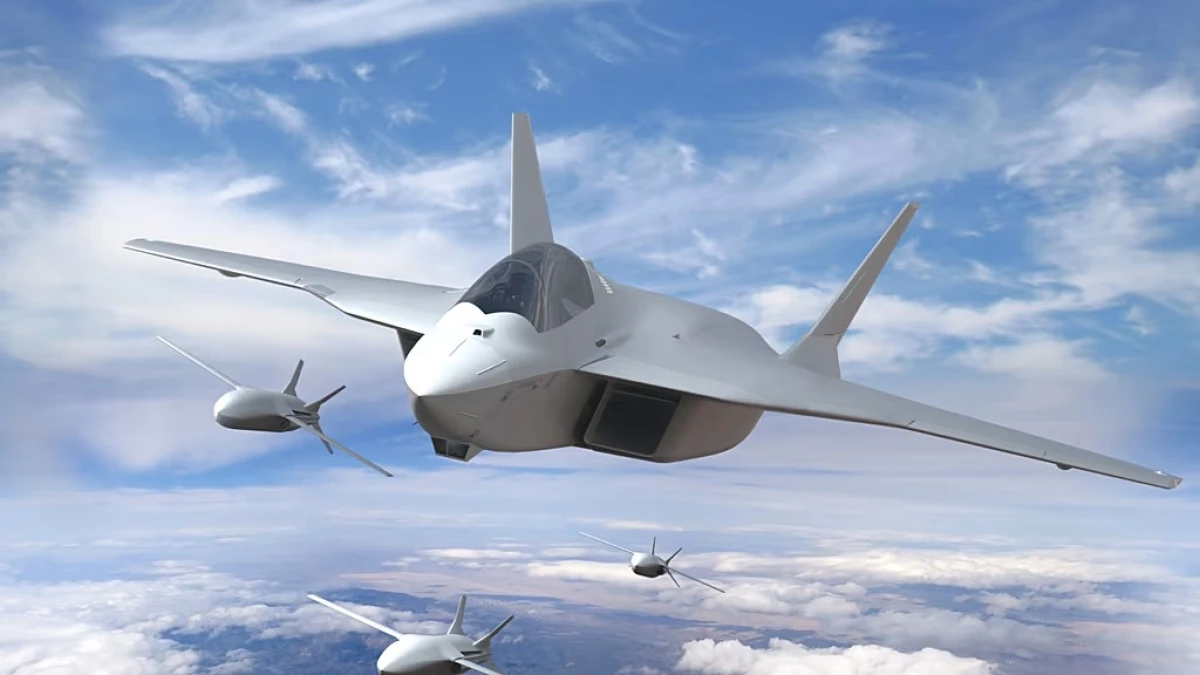
The FCAS program was viewed as Europe's flagship defense project aimed at strengthening military cooperation amid an increasingly assertive Russia.
A consortium led by Airbus has proposed to develop a next-generation fighter jet following the failure of the high-profile Franco-German program to create a combat aircraft, one of the participating companies told AFP on Tuesday.
This came a day after German Chancellor Friedrich Merz and French President Emmanuel Macron concluded the initial project after years of disagreements among industrial partners.
The Munich-based defense electronics company Hensoldt announced that it has joined forces with Airbus Defence and Space, Autoflug, Diehl Defence, Rohde & Schwarz, Liebherr, MBDA, and MTU Aero Engines to prepare an alternative plan.
According to a company representative, the proposal has been sent to German Defense Minister Boris Pistorius. The Financial Times, which first reported on this initiative, stated that the document was also sent to Merz's office.
The companies "jointly prepared a conceptual document for the Future Combat Air System (FCAS) program and the associated Next Generation Weapon System (NGWS)," the representative said.
More detailed information is expected to be released on Thursday during the announcement at the ILA Berlin Air Show.
A Setback for European Defense Integration
The German Ministry of Defense confirmed the existence of the proposal. Pistorius stated that Berlin is currently assessing "which direction we will take."
"We have also been in talks with various stakeholders on this issue for several months," he added.
According to Pistorius, the failure of the initial Franco-German project "hit hard".
"I know how important Franco-German cooperation is for Europe, but ultimately, one has to draw a line between reason and heart," he said.
The FCAS program was viewed as Europe's flagship defense project aimed at strengthening military cooperation on the continent amid increasingly assertive Russian policies and rising tensions in relations with the United States.
However, the implementation of the initiative was hindered by protracted disputes between French Dassault Aviation and Airbus, which was the lead industrial partner for Germany and one of Spain's key partners in the FCAS program.
German partners opposed Dassault's desire for greater control over the aircraft's development.
Merz also argued that Germany, unlike France, does not need fighter jets capable of carrying nuclear weapons or operating from aircraft carriers.














Leave a comment