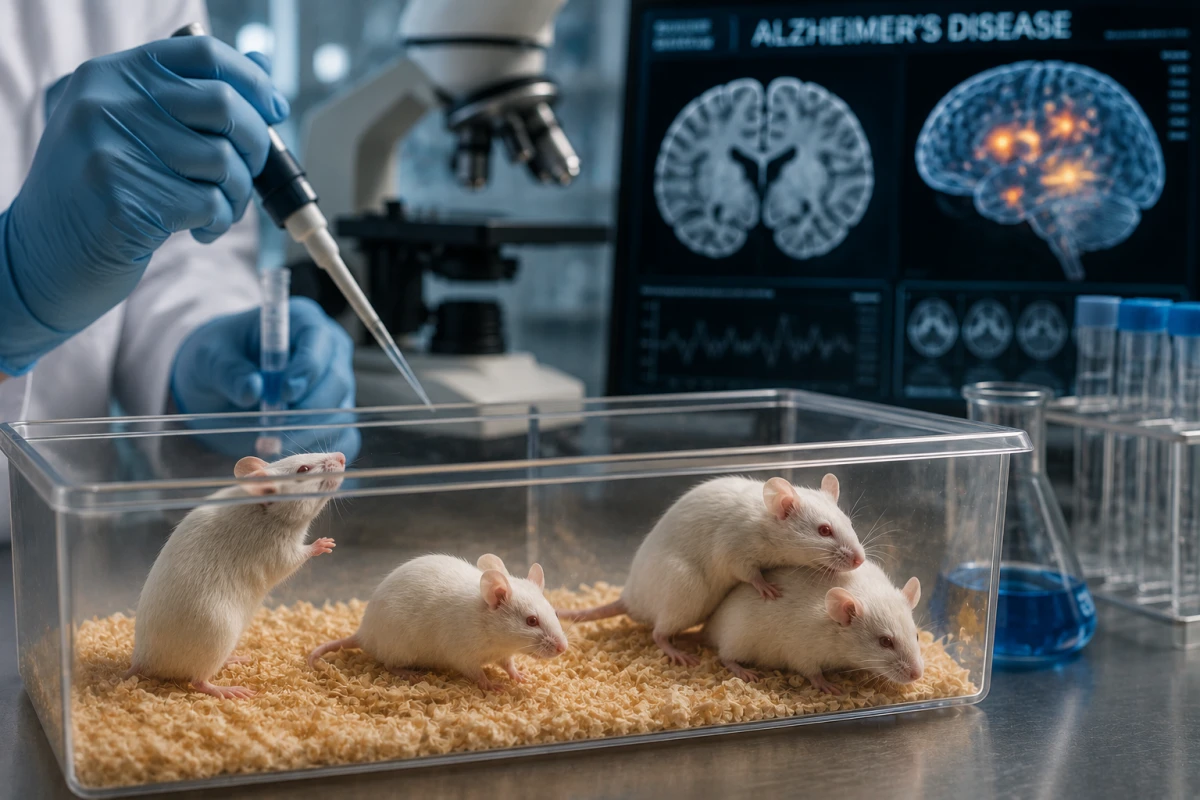
An international group of researchers has developed an innovative method for treating Alzheimer's disease using special nanoparticles. In experiments on mice, the new technology was able to restore the brain's cleansing system, reduce the amount of toxic proteins, and return cognitive abilities to the animals.
Scientists have made a breakthrough in the treatment of Alzheimer's disease. Using specially designed nanoparticles, they were able to restart the brain's natural cleansing system in mice. The innovative method restored blood vessels and quickly removed toxic proteins, returning the animals to health. The study was published in the journal Signal Transduction and Targeted Therapy.
An international team of researchers from Spain and China presented the results of trials of a new type of therapy. Unlike traditional approaches, the scientists targeted not the damaged neurons themselves, but the blood-brain barrier—a protective network of blood vessels in the brain.
In Alzheimer's disease, the transport vascular system deteriorates, leading to the accumulation of the toxic protein beta-amyloid. To address this issue, the researchers developed "supramolecular drugs." These nanoparticles not only deliver medication but also act as therapeutic agents that repair molecular pathways.
The particles are designed to interact with receptors responsible for clearing waste from the brain. By administering the drug to genetically modified mice, the scientists achieved remarkable results: just one hour after the injection, the amount of amyloid plaques in the rodents' brains was reduced by half.
The most striking changes were observed after several months. The researchers cured elderly mice, whose age corresponded to that of a 60-year-old human. After six months, these rodents demonstrated cognitive skills and memory comparable to those of completely healthy young individuals, despite their advanced age.
The scientists note that the nanoparticles activate a cascade reaction: by restoring the function of blood vessels, the brain begins to effectively cleanse itself of toxins. This approach could become a crucial addition to existing types of therapy, opening a safe pathway for drug delivery across the blood-brain barrier.
The researchers believe that the new approach could open a promising direction in the fight against Alzheimer's disease. Although the technology is still in the experimental stage, the results are already being hailed as one of the most promising achievements in recent years in the field of neurodegenerative disease treatment.