Scientists have created a unique antibody capable of completely halting the Epstein-Barr virus, which affects most of the planet's population, paving the way for life-saving therapy.
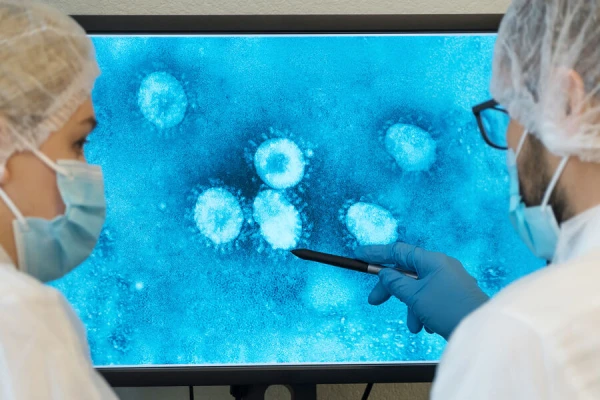
Specialists at the Fred Hutchinson Cancer Center have made a significant breakthrough in the fight against the Epstein-Barr virus. This insidious pathogen, affecting up to 95% of the global population, has long been linked to the development of dangerous oncological and neurodegenerative diseases. The results of their exciting work were published in the prestigious journal Cell Reports Medicine (CRM).
Using an innovative approach, the scientists worked with genetically modified mice whose bodies can synthesize human antibodies. They succeeded in developing unique monoclonal antibodies that effectively prevent the virus from attaching to immune cells and further penetrating them. One of these remarkable antibodies demonstrated a hundred percent protection against infection in laboratory mice with a fully 'human' immune system.
However, when creating such powerful therapies, there is always a pressing task: to find antibodies that do not provoke an undesirable immune reaction to the drug itself. To overcome this problem, the research group focused its efforts on two key viral proteins: gp350 and gp42. The gp350 protein acts as a 'key' responsible for the initial attachment of the virus to the cell membrane, while gp42 is responsible for the 'break-in' that facilitates fusion with the cell and its capture.
Through meticulous work, the scientists identified two specific antibodies effectively targeting the gp350 protein, and as many as eight targeting gp42. In-depth additional analysis of this data allowed for the precise identification of the virus's most vulnerable spots, opening promising prospects for the development of entirely new vaccines.
The most impressive results were obtained in the final experiments: the antibody targeting gp42 demonstrated complete and unconditional blockage of the infection. At the same time, the antibody to gp350 provided only partial, albeit significant, protection.
Hope for At-Risk Groups
This groundbreaking work is of colossal importance, especially for patients who have undergone organ or bone marrow transplants. Due to mandatory immunosuppressive therapy, they face a sharply increased risk of virus activation, which, unfortunately, often leads to the development of severe post-transplant lymphoproliferative disorders, essentially aggressive forms of lymphoma.
"Such complications often become a cause of morbidity and mortality after transplantation," emphasized Rachel Bender Ignacio from the University of Washington with concern. She is convinced that effective prevention of virus replication could significantly reduce the risks of these dangerous conditions and, consequently, substantially improve treatment outcomes.
Prospects and Plans
The scientists boldly suggest that in the near future, these life-saving antibodies could be administered to patients in the form of infusions. This would effectively prevent both primary infection and dangerous reactivation of the virus, especially in those who are in high-risk groups.
Currently, the research team is actively engaged in the next, extremely important stages of their work. They are carefully testing the safety of the developed antibodies and diligently preparing to start full-scale clinical trials to bring this breakthrough closer to real patients.