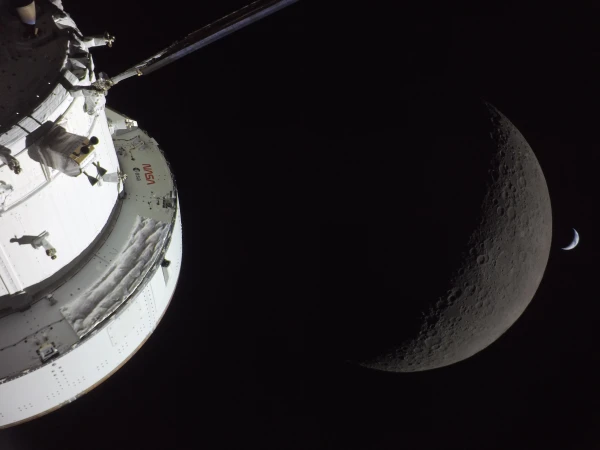
NASA's 'Artemis-2' mission marks a new era of crewed space flights, but at the same time raises an increasingly pressing question — who really owns space and its resources.
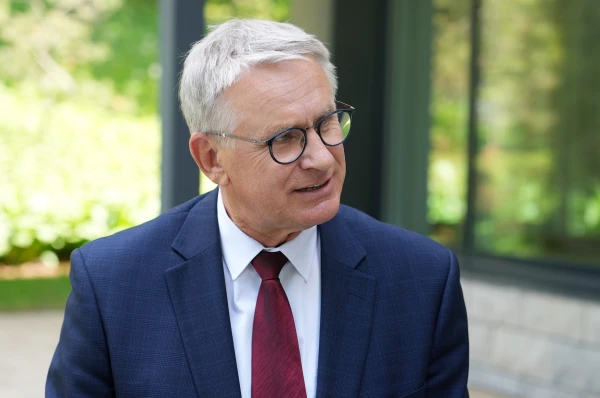
As explained by space law expert Katrine Anniya Rochane in the TV3 program "900 Seconds," the current situation is paradoxical: celestial bodies belong to no one, yet their resources are effectively unregulated.
In the program, the expert emphasized that space law is no longer science fiction but a real and rapidly developing field. "Space law is a real industry, and the reason is simple — countries are already going to space and exploring it," she noted, adding that space-related decisions are used in everyday life, such as in GPS technologies.
It was noted in the conversation that today the main focus of space research is on resource extraction.
"Currently, the most pressing issue in space law is resource extraction," Rochane explained.
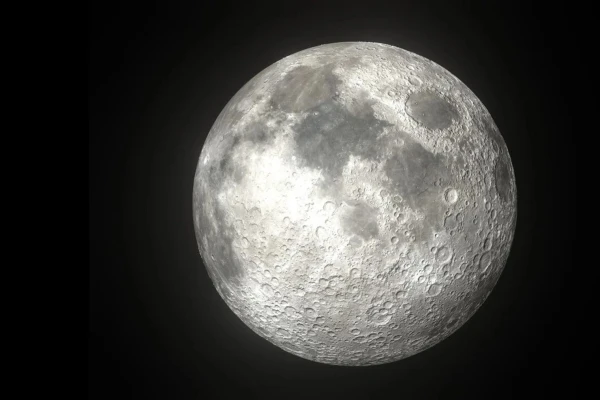
She cited the Moon as an example, where water is of particular interest as it can be used for rocket fuel production.
This is why, under the Artemis program, the United States plans to establish bases at the Moon's south pole, where ice has been discovered in craters. However, other world powers also claim these territories.
The expert pointed out a significant problem — the lack of regulation in space.
"There is currently no police or court in space — nothing," she said.
This means that relations between states are based solely on international agreements, which are not always adhered to or signed.
Although there is an agreement that celestial bodies do not belong to any one state, the question of resource use remains unclear. This creates a situation where speed may become a decisive factor.
"The country that gets there first and occupies the place will gain access to the resources," she added, acknowledging that this seems "funny and strange," but that is how things stand now.
According to the expert, the Moon has already become an object of geopolitical interests. "In my opinion, it has already become an apple of discord," she noted, emphasizing the competition between the United States, China, and Russia for access to resources.
Additional tension is created by the fact that not all countries have joined agreements on space use. Major space powers have not signed the Moon Agreement, which recognizes resources as the common heritage of all humanity.
Why Is This Important for Latvia
Although Latvia itself does not conduct space missions, the expert emphasized that this field opens up broad opportunities for smaller countries. The space industry includes not only rocket launches but also legal services, financing, insurance, and technology.
Luxembourg was cited as an example, which, despite its small size, actively invests in the space sector and has created appropriate legal regulations.
Forecasts indicate that by 2040, the space industry will become a trillion-dollar sector, so participation in it could have strategic significance for Latvia.