Such engines allow for trajectory adjustments if necessary.
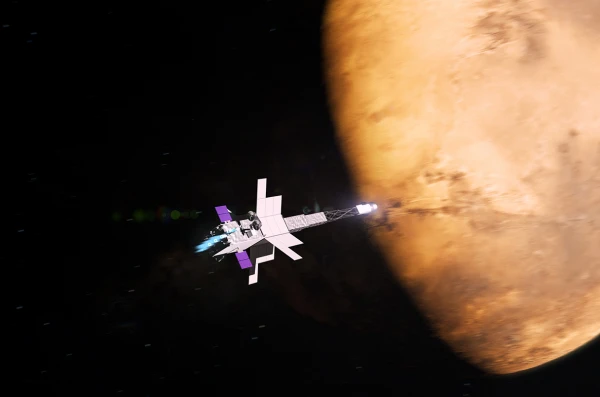
NASA chief Jared Isaacman announced that a new Mars mission will be launched at the end of 2028. The nuclear tug SR-1 Freedom will deliver three helicopters to the red planet, which will search for the ice necessary for human arrival.
The nuclear tug is an independent unit that is launched into space separately. Once in orbit, it docks with the payload that needs to be delivered to the Moon, Mars, or another planet. The power plant of such a tug is similar to a terrestrial nuclear power plant: the nuclear reactor generates heat, which is then converted into electricity. This electricity, in turn, powers the equipment and plasma thrusters. The design with a nuclear power plant has several important advantages. The main one is that there is no need to haul a large amount of fuel into orbit each time, which means more scientific equipment can be delivered at once.
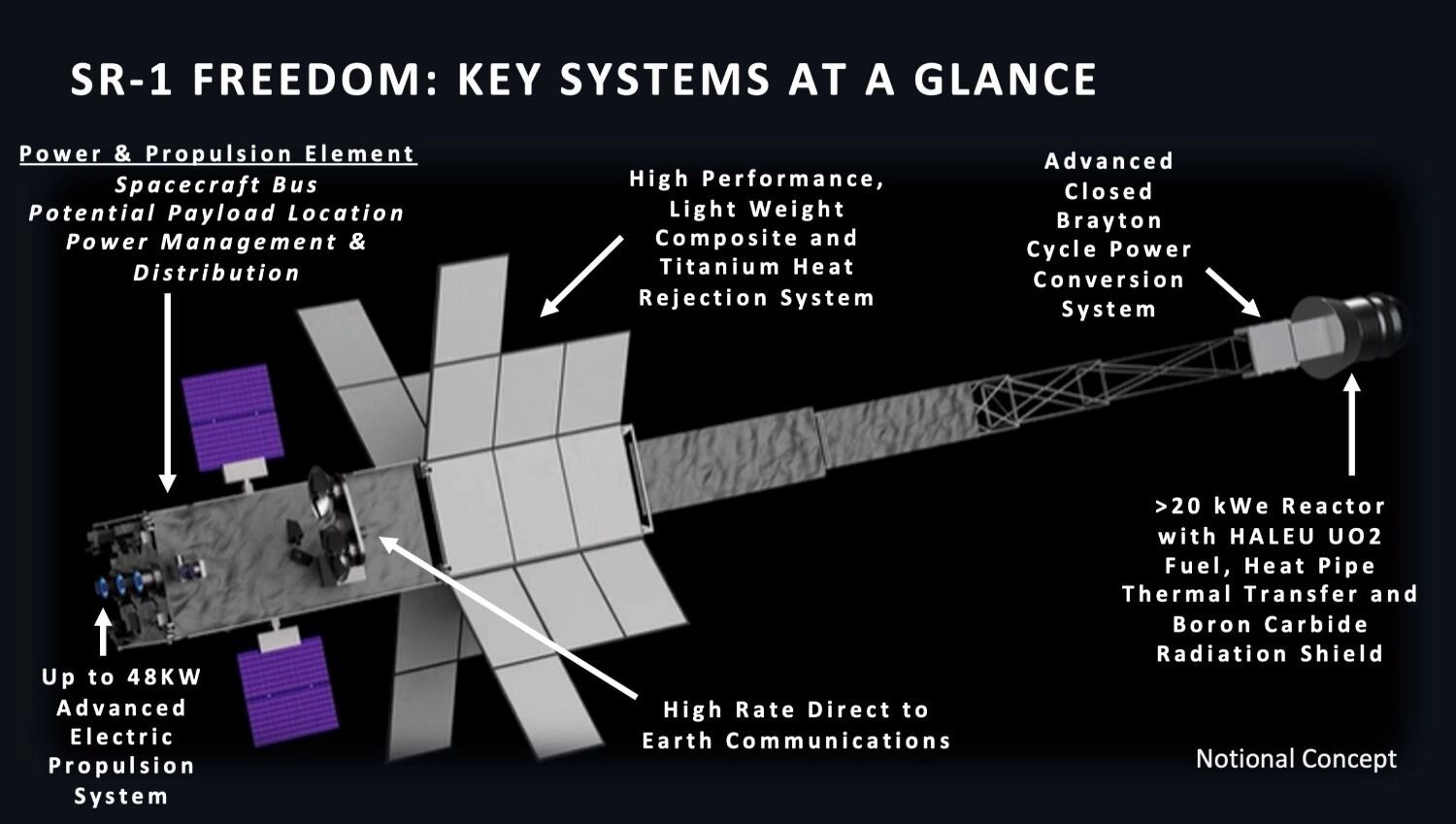
Additionally, the functioning engines allow for trajectory adjustments if necessary, and the nuclear reactor enables independence from solar energy for electricity generation. Moreover, such reactors are reusable.
The secret to the speed of this American development is simple: NASA will use an already created reactor for its tug, which was intended for the Lunar Gateway orbital station that was recently canceled.
Therefore, there is no talk of tons of payload. The NASA tug will deliver three mini helicopters to Mars — analogs of the Ingenuity helicopter, which flew there in 2021–2024. The mass of such a device is 1.8 kg.
But the Americans are not the only ones striving to reach the Moon. China has become the main competitor in the lunar race, the prize of which will be the ability to mine helium-3 there — fuel for thermonuclear reactors. This is the holy grail of all energy producers. The PRC is actively developing and testing a rocket, a crewed spacecraft, a cargo ship, and a landing module for the lunar mission. An International Scientific Lunar Station (ISLS) is expected to be created in the 2030s.