Scientists have only recently described this phenomenon. People who have eaten Lanmaoa asiatica mushrooms experience the same hallucinations: they see little people marching under doors, walking on walls, and hanging on furniture.
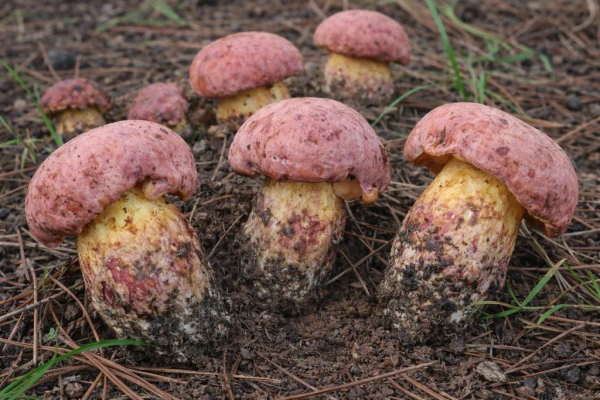
In Russian-language sources, Lanmaoa asiatica is sometimes referred to as the "lilliputian porcini." This tubular mushroom does indeed resemble a porcini, only slightly brighter, with a pinkish stem and a yellowish cap. It grows in Asian countries and is known for its rich umami flavor. In the Chinese province of Yunnan, during the mushroom season from June to August, it is freely sold in markets and appears on restaurant menus. Meanwhile, doctors at one hospital are preparing for an influx of patients with an unusual complaint: they see small beings resembling elves. Such patients number in the hundreds each year.
The thing is, if Lanmaoa asiatica is improperly prepared, hallucinations begin. "In one restaurant with a mushroom hot pot, the waiter set a timer for 15 minutes and warned us: 'Don't eat until the timer goes off, or you might see little people,'" says Colin Domnauer, a biology graduate student at the University of Utah and the Natural History Museum of Utah, who studies these mushrooms. "It seems that this is a well-known fact in the local culture."
Outside the province of Yunnan and a couple of other places, the mushroom is not regarded as something ordinary and is perceived as a mystery.
"There have been many reports about the existence of this psychedelic [mushroom], and many people have tried to find it, but they have not discovered this species," says Juliana Furci, a mycologist, founder, and executive director of the Fungi Foundation — a non-profit organization dedicated to the discovery, documentation, and preservation of mushroom species.
Domnauer hopes to find out what unknown compound might cause such similar hallucinations and understand what new insights we can gain about the human brain from this mushroom.
Domnauer first heard about such a mushroom while he was still a student, from his mycology professor.
"It sounded so strange — that there is a mushroom somewhere that causes fairy-tale visions reported by people from different cultures and eras," says Domnauer. "I was puzzled, and I became curious to learn more about it."
There is not much to be found in the scientific literature. In a 1991 article, two researchers from the Chinese Academy of Sciences wrote about cases where residents of Yunnan province experienced "lilliputian hallucinations" after consuming a certain mushroom. This is a psychiatric term meaning that the patient sees small people, animals, or fantastical creatures. Lilliput is a fictional island nation from Jonathan Swift's novel "Gulliver's Travels," inhabited by tiny people.
Patients saw many (more than ten) "lilliputians" scurrying around. Closing their eyes did not help; the visions only became brighter.
"They saw them on their clothes when they were getting dressed and on the dishes when they were eating," the authors of the article describe the hallucination.
As early as the 1960s, Gordon Wasson and Roger Heim — an American writer and a French botanist who introduced the Western audience to the existence of psilocybin mushrooms — encountered something similar in Papua New Guinea. They were searching for a mushroom that a team of missionaries had reported about 30 years earlier. This mushroom caused a state in local residents that was later termed "mushroom madness."
Unbeknownst to them, they encountered a phenomenon that would later be described by scientists from China. At that time, the researchers collected samples of the species they suspected to be the very mushroom and sent them for analysis to Albert Hofmann — the Swiss chemist who discovered LSD. However, Hofmann was unable to identify any interesting molecules. The team concluded that the stories they had heard were folk legends and had no pharmacological basis. They did not pursue further research.
Only in 2015 did researchers officially describe this mushroom and name it Lanmaoa asiatica. However, there was still almost no information about the psychoactive properties of the mushroom, but it was known that the "lilliputian" effect was not caused by psilocybin.
The first task Domnauer set for himself was to determine the true "identity" of this species. In 2023, he traveled to Yunnan in the midst of the summer mushroom season and asked market vendors what mushrooms "make you see little people." The vendors chuckled. He bought the mushrooms they pointed to and took them to the lab — to sequence genomes and conduct experiments.
An article with the research results is currently being prepared for publication. Domnauer found that chemical extracts from laboratory samples caused behavioral changes in mice similar to those described by people. After the introduction of mushroom extracts, the mice exhibited a period of hyperactivity followed by a prolonged stupor during which the rodents hardly moved.
In the Philippines, there are rumors of a mushroom that causes similar symptoms. The scientist traveled there and collected samples that, according to him, looked slightly different from the Chinese ones: they were smaller and more light pink, while the Chinese ones were redder. However, genetic analysis showed that they were indeed the same species.
In December 2025, Domnauer's scientific advisor also visited Papua New Guinea to try to find the mushrooms mentioned in Wasson and Heim's records. They were unable to find them, and what this mushroom is remains a great mystery.
"It could be the same species, and that would be amazing because usually, species of mushrooms that grow in China or the Philippines are not found in Papua New Guinea," says Domnauer. But if it is a different species, that would be even more surprising: it would mean that different mushrooms evolved independently in completely different parts of the world and as a result possess the same quality.
Such precedents, however, already exist in nature. Scientists — some of whom work in the same lab as Domnauer — recently discovered that psilocybin, a psychedelic molecule found in hallucinogenic mushrooms, appeared independently in two distantly related types of mushrooms.
However, Domnauer emphasizes that the "lilliputian" effect in L. asiatica mushrooms is not caused by psilocybin.
He and his team are still trying to identify the chemical compound responsible for the hallucinations. Judging by the tests already conducted, it is likely not related to any known psychedelic compounds. The "trips" caused by this mushroom are extraordinarily long: from 12 to 24 hours. In some cases, patients remain in the hospital for up to a week. Due to the extreme duration of these states and the risk of prolonged side effects — such as delirium and dizziness — Domnauer has yet to decide to try raw mushrooms himself.
According to Domnauer's conclusions, such "mega-trips" may explain why there is no tradition of intentional consumption of L. asiatica for psychoactive effects in China, the Philippines, and Papua New Guinea. "It has always been eaten simply as food," he says. The hallucinations were an unexpected side effect.
There is also another curious point: other known psychedelics typically induce unique states that can differ not only among different people but also in the same person who has tried the substance multiple times.
L. asiatica induces visions of little people every time.
"I don't know of anything else that would cause such consistent hallucinations," says the researcher.
Understanding the nature of this mushroom will not be easy, says Domnauer, but like the research on other psychedelic compounds, scientific work on it may ultimately touch on the most fundamental questions of consciousness and the relationships between mind and reality.
Moreover, it may help uncover the cause of spontaneous lilliputian hallucinations in people who have not consumed L. asiatica. This is a rare condition: by 2021, since the first description of lilliputian hallucinations in 1909, only 226 such cases unrelated to mushrooms had been recorded. However, for this relatively small group of people, the consequences can be serious: a third of patients have not been able to fully recover.
According to Domnauer, studying L. asiatica may help scientists better understand the brain mechanisms underlying these visions and possibly even create new treatments for patients with similar neurological conditions.
"Now we may be able to understand in which areas of the brain [lilliputian hallucinations] arise," says Dennis McKenna, an ethnopharmacologist and director of the McKenna Academy of Natural Philosophy — a non-profit educational center in California. He agrees with the suggestion that understanding the compounds contained in this mushroom could lead to the discovery of new medications. "Whether there is a therapeutic application here — time will tell," he notes.
Researchers estimate that less than 5% of all mushroom species on Earth have been described so far. Therefore, Juliana Furci believes that these studies have enormous potential for new discoveries in rapidly shrinking ecosystems.
"Mushrooms contain an extraordinarily vast biochemical and pharmacological library, which we are just beginning to touch upon," says Furci. "A whole world of discoveries awaits us."