
The ability to reduce DNA neuronal damage is an ancient trait already present in simple animals.
Researchers from Israel's Bar-Ilan University have shown that one of the key functions of sleep – protecting neurons from DNA damage – emerged hundreds of millions of years ago, even in jellyfish and anemones.
All animals with a nervous system sleep, although sleep creates risks for survival: during sleep, alertness decreases, animals become vulnerable to predators, and vital processes such as feeding are interrupted. The preservation of sleep throughout evolution has long remained a biological mystery. A new study published in the journal Nature Communication shows that this essential function of sleep appeared at the earliest stages of animal evolution and proved to be so important that it outweighed the associated dangers.
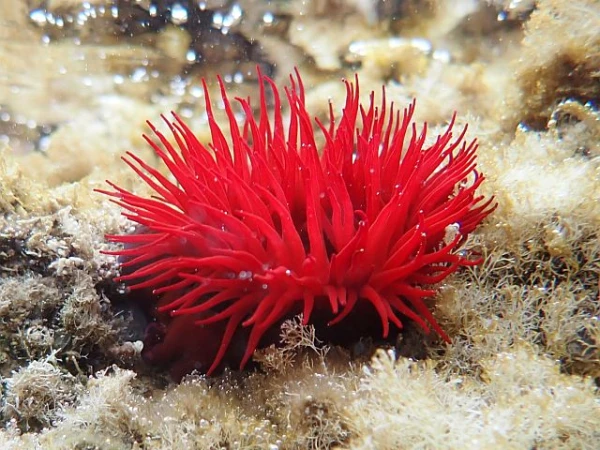
In the new study, scientists examined sleep patterns in two of the most ancient groups of animals: daytime jellyfish, which primarily sleep at night, and twilight anemones, which sleep from dawn until midday. Both species sleep for about eight hours a day – the same amount as humans. Despite differences in lifestyle and sleep control mechanisms, they exhibited a common pattern: DNA damage accumulates in neurons during wakefulness and decreases during sleep. When the animals were deprived of sleep and DNA damage increased, both jellyfish and anemones then slept longer than usual.
This behavior, known as restorative sleep, allowed for a reduction in damage levels.
"Our results show that the ability of sleep to reduce DNA neuronal damage is an ancient trait already present in simple animals with a nervous system," said co-author Professor Lior Appelbaum. "Sleep arose and evolved to ensure the functioning of neurons – a function so fundamental that it has been preserved throughout the animal kingdom."
The scientists believe that the main value of the study lies in understanding the absolute necessity of sleep for any organism with a nervous system. It shows that protecting neurons through sleep is not a random side effect, but a primary, ancient function that emerged with the appearance of the nervous system in primitive animals.















Leave a comment