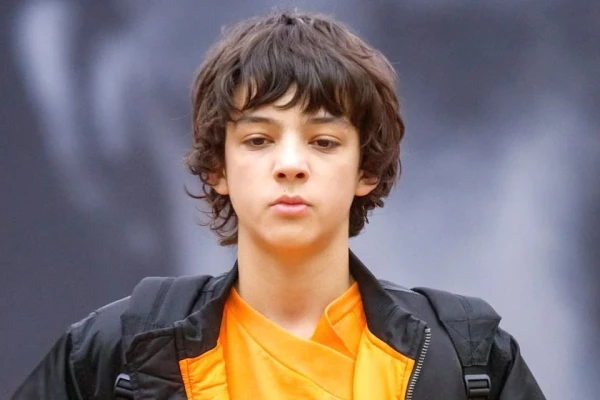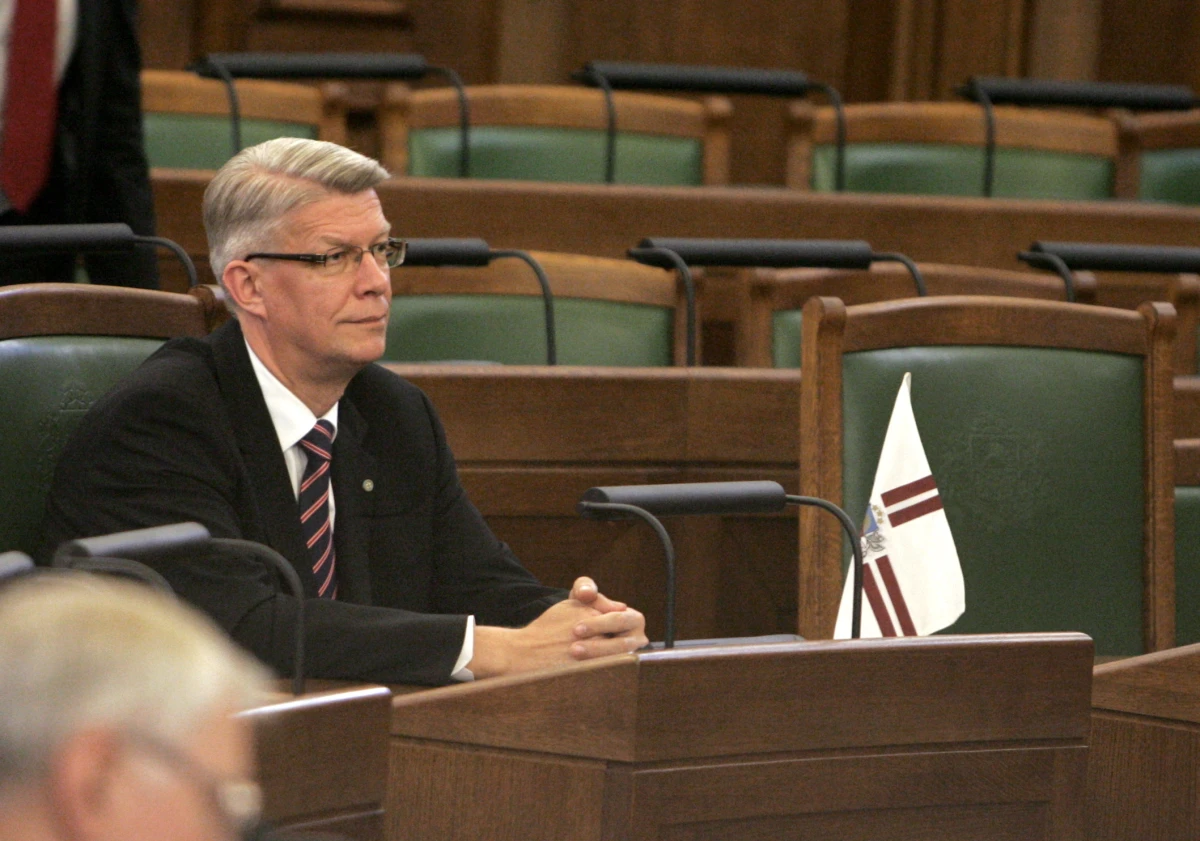
The sensational premiere of the political thriller "Decree Number 2" at the Dailes Theater in Riga reminded – at least the middle-aged and older generations – of the loud event that took place exactly 15 years ago.
Spectacle and Reality
Yes, at the end of May 2011, the then President of Latvia, Valdis Zatlers, signed the famous Decree Number 2 on the dissolution of the Saeima, or more precisely – on a referendum regarding the dissolution of the 10th Saeima. The referendum itself took place at the end of July 2011, and the overwhelming majority of citizens of the Republic of Latvia supported the president on the issue of dissolving the Saeima...
We will not analyze how accurate what was shown and told to us from the theatrical stage is – it is, in any case, a work of art. We will turn to the facts and, importantly, to the consequences of those events: 15 years later, the consequences are of much greater interest than the emotions, experiences, and statements of politicians from 2011...
A Bold Step that Entered History
Fact one – Valdis Zatlers became the first and so far the only president in the recent history of Latvia to exercise his constitutional right to initiate the dissolution of the Saeima. It is noteworthy that two of his predecessors were close to taking such a step, but... ultimately did not dare to do so.
The first president after the restoration of independence, Guntis Ulmanis, later admitted that he considered dissolving the Saeima after the parliament twice failed to approve candidates for prime minister. He even allegedly warned the leaders of parliamentary factions that if they failed the third candidate, he would initiate the dissolution procedure of the Saeima. It was then that the non-partisan candidate for prime minister, Andris Škēle, appeared on the political horizon. The deputies agreed to vote for the local oligarch to avoid losing their parliamentary mandates.
Already in the early 2000s, Vaira Vīķe-Freiberga, trying to rein in the oligarchs, stated from the Saeima podium that a sword of Damocles hung over the parliament... However, she ultimately did not proceed with the dissolution...
Neither for Himself nor for the People
Fact two – no matter what someone tells us or you, Zatlers decided to take such a truly bold step not only and not so much because he was outraged by the parliament's refusal to grant permission for a search by the anti-corruption bureau of the property of deputy Ainars Šlesers, but because he realized: in that composition of the parliament, he had no chance of being elected for a second term. Note: he signed Decree Number 2 a week before the presidential elections!
The subsequent presidential elections after Decree Number 2 confirmed the validity of Zatlers' "fears" – he lost to Andris Bērziņš, who was ultimately voted for by the majority of deputies.
By the way: the criminal case against Šlesers ended up being a bust – the case was subsequently closed... In other words, there was no crime.
Without Special Risk
Fact three – Zatlers, deciding to dissolve the Saeima, was practically not risking anything.
Firstly, he understood that he would not be elected president for a second term anyway (and he really wanted to!), and secondly, he knew perfectly well the sentiments in society: the country had not yet recovered from the consequences of a severe financial and economic crisis, and therefore the population had a very negative attitude towards both the parliament and the government. The desired result in the referendum was practically guaranteed.
And, thirdly, the initiative to dissolve the Saeima allowed Zatlers, even after he was not elected for a second term, to "linger" in politics – he created his own party, which took second place in the extraordinary elections!
Consequences of Decree Number 2
Now a few words about the consequences, which can be divided into short-term and long-term.
-
Short-term: the dissolution of the Saeima and the extraordinary elections indeed reduced the influence of politicians from the 90s to the early 2000s. But this largely natural process would have happened anyway – just a couple of years later: after the next elections, if the Saeima had not been dissolved.
-
Long-term: although Zatlers' Reform Party began to fall apart shortly after the extraordinary Saeima started working, it provided Latvia with a whole array of politicians who are still active in politics – including the now former prime minister Evika Siliņa, former Minister of Justice Inese Lībiņa-Egnere, and Minister of Transport Rihards Kozlovskis... In fact, former Zatlers' supporters make up the backbone of the "Unity" party... Whether this is a positive consequence or a negative one is another question... The current president Rinkēvičs is also, to some extent, a Zatlers' supporter, as he was the head of his office.
It is noteworthy that after Zatlers, there were three more presidents – Andris Bērziņš, Raimonds Vējonis, and Egils Levits. The first three years in office have already been served by Edgars Rinkēvičs. And in all these following 15 years, there has never been a situation where any of the presidents had sufficient grounds to initiate the dissolution procedure of the Saeima. Yes, after the last parliamentary elections, the formation of the government took three months, but this could not be called a political crisis...
Looking back, it must be said that whatever motives Zatlers may have been guided by back in 2011 (noble, almost noble, or purely mercantile), he certainly inscribed his name into the recent history of Latvia and into political science books. And now also into theatrical art – considering the performance at the "Dailes" theater.
Others are Gone, and Those are Far Away
It is noteworthy that over the past 15 years, most of the main actors have already left active politics: the president in retirement is Zatlers himself, the then speaker of parliament Solvita Āboltiņa has left active politics, transitioning to diplomatic service, and the then deputy of the Saeima, and later Minister of Health Ilze Viņķele is no longer in active politics...
All of them, by the way, attended the premiere of the play at the "Dailes" theater, as did, at that time, perhaps the most influential person in the country, now a "humble" deputy of the Ventspils City Council, Aivars Lembergs.