
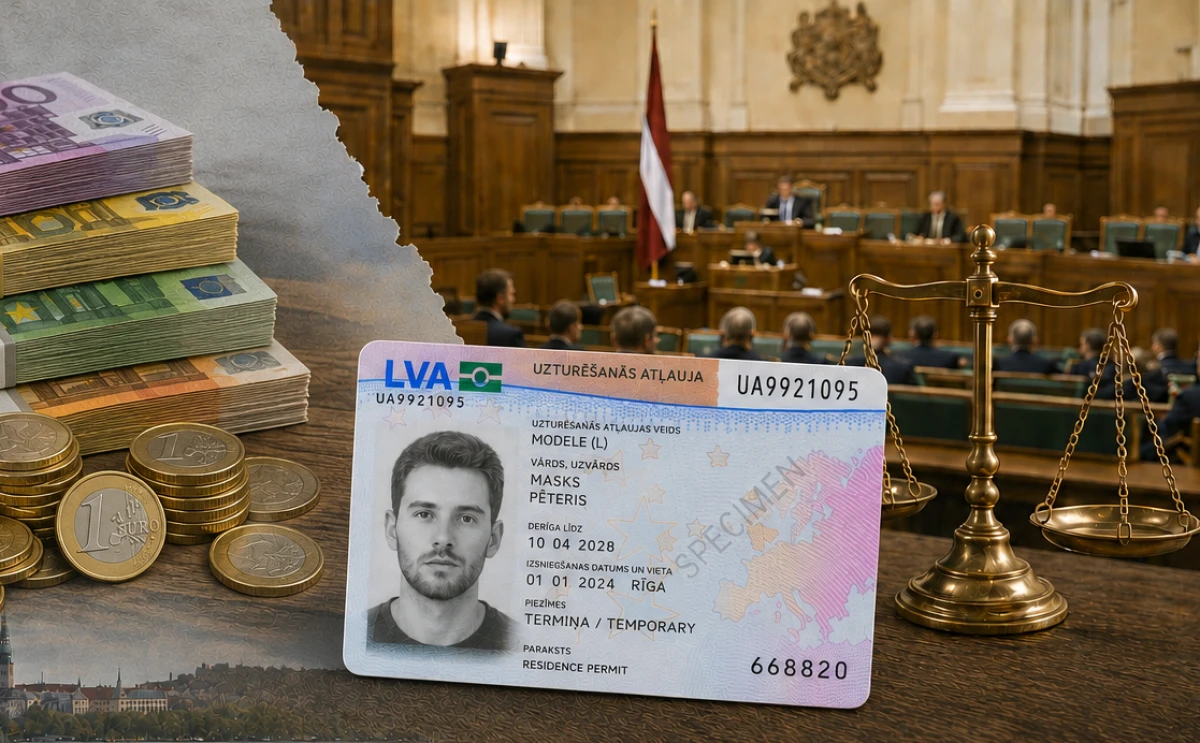
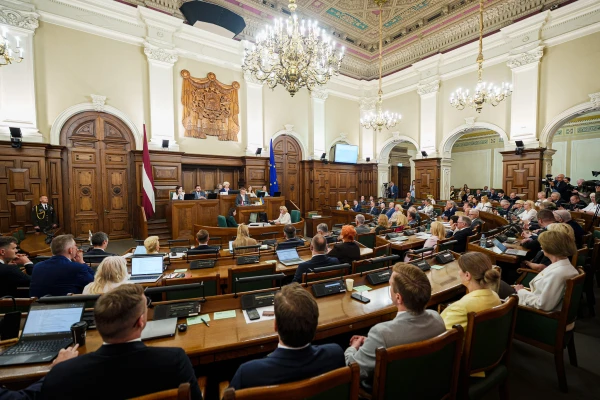
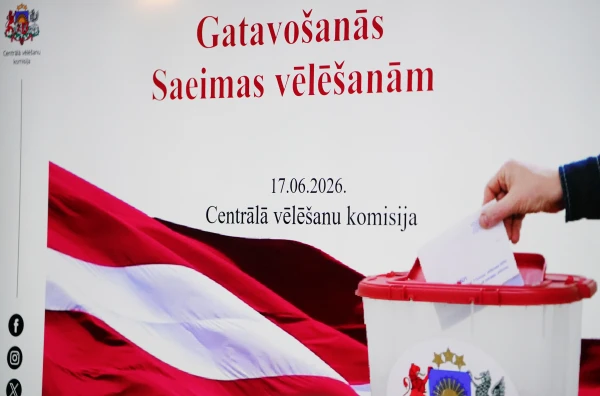
This week, the President of Latvia, Edgars Rinkēvičs, must decide whether to sign the fundamentally new Immigration Law passed last Thursday or, as the opposition requests, return it to the Saeima for revision.
What Will the President Do?
We dare to assume that the head of state will most likely decide to proclaim the law.
-
Firstly, because the law has become a sort of compromise between an overly liberal position (allowing almost everyone into the country) and a completely radical-conservative position (allowing citizens of third countries into the country in very limited numbers). And although the outcome tilted towards the national conservatives, this is completely logical – considering the composition of the parliament and the current ruling coalition, as well as the general negative attitude of society towards 'outsiders'.
-
Secondly, the Saeima elections are already on October 3rd, and if the law is sent back for revision, taking into account the long summer recess, this parliament may not have time to adopt the law again, while modern regulation of migration processes is simply necessary. After all, the current law was adopted back in 2003 and, of course, no longer corresponds to modern realities. It is not surprising that over the past three years, about a dozen amendments have been made to this law.
Apparently, the president will suggest to those deputies who are dissatisfied with the law adopted last Thursday to simply submit amendments to it.
Ironically, the 'progressives', who actually position themselves as a left-wing, almost social-democratic force, are opposed to... attracting investors from third countries to the country! Apparently, the 'progressives' are only happy to welcome refugees and other asylum seekers, rather than successful foreigners who, instead of living off Latvian taxpayers (on benefits), are ready to invest in the Latvian treasury themselves!
Fixation Ideas from Kulbergs
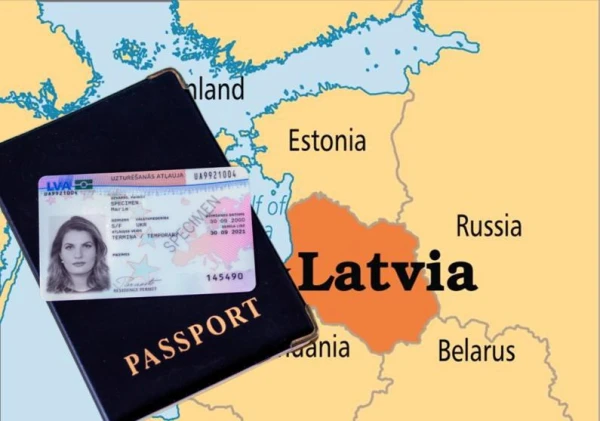
Dissatisfaction arose from the amendment approved by the Saeima at the third reading stage, which speaks of the possibility of granting a temporary residence permit for a period of 5 years to citizens of third countries. For this, they need to make an investment of 150,000 euros into a state-created fund and simultaneously pay an additional 10,000 euros into the Latvian budget.
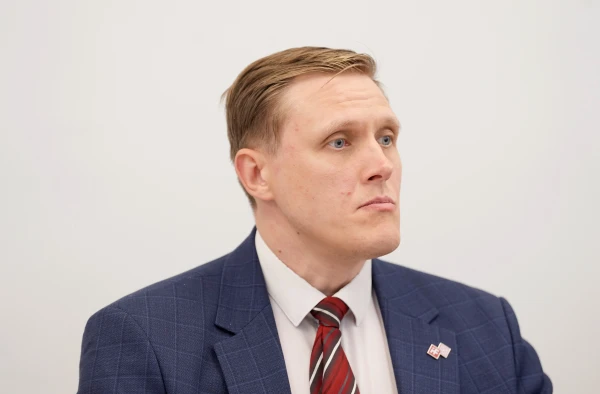
It is noteworthy that the initiator of such an amendment was Andris Kulbergs, who at the time of preparing his proposals for this law was not yet the prime minister but was an opposition deputy. By the way, this was the only initiative of Kulbergs to attract investors that was approved by the Saeima. All other similar proposals from Kulbergs were rejected.
Thus, the current prime minister proposed to issue a residence permit for a period of 5 years to a foreigner who created a company in Latvia with real employees and made a payment to the state budget of 50,000 euros, as well as ensured tax revenues of a certain amount, or invested money in state zero-interest bonds for 150,000 euros, or made a fixed tax payment...
"The proposals have significant international and fiscal context. Given the deterioration of the geopolitical situation and the growing demands for defense and security funding, Latvia will need additional, long-term sources of public revenue in the long term. Currently, the main identified sources of funding are EU funds and state loans.
The proposals offer an additional solution – attracting wealthy foreigners, providing them with the opportunity to become taxpayers in Latvia by making a fixed tax payment of 60,000 euros per year, with a mandate for the Cabinet of Ministers to prepare and submit a draft law on fixed tax payments for foreigners to the Saeima by December 31, 2026. It should be noted that similar fixed tax systems to attract wealthy foreigners are already applied in several EU countries," explained A. Kulbergs.
But all these reasonable ideas did not receive support from the parliament.
Bring Your Money
As for the approved initiative regarding investments in an alternative investment fund, this program, dubbed by the 'progressives' as the 'golden visas' program, certainly does not threaten Latvia's security.
All applicants will still have to undergo security service checks and provide proof of the legal origin of their funds. Not to mention that... there is currently no alternative investment fund in Latvia yet – it still needs to be created and the corresponding law adopted.
By the way, the National Alliance deputies also opposed the 'golden visas', who do not rule out the possibility of trying to remove this article from the new law in this Saeima.
We Don't Need Rich People?
However, the residence permit program in exchange for investments in real estate, which just turned 15 years old this year, seems to have come to an end. In any case, the attempt by the Minister of Economics, Viktor Valainis, to preserve this program in the new law completely failed. Only 23 deputies voted for Valainis's corresponding amendment, while the others were against or abstained.
The Minister of Economics actually proposed to maintain the same conditions for real estate investors that are currently in place. In particular, a foreign citizen who purchases a house or apartment in Riga, Jurmala, or the Riga region for no less than 250,000 euros may apply for a residence permit for a period of 5 years...
Since this amendment was rejected, starting from January 1 of next year, when this law comes into effect, a foreign buyer of Latvian real estate will no longer be able to obtain a residence permit based on this transaction. Thus, the state is giving up real income – in the form of property tax, tax from the sale of real estate, as well as related income (fees, maintenance expenses, other costs...).
It is important to note: opponents of this program to attract wealthy foreigners to the country could no longer use the argument – that "Russians and Belarusians will come here", since a special law has been in effect since last year that prohibits citizens of the Russian Federation and the Republic of Belarus from acquiring property in Latvia.








Leave a comment