
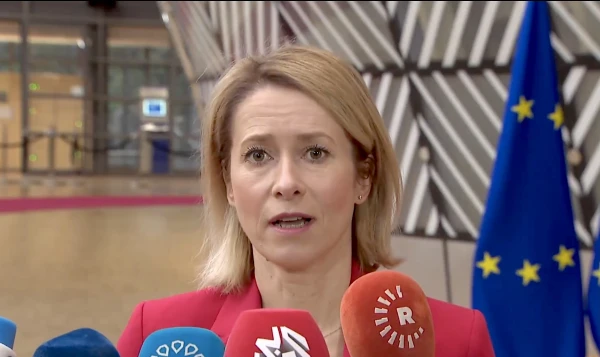
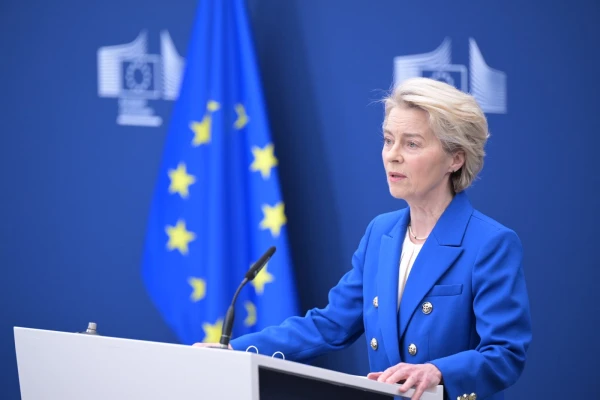
The Eastern flank countries of the EU are worried that they are not being included in negotiations with Moscow. Meanwhile, they truly know Russia well, said the EU's High Representative for Foreign Affairs Kaja Kallas in an interview with ERR.
ERR: – According to the news agency Bloomberg, the President of the European Council, António Costa, is already establishing contacts with Moscow through unofficial channels. Italian Prime Minister Giorgia Meloni is also talking about a special representative, and we have seen diplomats from the 'EU troika' (Germany, France, and the United Kingdom) visiting Moscow. So, is the European Union engaging in dialogue with Russia or not?
Kallas: – For me, the most important thing was and remains that we clearly define what demands we intend to make to Russia in advance. There are indeed statements that we need to talk, and it is obvious that some movement in this direction is taking place – whether it is the 'EU troika' countries or someone else trying to establish contact with Russia.
However, it is important that Russia is required not only to cease the war but also to make a number of concessions. Otherwise, we will only see a pause in the war, after which Russia will attack again in a few years. We have faced similar situations before, so my goal and my work are aimed at preventing this. Whoever sits down at the negotiating table with Russia must present demands and ensure that Russia also takes concrete steps.
ERR: – Is there currently any preparation underway for opening a more formal dialogue with the Russian Federation?
Kallas: – The media has already reported that there is certain activity taking place in various locations. Therefore, my main message is that the question is not who will be talking, but what exactly they are bringing to these negotiations.
In my opinion, the Eastern flank countries are primarily concerned that representatives from Eastern Europe – those who truly know Russia well – are not being included in such negotiations or contacts. Unfortunately, both recent and more distant history has many examples where such negotiations and contacts with Russia ended poorly for some European countries.



Leave a comment