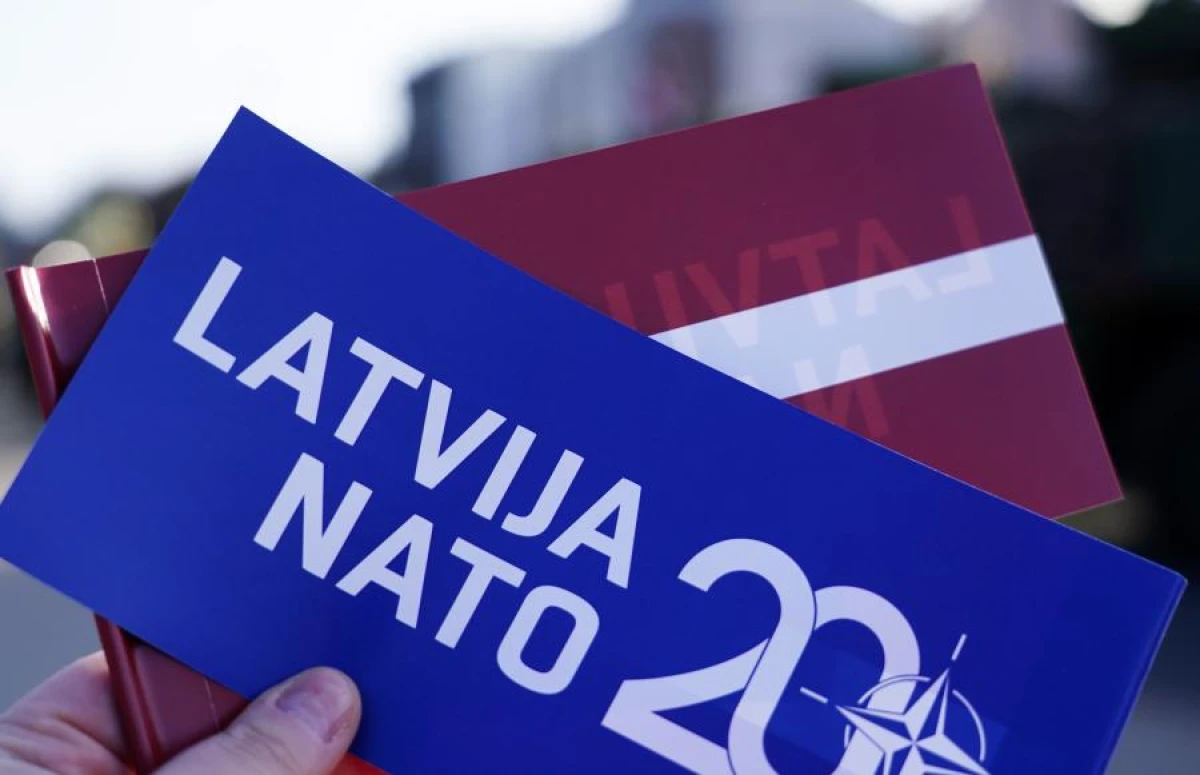
Latvia should perceive itself not as a country that NATO will come to defend in case of necessity, but as an integral part of the alliance itself. This was stated by Latvia's Ambassador to NATO Maris Riekstins, speaking about the deep integration of national defense into the structures of the North Atlantic alliance.
The Latvian defense system is now so closely integrated with NATO that discussions in the spirit of 'NATO will support us' no longer reflect the real state of affairs. This opinion was expressed in an interview with the LETA agency by Latvia's Ambassador to NATO, Maris Riekstins.
According to him, the National Armed Forces of Latvia are fully integrated into the command structures and defense plans of the alliance. He cited the multinational NATO brigade stationed in Latvia as an example, which has already been certified and included in the alliance's command and control system.
This means that it is not just about the presence of allies on the territory of the country, but about a unified defense system operating under common plans and procedures.
One of the most significant challenges for NATO and the Baltic states, Riekstins noted, is the rapid development of military technologies. According to him, the experience of the war in Ukraine has shown how significantly drones and other autonomous systems impact the modern battlefield.
Just a few years ago, the focus was on traditional types of weapons — artillery, armored vehicles, and mechanized units. However, recent events have forced a reevaluation of many previous concepts.
The ambassador pointed out that technologies are changing so quickly that the military industry risks producing equipment that may become outdated even before it is delivered to the troops. Therefore, one of the key tasks becomes the defense sector's ability to rapidly implement innovations and adapt to new conditions.
According to Riekstins, the Ukrainian experience is of particular importance. Ukraine is gaining knowledge directly in real combat conditions and quickly implementing new solutions in practice. For NATO and the Baltic states, this experience has become one of the most important sources of information about modern warfare.
The ambassador also confirmed that discussions continue within the alliance regarding further strengthening air defense on NATO's eastern flank. This involves closer integration of air patrol missions and air defense systems so that in the event of a crisis, allies can more quickly deploy the necessary forces to the region.
Such issues are currently relevant not only for the Baltic states but also for Romania and other countries facing incidents in the airspace near the borders of Russia or the war zone in Ukraine. Meanwhile, the details of NATO's defense plans remain classified. Riekstins emphasized that they are regularly updated in light of changes in the security environment and analysis of Russia's actions.
He stated that the continuous exchange of experiences among allies and the consideration of lessons learned from the war in Ukraine should ensure the main goal — that a potential adversary has no desire to test NATO's defensive capabilities in practice.