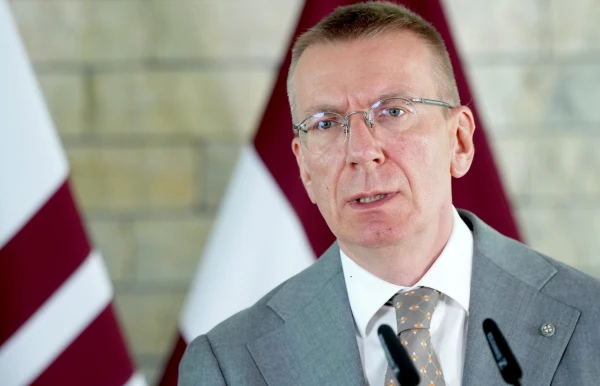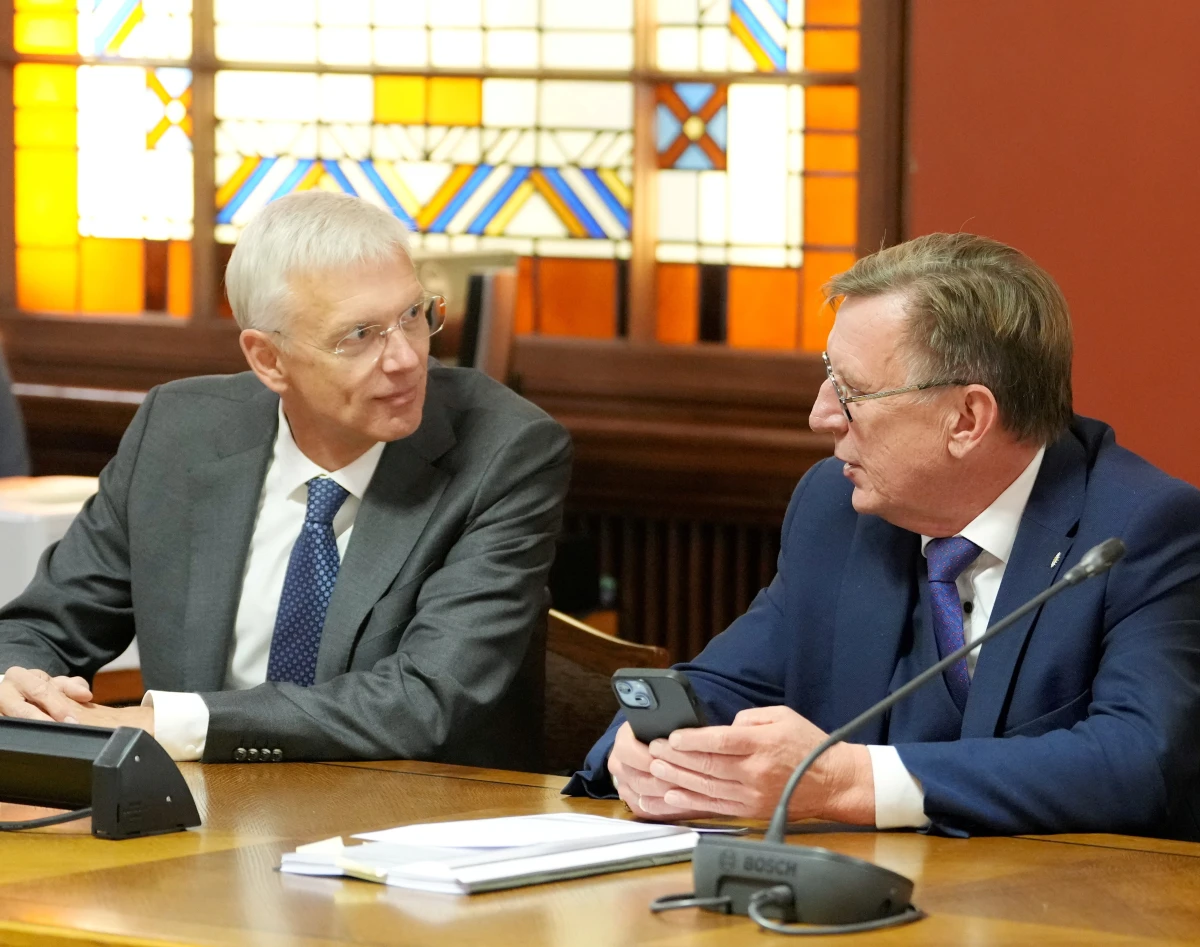
Finance Minister Maris Kucinskis criticized the establishment of the Ministry of Climate and Energy, calling it a political whim of former Prime Minister Krisjanis Karins. In his opinion, public administration needs optimization, and some ministries could be merged in the future.
Finance Minister Maris Kucinskis questioned the necessity of the Ministry of Climate and Energy, which was established in early 2023.
In an interview with Latvian Radio, he stated that he sees no tangible benefit from the emergence of the new agency and considers its creation a mistake made by the previous government. According to Kucinskis, the idea arose during the premiership of Krisjanis Karins, when several European countries began to create similar structures.
"We still believe that the establishment of the Ministry of Climate and Energy was a whim of Karins," the minister stated.
The statement came against the backdrop of the new government's declared course to increase the efficiency of public administration and reduce unjustified expenses.
Kucinskis believes that there are still significant reserves for optimization within the public administration system. In particular, he did not rule out that in the future, the possibility of merging certain ministries could be considered if their functions are partially duplicated.
However, the minister acknowledged that implementing such reforms in the coming months is impossible. According to him, a serious restructuring of the public administration system will require significantly more time than the current government has before the parliamentary elections.
In fact, Kucinskis indicated that the issue of possibly reducing the number of ministries could become one of the topics after the next Saeima elections.
Speaking about public finances, the minister also pointed to the need for more effective use of the potential of state-owned enterprises. In particular, he mentioned the energy company "Latvenergo" and the enterprise "Latvijas valsts meži," stating that their capabilities are not being fully utilized.
Additionally, Kucinskis reaffirmed his previous position on the pension system, opposing the idea of allowing residents to withdraw their second-pension-level savings early.
The key principle of his work, the minister stated, is efficiency. According to him, public expenditures must be justified, and the practice of additional spending without clear results should remain in the past.
The Ministry of Climate and Energy began its work on January 1, 2023. The new agency took over some functions of the Ministry of Economics in the energy sector, as well as powers in climate policy that were previously under the Ministry of Smart Governance and Regional Development.
Thus, less than four years after its establishment, the ministry faced public statements from one of the key ministers of the government questioning the appropriateness of its existence.