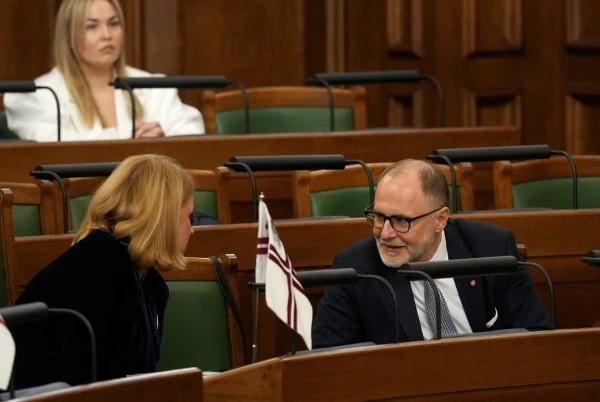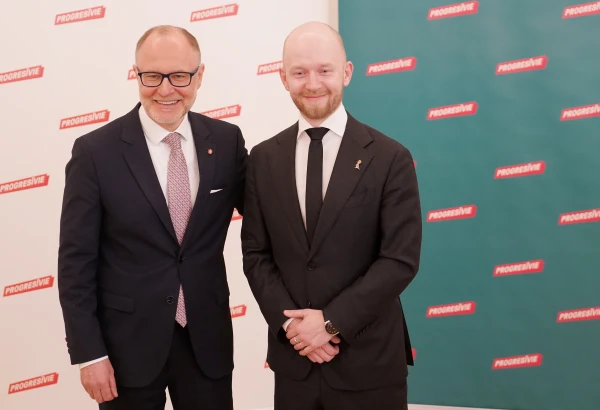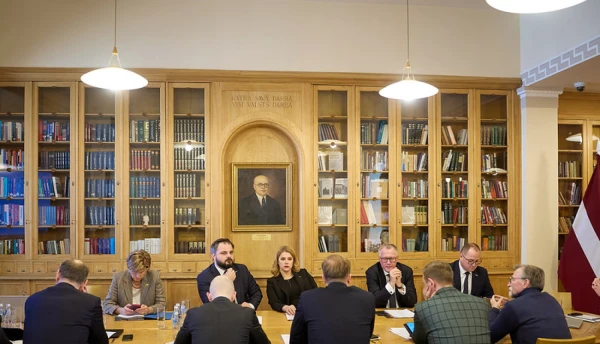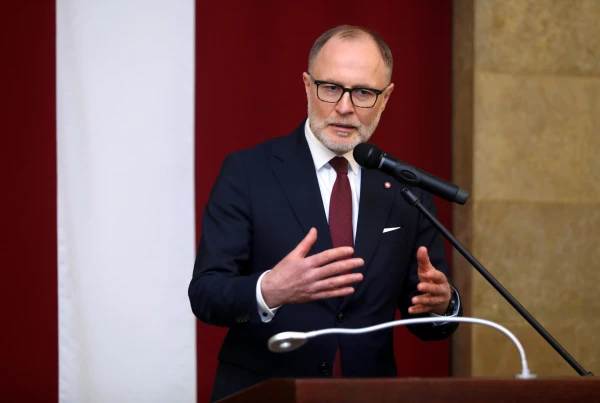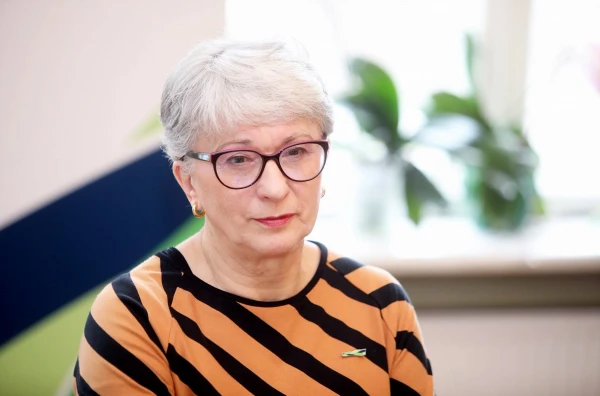
Interestingly, this was done by the Minister... of Culture Agnese Lāce, who was substituting for the head of the Ministry of Defense Andris Sprūds. Such is the local political order – the main thing is to be from the same party, in this case, the "Progressives."
The second interesting point that arises from the information message "On the Progress of Implementing the Comprehensive Defense System of the State" is the year it began – 2019. That is, three years before the onset of large-scale hostilities in Ukraine, Latvia had already started preparing...
With a Focus on Expeditionary Forces – and Hunters
As evidence of our republic's readiness for "necessary actions in case of crisis and war," the Ministry of Defense cites large-scale (by our standards) exercises Namejs, traditionally held in early autumn. Last year, 12,000 soldiers and zemessargi participated, along with allied forces from the USA, Canada, the UK, Estonia, and Lithuania. The combat cooperation of the Balts and Anglo-Saxons was coordinated within the framework of the Joint Expeditionary Force (NATO's Joint Response Forces) and the headquarters of the multinational division "North."
Exercises of a military-civilian type are also being conducted – NATRIZ, Pilskalns, Rupors... All, again, for the reception of allies. Even the Cabinet of Ministers, in full composition, participated in maneuvers simulating the "decision-making procedure at the strategic, political, and military levels."
At the grassroots level, the military department actively collaborates with the Latvian Hunters' Union – half a thousand people participated in shooting competitions under the slogan Vienoti Valstij.
Even the youngest Latvians can now become high-tech warriors – last year, 28 students received drone operator certificates.
The flow of volunteers into the armed forces does not dry up, although it is thin – at the beginning of last year, 207 volunteers signed up, and 34 recruits decided to sign a 5-year contract with the Zemessardze. But will this be enough to protect against the aggressor, even with a lowercase "a"?
The Arsenal of the Homeland
Well, and, of course, the military-industrial complex is gradually catching up – the Latvian Federation of Security and Defense Industries is actively operating in the country. Defense industry projects can now count on funding of up to 10 million euros from the Latvian Investment and Development Agency and the financial institution Altum.
Last year, 11 contracts for the supply of military and dual-use products were concluded for a total of 2.35 million euros. Overall, by the end of 2025, there were 118 enterprises in Latvia producing strategic products. In 2025, the Ministry of Defense continued cooperation and provided support to the State Defense Corporation (Valsts aizsardzības korporācija), which is building a factory for the production of modular propellant charges for 155 mm artillery in collaboration with the Finnish-Norwegian company Nammo and the French-Italian KNDS. Construction of the factory began on September 18, 2025.
"Its creation will ensure the reliability of supplies of critically necessary artillery ammunition components for the Armed Forces and, together with partners, increase production capacities for modular propellant charges in Europe," promises the Ministry of Defense.
A memorandum has also been signed with the famous German company Rheinmetall AG, which "will provide the Armed Forces with the necessary artillery ammunition in the long term."
Science is also getting involved: last autumn, the Ministry of Defense signed contracts with the University of Latvia, Riga Technical University, Stradiņš University, and the University of Biotechnology in Jelgava. Even the quite civilian concern LMT (with a controlling stake held by the state) opened production of small drones VANTAGE.
Couch Troops on the March
Russia and Belarus are now written with a lowercase letter in the official document of the Latvian Ministry – from a linguistic point of view, this is quite strange, but it aligns with the trend established in Ukraine.
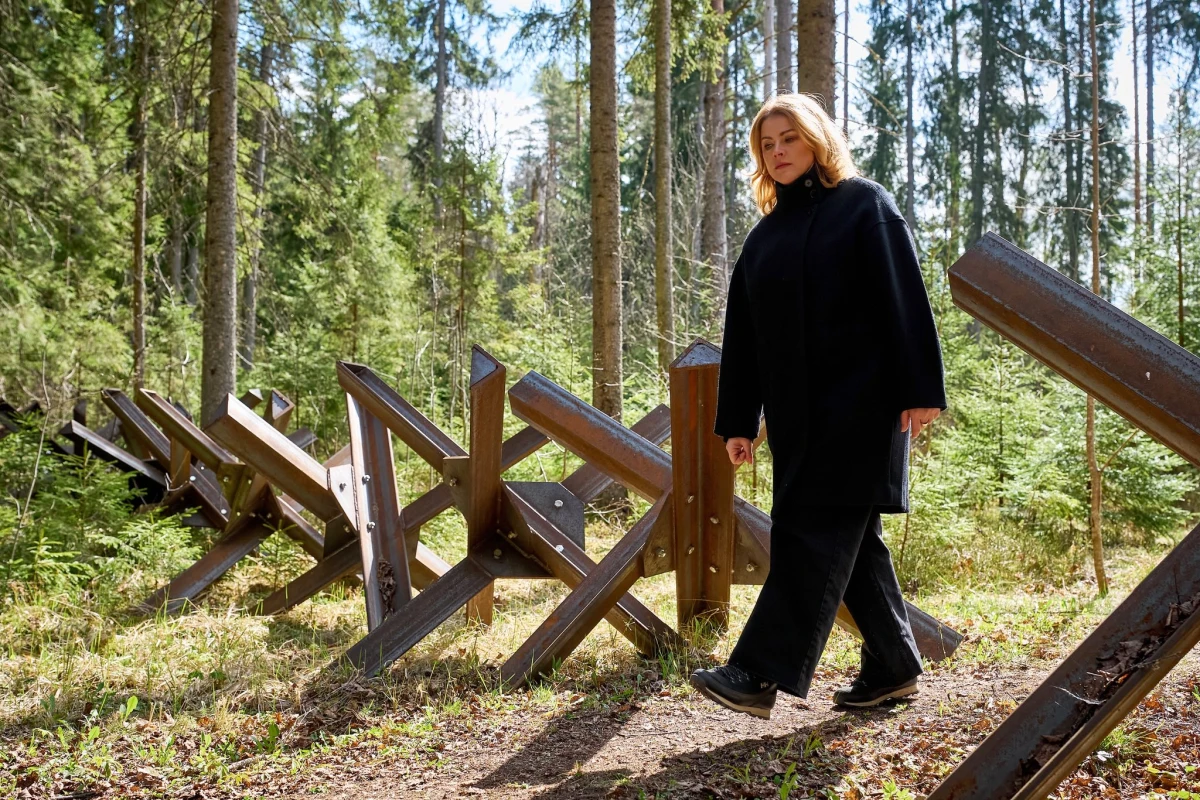
In terms of countering these states, we are now building not only the "Baltic Defense Line," which includes physical fortifications and sensor systems on the Eastern border – but also a complex of informational activities...
The Latvian Transatlantic Association LATO, the "Festival of Conversations" LAMPA, and other young people with good faces have begun to cultivate the younger generation. A series of lectures titled "How Will We Defend Latvia?" was held in 200 schools across the country. The population of Latgale, which was concerned about the process of land acquisition for the construction of a defense rampart, particularly needed enlightenment. Military leadership visited Ludza, Krāslava, Preiļi, Balvi, Karsava, and Zilupe.
In 2025, the Ministry of Defense provided assistance in a competitive manner amounting to 95,151 euros and 35 cents to 10 media and non-governmental organizations as part of the "Support for Strengthening the Information Space of Latgale." For example, the newspaper Vaduguns received 10,000 euros for the project "We Will Not Give Up an Inch," and the portal chayka.lv also utilized the same amount.
How to Manage a Disaster
On December 29, 2025, it was ceremoniously announced that the construction of a 280 km long fence on the border of Latvia and Russia was completed. But this is not enough – now on the agenda is the construction of "mobility counter-infrastructure," i.e., various obstacles and trenches in the border strip.
By 2027, the authorities plan to build 11 "disaster management centers" (official name!) in regional centers of Latgale. In 2025, the corresponding crisis resources (a total of 13,140 folding beds, 13,170 mattresses, 13,070 pillows, 148 modular containers) were provided free of charge to municipalities.
They also did not forget about the money – Latvia became the first eurozone country to prepare for cashless transactions in the absence of the internet. When the thunder strikes, people will have the opportunity to pay for essential goods and services with cards, on credit from the state, up to 200 euros each.
At the communication level – the population is offered to download the mobile application Patvertnes, from which they can learn: where to run and where to hide. However, the warning systems have been increasingly criticized in recent weeks, as "good drones" were directed through Latvia to bomb oil facilities in the Leningrad region, the contents of which were successfully spilled into our shared Baltic Sea.
THEORY OF 72 HOURS
In all the methodological guides distributed through the defense portal sargs.lv and other channels, the population is trained to be ready to act in case of a crisis – for this duration of time.
The necessity to ensure one's financial security, maintain "operational silence," and be vigilant against Russian propaganda is emphasized.