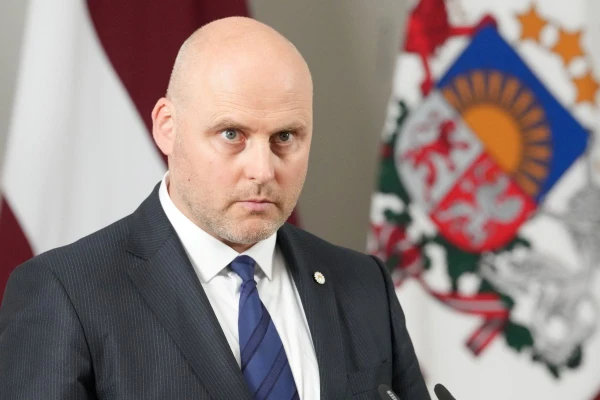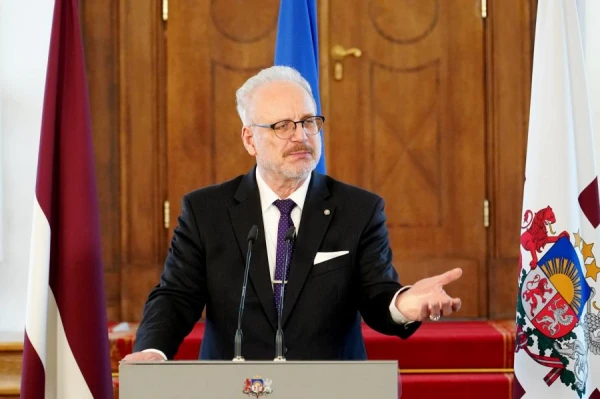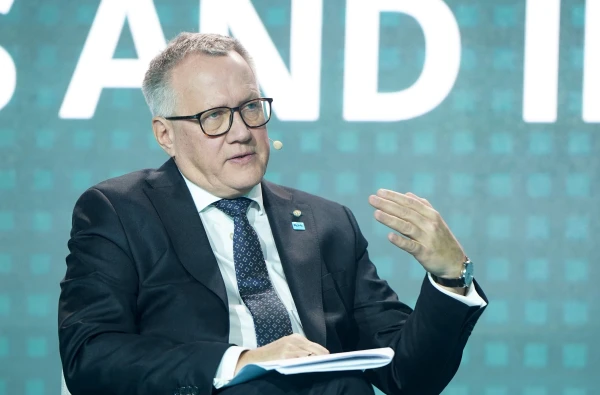
Finance Minister Arvils Asheradens (“New Unity”) presented a report to the government last week on the progress of Latvia's fiscal structural plan for 2026 – the main theoretical justification for our economy.
“The current geopolitical situation in the world, especially the risk of escalation of the conflict in the Middle East, requires close attention to the possibility of a pessimistic scenario. A blockade of oil and gas supplies in the Strait of Hormuz could not only contribute to inflation but, with a prolonged blockade, lead to a decline in supply with subsequent negative effects on growth. There is a risk of experiencing stagflation – low economic growth alongside high inflation.”
“Balanced” Deficit
However, even without external shocks, bright prospects were not expected for our republic:
“Potential GDP growth in the period from 2026 to 2030 is forecasted to average 2.2%, which is lower than the average economic growth over the past fifteen years (2.4%), but slightly higher than in previous forecasts. The low growth is influenced by the negative contribution of the labor force component, but the increase is determined by a higher influx of capital…”
Let us recall that last year, the total state budget deficit first exceeded the symbolic mark of 1 billion euros – with 1,019.5 million euros, the excess of expenditures over revenues amounted to 2.4% of the gross domestic product. “This was mainly determined by large advance payments for military assets, the delivery of which was planned for the coming years,” explains the Ministry of Finance.
However, this is not the limit: a 3% deficit is projected for 2026 (in absolute terms – 1.37 billion euros), which, relative to GDP, exceeds the level of the pre-pandemic and pre-war 2019 by ten times. Nevertheless, according to the assurances of A. Asheradens' agency, “the local government balance is forecasted to be balanced”...
How We Will Repay Debts
Latvia is shaping its policy for servicing external debt, if we are to believe the Ministry of Finance, “flexibly adapting to the current situation in the financial markets” – “borrowing instruments are diversified.”
“Resource attraction in the necessary volume is carried out both through the issuance of bonds in international financial markets and at auctions of additional issues of bonds already in circulation with the mediation of primary dealers, as well as through savings bonds from individuals.”
Thus, in May 2025, 5-year bonds worth 1 billion euros were issued, and in September, 10-year bonds worth 1.25 billion euros. Demand, according to the Ministry of Finance, “was higher than supply.” Notably, the country is also lent to by its residents – Latvian residents held savings bonds worth 370 million euros, which, based on approximately 7,900 investors, amounts to 46,835 euros per individual.
Of course, Latvia timely pays off previous debts: last year, eurobonds from 2015 worth 1.11 billion euros were redeemed.
At the same time, as the Ministry of Finance claims, “the timing of issuance and high investor demand in transactions allows borrowing on favorable financial terms.”
How Much Debt We Have Taken
As of February 25, 2026, the total government debt amounted to 20.2 billion euros, or 47% of GDP. Meanwhile, in the European Union at the beginning of this year, the average debt levels of member states were over 80%, ranging from the lowest values in Estonia and Bulgaria (less than a quarter of GDP) to medium-high in Germany (over 60%), and critically high in Italy, France, and Greece (over 100%).
According to the Ministry of Finance's forecast, our debt will exceed the 50% mark of GDP next year, after which it will stabilize at around 52-53%.
Latvia's ability to borrow money in external markets is determined not only by the will of the local government and market conditions but also by directives from Brussels. Following the general monetary policy, our country received permission from the EU Council in February to borrow up to 3.5 billion euros by 2030. These funds will be specifically allocated for the development of the defense sector within the framework of the European SAFE plan. The first loan will be this year – 524 million euros.
“Downside Risks”
But let’s return to the immediate expectations. “The growth prospects of the Latvian economy are still characterized by high uncertainty, and downside risks dominate compared to the optimistic scenario,” states the Ministry of Finance's forecast.
Geopolitical conflicts, trade wars, as well as the cessation of funding from EU funds (the next 7-year plan will end in 2027), “may negatively impact enterprises' decisions to make new investments.”
The features limiting Latvia's prospects include “rapid growth in labor costs, as well as further strengthening of the euro.” That is, our native European currency, when strong, makes it less profitable to export our goods and services to countries outside the eurozone.
Economists – Pessimists
Meanwhile, when calculating the pessimistic scenario – which happened even before the unprecedented rise in energy prices! – our ministerial minds assumed that “the increase in food prices will remain persistent.”
However, it is already clear that food inflation is also approaching fuel inflation – here the transport component plays a role, as well as the factor of fertilizers, and the simple shortage of certain goods imported from the Middle East and Mediterranean region. It’s fine with pistachios, but spring ground tomatoes from Egypt did not arrive – due to the blackout in the largest Arab state. And thus, we are eating local, greenhouse tomatoes at 4-5 euros per kg.
Overall, the pessimistic scenario provides for only 0.7% GDP growth in 2026. At the same time, the gross salary of those employed in the national economy will be 1,929 euros. In turn, employment will decrease by 0.2%.
In macroeconomic terms, crisis phenomena will increase the government deficit to 3.3% of GDP. But further forecasts are simply fantastic – up to 6% in 2028. To date, only Romania has an unprecedented deficit in the EU – 7%, which is more than double the 3% norm.