
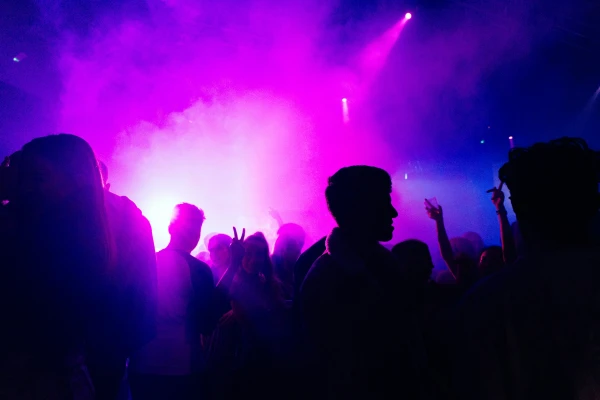
The Constitutional Court (Satversme Court) found the regulation of noise assessment and management unconstitutional to the extent that it does not provide adequate protection against excessive entertainment noise, LETA reports.
The court established that, contrary to its duty, the state has not regulated issues of assessment, control, and accountability related to entertainment noise.
The court concluded that a number of regulatory acts address excessive entertainment noise in various aspects. However, this regulation does not provide adequate protection for individuals. Furthermore, the procedure for assessing and measuring noise provided in the noise management rules is not suitable specifically for entertainment noise.
The court indicated that entertainment noise is a type of pollution that can significantly restrict fundamental human rights. Therefore, legal regulation must balance, on one hand, the individual's right to privacy in their home, the right to health protection, and a favorable environment, and on the other hand, the rights of entrepreneurs to property and significant societal interests in the economy, culture, and tourism, which are realized by visitors to entertainment events.
Since the assessment of excessive entertainment noise, the control process, and the establishment of effective accountability are essential issues for the protection of fundamental rights, their basic principles must be clearly defined by the legislator. At the same time, the Cabinet of Ministers or other institutions may be tasked with developing detailed rules and technical standards to ensure the implementation of these principles, the court emphasized.
During the consideration of the case, amendments to the law "On Pollution" were adopted, which expanded the competence of municipalities to regulate and supervise noise arising during events, in entertainment venues, and as a result of their activities, which came into force on March 28 of this year, the court noted.
In the case under consideration, these amendments were not contested, and taking into account the limits of the requirement, their compliance with the Constitution was not assessed.
The court concluded that the Saeima did not make decisions on key issues—the criteria by which it could be determined whether entertainment noise is excessive and disproportionately restricts fundamental human rights.
The Saeima also did not regulate key issues concerning the framework of the control process and types of accountability, subjects, and bodies applying accountability. At the same time, possible administrative-legal measures and the consequences of their application were not assessed, nor was it regulated whether and how the protection of fundamental rights would be ensured in municipalities that do not adopt mandatory rules on entertainment noise, the court noted.
Thus, the Saeima itself did not establish the basic principles of assessment, control, and accountability in this area, resulting in the Cabinet of Ministers and municipalities not receiving adequate powers, the court stated.
The court recognized that the current legal regulation does not provide a fair balance between the rights of individuals and the interests of entrepreneurs, as well as visitors to entertainment events. Consequently, the state has not provided adequate protection against excessive entertainment noise.
The court ruled that the Saeima must regulate the basic principles of assessment, control, and accountability related to entertainment noise by March 2027, as well as clarify the powers granted to the Cabinet of Ministers and municipalities.
It was previously reported that, at the request of the Ombudsman’s Bureau, the Constitutional Court initiated a case regarding the regulation of noise assessment and management in June of last year.
The Ombudsman’s Bureau indicates that the Cabinet of Ministers was granted the authority as a legislator to determine the indicators for all types of noise, including entertainment noise, the procedure for their application, and methods of assessment.











Leave a comment