
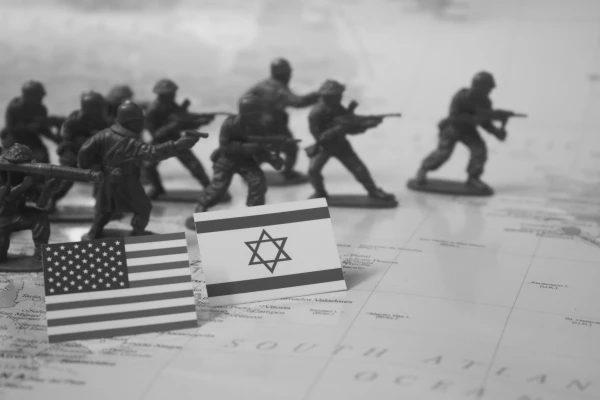
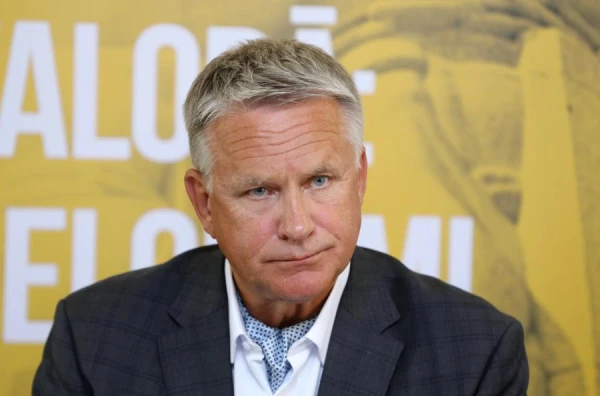
The US and Israel's military campaign against Iran has led to an outcome opposite to what the White House expected — instead of overthrowing the Iranian regime, it has been consolidated, stated Sandis Shraders, a board member of the Latvian Transatlantic Organization and a researcher at the Latvian Institute of International Affairs.
Shraders explained that the slain religious leader of Iran, Ayatollah Ali Khamenei, was succeeded by his son, who is significantly more radical in his principles and values than his father. Thus, the US may achieve the exact opposite effect — not turning Iranian society against the regime, but rather against the West.
According to the researcher, a military campaign is unable to change a regime that has existed in Iran for almost 50 years. It is not only one military or religious leader, but also the Islamic Revolutionary Guard Corps, as well as the conservative part of society that has always considered adherence to Western values as treason.
Shraders also hypothesized about the death of the Supreme Leader of Iran. He may have consciously sacrificed himself to strengthen the Islamic regime and bolster his son's position as the "heir," as US aggression consolidated the regime and its supporters.
The researcher noted that the worst-case scenario could be a civil war in Iran, which would lead to even greater instability in the Middle East, and the only beneficiary in such a case could be Israel, as its main opponent would be embroiled in prolonged instability.
In Shraders' opinion, one of the reasons for the failure of the US and Israel's campaign is also that US President Donald Trump likely did not consult even with the US National Security Council, let alone Congress, so the outcome achieved does not meet the expectations of the White House before the military operation began.
As reported, the US and Israel began military actions against Iran on February 28, stating that their goal is to eliminate the Iranian nuclear program and change the regime.












Leave a comment