
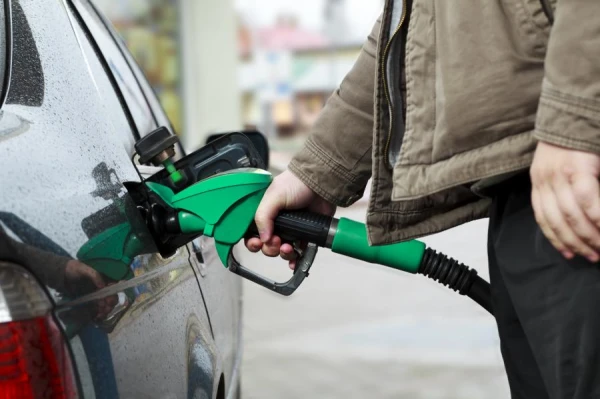
The government's initiative to lower fuel prices through amendments to the excise tax law met unexpected resistance in the expert community. Luminor Bank economist Peteris Strautins sharply criticized the state's attempts to artificially ease the lives of car owners, calling it a lack of strategic vision.
Here’s what he thinks:
"If the Saeima lowers the excise tax on fuel, the message will be: 'Dear oil producers, we are willing to bear the consequences of your madness at the expense of our budget, helping to sustain demand for a product that finances war, terrorism, the use of which worsens the projected quality of life for the entire world's population in the future. We are unable to think strategically, to make investments that would accelerate the development of an economically viable and environmentally friendly transportation system that would make our cities quieter and cleaner. Instead, we will encourage the illusion that we can rely on the availability of cheap fossil fuels in the future, thereby prompting the residents of our country to acquire vehicles whose lifecycle costs will be greater than those of modern initiatives.' I understand that this is an election year, but isn't it a bit too much?"
However, the "voice of reason" from the banking sector triggered a bombshell effect in society. Most commentators agreed that the "excess" is actually the position of Strautins, who, in their opinion, is infinitely far from the needs of ordinary residents of the country.
On social media, the economist was reminded that Latvia is not limited to the center of Riga, and electric vehicles remain an expensive toy:
"Name one modern alternative to the internal combustion engine? You can skip the electric garbage trucks; they are not suitable for my lifestyle. For me, Latvia does not end beyond Riga!"
"A man wrote this while sitting on his ivory throne. Far, far below, the heavy life of ordinary Latvians flowed."
Many saw a political subtext in the expert's words, defending the interests of bureaucracy rather than ecology:
"The idea of the court economist of 'Unity' that lowering the excise tax helps oil producers is a pure illusion. It eases the lives of Latvian families, farmers, and entrepreneurs. High taxes do not make cities cleaner—they feed the bureaucracy."
"Just no. Fuel is taxed because it is indispensable. As soon as the diesel excise tax becomes insufficient to support the budget, they will tax electricity. You are proposing to replace one illusion with another."
The thesis about the influence of Latvian taxes on the global oil market was also criticized. According to users, Strautins' logic does not withstand reality checks: "Does Latvian tax policy affect the market price of oil? No. Sit down, two."
The conclusion of the discussion was summed up with an age-old proverb: "The full does not understand the hungry."




Leave a comment