In the age of artificial intelligence (AI), future development will be determined not only by technological progress but also by the decisions that governments make in policy, education, and labor market restructuring, emphasized Latvian officials at the international forum 'Future of Work in the Age of Artificial Intelligence,' which is taking place today at Hanzas perons, reports LETA.
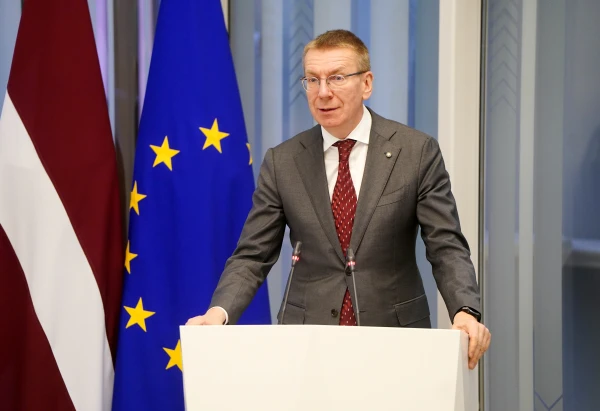
Latvian President Edgars Rinkēvičs stated that the world is changing rapidly, but words alone are not enough, so a clear action strategy is needed right now. He noted that the development of AI should be used to enhance human capabilities rather than replace them, and that the advantages will go to those who can combine technology with curiosity and education.
As the president emphasized, literacy in AI is no longer a matter of choice, especially since almost every young person and student is already using AI tools in their daily lives. He also pointed out that young people are aware that AI can make mistakes.
Rinkēvičs noted that the current education system is effectively preparing graduates 'for yesterday's economy,' adding that in the future, people may need to be ready for more than one career.
He also emphasized that Latvia, despite its small size, can take a significant place in the development of AI in Europe, as it has already become one of the most digitally advanced societies in Europe.
In turn, Prime Minister Evika Siliņa highlighted at the forum that in the digital age, the small size of the state can be an advantage, as smaller countries can make decisions faster and adapt more flexibly to changes.
As positive examples of AI development, officials mentioned the language technology company 'Tilde,' which adapted the large language model 'TildeOpen' for translation and integrated it into a machine translation platform that provides translations in 34 European languages. At the same time, politicians called the establishment of the Artificial Intelligence Center an important event, aimed at increasing the country's competitiveness by promoting reliable and safe innovations in the field of AI, developing partnerships between the public, private, and scientific sectors, as well as supporting the commercialization and responsible application of AI technologies.
Siliņa noted that Latvia is already among the most digitally advanced countries in Europe — residents widely use digital services, and registering businesses online takes only a few minutes.
At the same time, Siliņa pointed out that AI is already influencing the economy, public services, security, and competitiveness, but technology cannot replace human judgment and ethical responsibility.
The Prime Minister also stated that the responsibility of the state is to help people transition from disappearing professions to new employment opportunities by investing in education and lifelong learning. She added that the skills of the future are not limited to technical knowledge but also include critical thinking, ethical reasoning, creativity, and the ability to collaborate.
She emphasized that the main question in education is no longer whether AI will be used, but how to do so responsibly.
As reported, today in Riga, an international forum is taking place all day, discussing the future of work in the age of artificial intelligence, as reported by the LETA agency from the consulting company 'ERDA.'
The forum 'Future of Work in the Age of AI' has gathered more than 700 participants. The event discusses how artificial intelligence is transforming the labor market and how Europe can prepare people for the new economy.
The discussions focus on skill development in the age of artificial intelligence and the strategies of states in this area. Participants analyze the role of AI in economic growth and human capital development, as well as the future of education and lifelong learning. There is also a separate discussion on how to make the labor market more inclusive.
The forum also examines innovations created by artificial intelligence in areas such as healthcare, research, and defense, as well as new models of collaboration between business, the educational sector, and government institutions. The program includes practical examples.
The forum is organized by the 'Future of Work Institute' in Riga and 'ERDA,' supported by the State Employment Agency and 'Google.'