
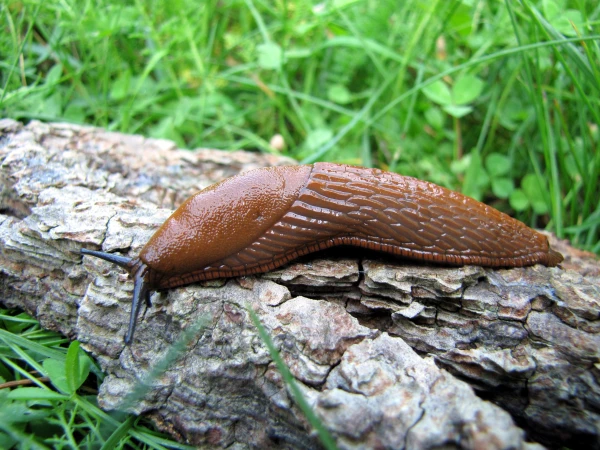
The agenda of today's Cabinet of Ministers meeting includes the issue of the list of invasive species in Latvia and measures to prevent their spread, reports Diena.
The purpose of such a list is to identify species that harm the biodiversity and ecosystem of Latvia, as well as human health or the economy, but are not included in the list of invasive species of the European Union (EU). It is also planned to determine measures to limit the spread of these species and restore affected ecosystems.
This formulation contains the answer to the question of why only the Spanish slug (Arion vulgaris) will be included in the mentioned list. For example, the giant hogweed, which is the first identified invasive species in Latvia, is already included in the EU's list of invasive species.
Among the hundred most invasive species, the Spanish slug is considered one of the most serious threats in Europe, according to the document's annotation. The Spanish slug meets the main criteria for an invasive species: it threatens natural habitats, reproduces in the wild, has a negative economic impact (it is an agricultural pest), reduces the quality of ecosystem services, and poses a threat to human and domestic animal health. In neighboring countries, this species is also considered invasive. Human activity helps the Spanish slug to spread actively, mainly through gardening, resulting in its introduction to new territories, so the spread of the species is not related to natural range expansion.
In Latvia, this species appeared relatively recently - it was first recorded in 2009 in Pastende. In the following years, significant spread was not observed; however, an expansion occurred in 2020. Currently, in Latvia, including observations by the public, 662 habitats have already been identified (data as of April 1, 2025). The rapid spread of the slug is facilitated by the import of seedlings from other countries and the trade of infected plants.
Since the mid-20th century, the Spanish slug has appeared in almost all European countries. The Baltic States were among the last to which it was introduced. Estonia and Lithuania are also making significant efforts to limit the spread and eradicate the Spanish slug.
















Leave a comment