
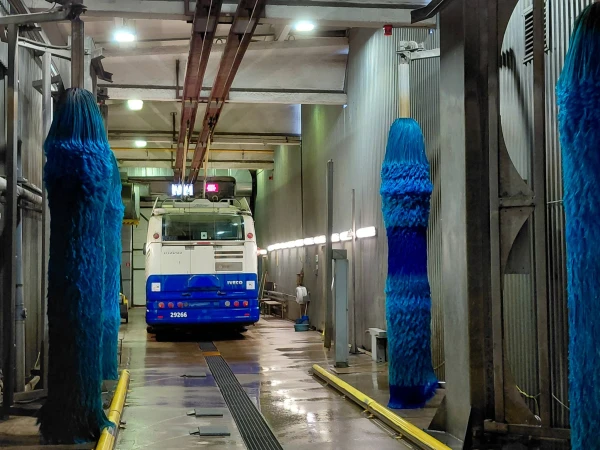
The 2nd trolleybus depot on Riga's Elgavas Street will soon be reconstructed, said Rīgas Satiksme head Jineta Innusa to the RD deputies at the site from which a hundred vehicles depart every morning. The Committee on Communication and Transport arrived in Pardaugava, near the LU high-rise buildings. Against their backdrop, the trolleybus base, built in 1968, looks quite modest.
Keen Eye of the Alcohol Meter
On the first floor, to the left of the turnstile, there is an office with a sign "Narcologist." Every morning, around 4-5 AM, a mass check of personnel takes place here – drivers before their shift, at two-hour intervals, and after work. At the beginning of the workday, controllers of public transport, parking lots, and repairmen are also checked. Any deviation from 0 results in a reprimand, and over 0.5 promille leads to dismissal. There are a couple of cases a year, admits Ms. Innusa.
However, after a year, a person who stumbled can return to the team. "There are no extra people. We pay a very adequate salary by Latvian standards," says the head of the company. In any case, the average age of drivers currently exceeds 55 years. There are also those who are over 70 behind the wheel.
– "We work on employee motivation, half of the budget consists of salaries," says Ms. Innusa. The company has, unfortunately, received warnings multiple times for overtime. In any case, drivers are the most tested (in terms of alcohol) workforce in Riga. It’s a pity that this is not the case with their employers in the Council!
"Coals" on the Wires
Today, Rīgas Satiksme (RS) employs 3,351 people, 50% of whom work directly behind the wheel. 24% are technical support, and 18% are route infrastructure. The administration has 61 employees.
There are 1,166 km of routes, 740 vehicles, and 79 routes. 51% of the wheeled vehicles belong to emission-free transport. There are a total of 6 depots in the city – a couple for each type of transport.
Currently, dispatchers are a digital profession, with only 8 rings having live people. A number of terminal stops only provide amenities for drivers; everything else has been digitized. However, there are no sensors on the trolleybus poles, and when they spark fiercely in the frost, they have to be lowered and adjusted manually. Graphite inserts with added resins, soaked in paraffin, are used there, colloquially called "coals." They have almost no wear on the contact wire, are cheap, and resemble chocolate bars. If you take one in your hand, you’ll get dirty.
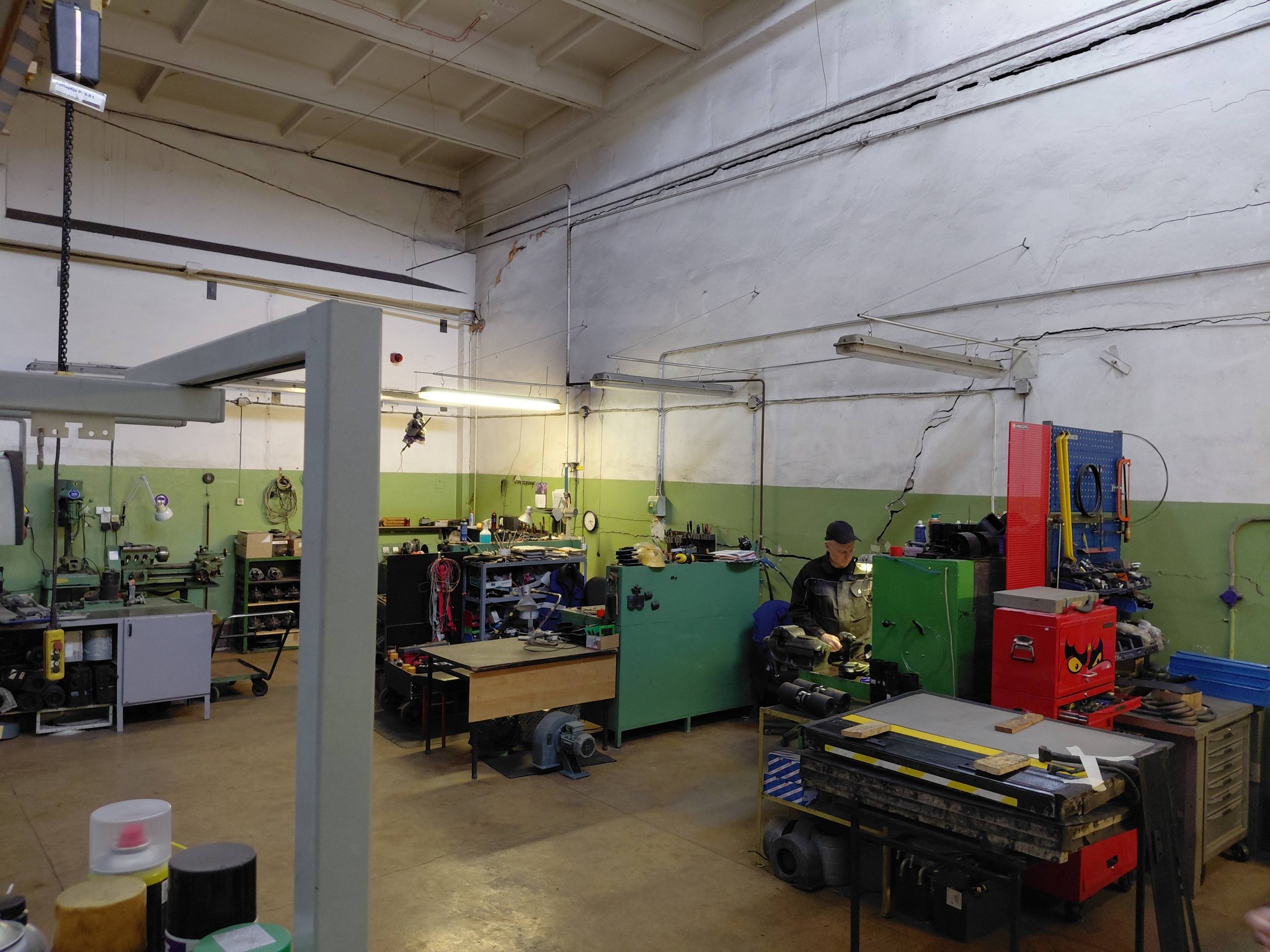
In such conditions, labor veterans work. Photo by the author.
Zone R
RS reported 118.5 million passenger trips in 2025 – a slight increase from the 2024 figure (115.97 million).
The company also monitors vehicle flows in the capital. As RS board member Janis Golubev explained, today, on average, cars spend 1.5 hours a day in municipal parking lots. It has become very difficult to find a spot due to free parking for electric vehicles – they already occupy 22.7%, and in the most "elite" zone R, where an hour costs 3 euros, a whopping 40%! By the way, for those living nearby, a discounted monthly pass is offered at 70 euros per month.
– "In the last 5-6 years, using all possible resources, including European funds, about 300 million euros have been invested in transport," says Jineta Innusa. "It is very important to start working on new projects."
Solaris Has Unnoticedly Aged
The fairness of these words was confirmed by your author after carefully inspecting the repair workshops of the 2nd depot.
The electromechanical section evoked nostalgia – it reminded me of mastering the specialty of a mechanical assembly worker 40 years ago. Nothing has changed – the same industrial interior from the planned economy era. However, it is very clean, and every unit is in place. No frivolous stickers at workstations, which the proletarians were once guilty of.
The radio plays cheerfully, and speech in Russian can be heard from afar. The enterprise employs citizens of Ukraine, and there is a preferential linguistic period for them. By the way, I also read information on the diagnostic screen in the great and mighty language. The importer did not correct the menu for Latvia in its state language.
The trolleybus is raised above the pit – one can see the condition of the thresholds. Heavy corrosion – the consequences of years of street salting in Riga. Although nothing lasts forever – this Solaris Urbino 18.75 H2 was produced in Poland in 2008. It was designed for 10 years of operation, but the average age of trolleybuses in Riga is already 13 years. However, they are still much younger than trams – averaging 32 years!
Looking to the Future
– "We have an integrated transport system where each mode complements the other rather than competes," says RS board member Andris Lubans.
The 2nd depot provides a full cycle of repair work. Here they carry out painting – in a special airtight chamber, where several shiny new bumpers are displayed, the most suffering element in everyday work. Perhaps it’s time to install rubber pads to prevent collisions with the curb?
Next, we see a room where used brake calipers are lined up in rows. They are also awaiting repair. The trolleybus workshops perform everything related to restoring the diesel engines currently on board. But large-scale purchases are still unavoidable:
– "We need 120 buses (60 electric and 60 diesel), 100 trolleybuses (with batteries for dynamic charging), and 24 low-floor trams," Mr. Lubans said about the company’s immediate goals. And then we can "retire" the old-timers… But all these grand plans are aimed at the distant year 2035.
50 Million Euros to Ziepniekkalns
When it comes to infrastructure, Jineta Innusa is grateful to the Riga City Council for a long-standing program that has allowed the company to speak with lenders.
– "There is no money in the public sector," stated the head of the enterprise. And the walls of the 2nd depot are all cracked; in some rooms, the Construction Administration simply closed the entrance, sealed it, with red prohibitory signs. In some places, for example, in the warehouse for work clothes, it is still possible to enter – although the door does not close, as the wall has warped.
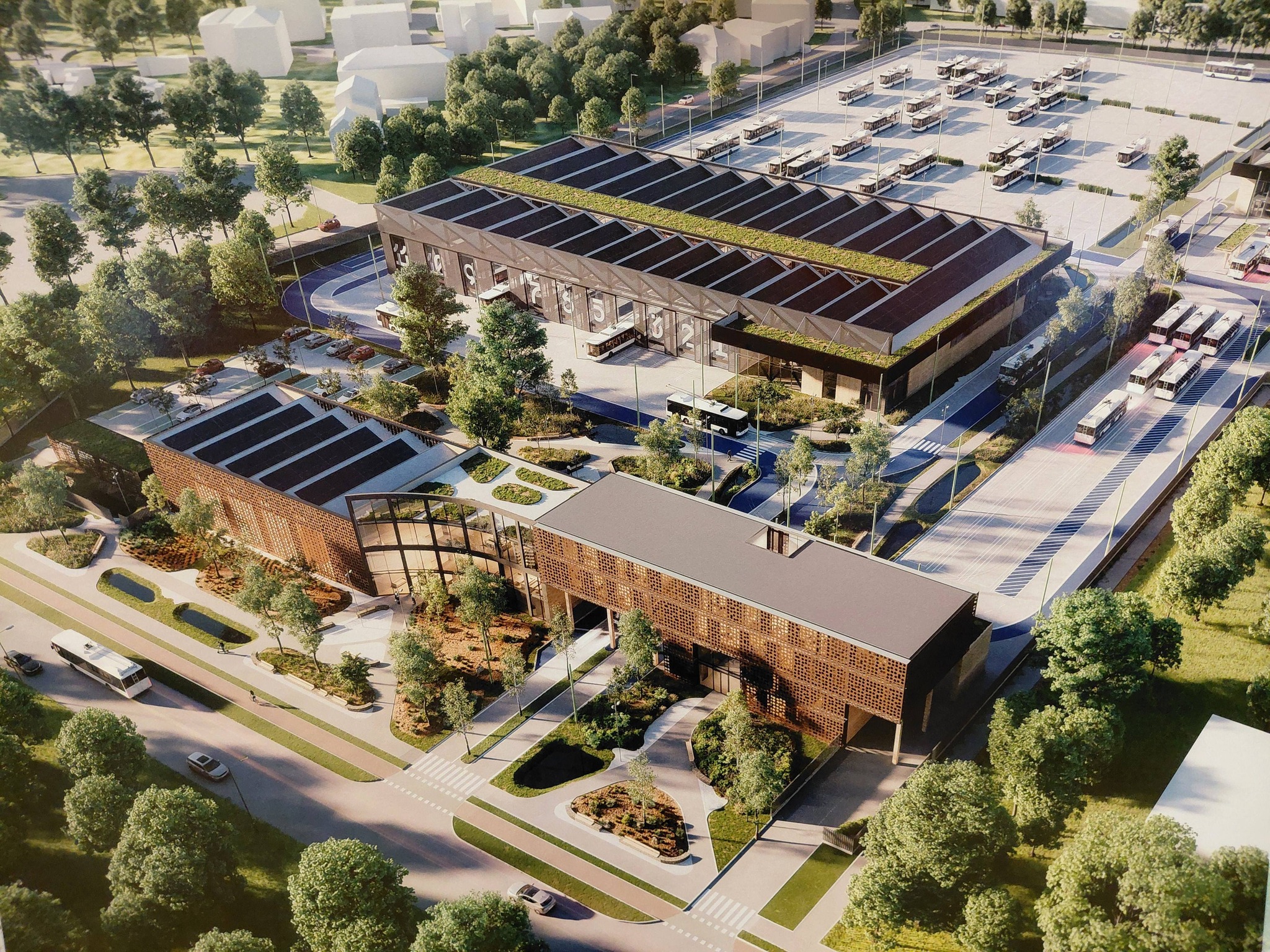
In the future – a reconstruction of the 2nd depot in a high-tech style, which will match the university buildings. The same bureau that built the trendy kindergarten in Ogre is ready to provide architectural solutions. The only thing left is to find the money.
Meanwhile, as Jineta Innusa noted, there are more and more privileged passengers in Riga's public transport – and unfortunately, the "face" of the cabins consists of asocial elements. In this regard, the 7th tram route (Ausekļa-Kengarags-Ausekļa, 18.6 km) stands out, which is currently being extended towards Rumbula. The longest route is N 1, from Imanta to Jugla and back, 36.6 km.
When it comes to megaprojects in still undeveloped areas, a tram on Skantes Street, which would connect Ganibu Dambis and Miera, would cost 43 million euros. And in Ziepniekkalns – all 50 million.
Prospective depot. Photo by the author.
By the way
_Public transport is also a place of temporary shelter in case of emergencies. If something happens, residents are evacuated precisely in the adapted buses and trolleybuses. The latter, thanks to compact diesels, can now reach any place where there is not even a contact network.







Leave a comment